





 Portuguese
  English
  Spanish
  4 min of reading
  0 comments


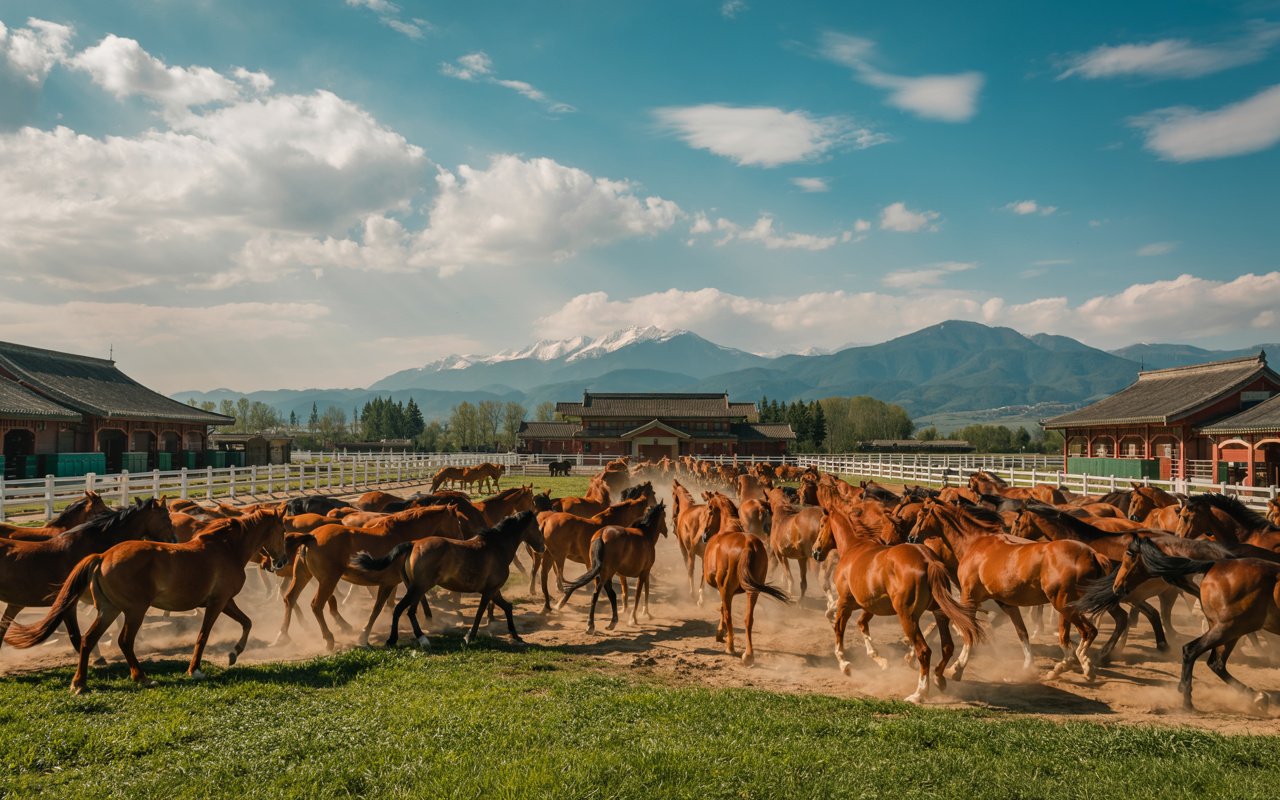
Know The Shandan Farm, The Largest Horse Farm in The World, Located in China and Home to 10,000 Horses, With Over Two Thousand Years of Tradition in Breeding and Cultural Preservation.
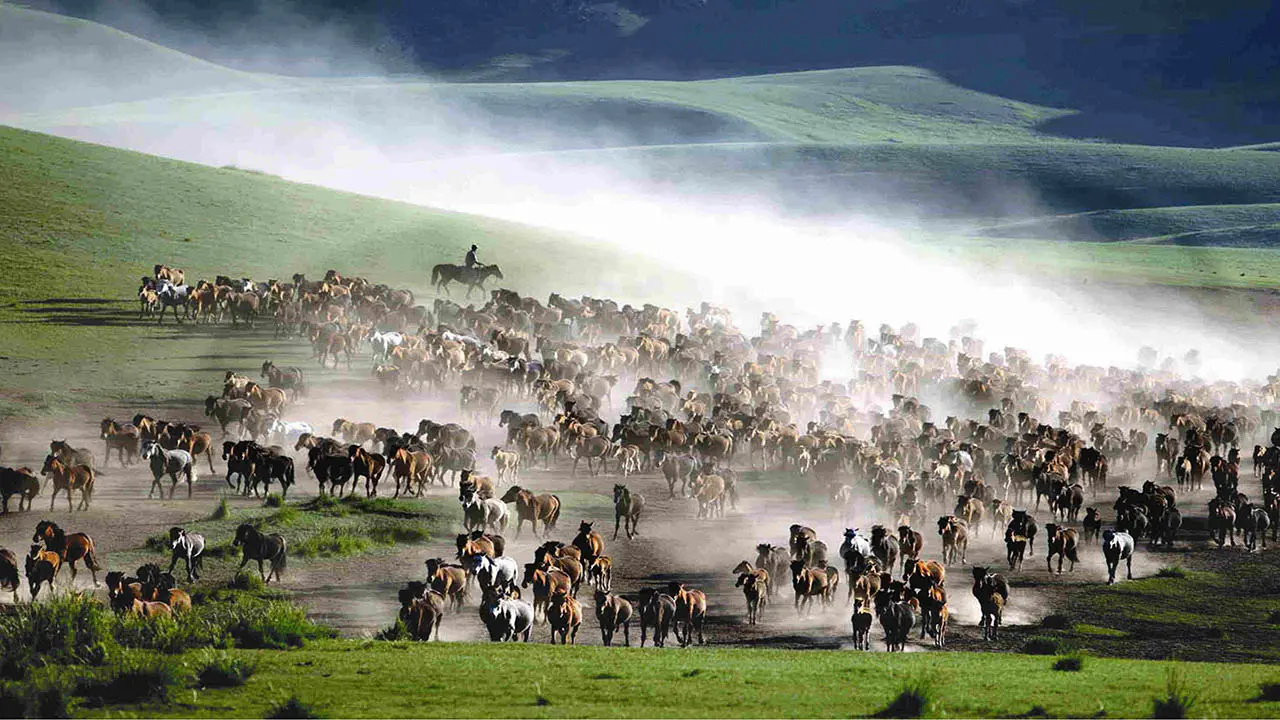
In northwest China, amidst vast plains and at the foot of the Qilian Mountains, lies a place that carries over two millennia of history and an impressive record: Shandan Farm, recognized as the largest horse farm in the world. With around 10,000 horses living in a single territory, the property not only impresses by its size, but also by its historical and cultural relevance, being one of the living symbols of the relationship between man and horse.
While countries like Brazil, the United States, and Mongolia have millions of horses scattered across different farms and pastures, no other place concentrates so many animals in a single property. The monumental scale of Shandan puts China in a unique position in horse breeding, attracting curious visitors, researchers, and tourists from all over the world.
Shandan Farm: Where The Largest Horse Breeding In The World Began
The history of Shandan Farm dates back to the Western Han Dynasty (206 BC – 24 AD), when the region was chosen to house a military stud that would provide horses for the Chinese empire.
-
Money with chickens: how much can 200 laying hens yield per month with eggs at R$ 12 per dozen?
-
As dams and pollution advance, migratory freshwater fish are facing a silent global crisis that has already decimated populations, threatened fisheries, and raised alarms in major basins.
-
Crotalaria, mucuna, and other cover crops stop being “weeds” between harvests and become central to agriculture by improving the soil, adding biomass, and enhancing green fertilization in vegetable production.
-
Coruripe Mill secures international financing of R$ 530 million and boosts the sugar-energy sector.


The location, situated in the Hexi Corridor, in Gansu province, has always offered the perfect conditions for breeding: vast flat areas, abundant pastures, and enough water to sustain thousands of animals.
Over more than two thousand years, Shandan has survived changes in dynasties, conflicts, and political transformations, remaining one of the primary centers of horse breeding on the planet. This continuity makes it not only the largest, but also one of the oldest continuously operating horse farms in the world.
10,000 Horses In Shandan: An Unprecedented Scale
Currently, Shandan houses over 10,000 horses in its fields, a number that surpasses any Western stud, where herds typically consist of hundreds of animals. This immense equine population highlights the uniqueness of Chinese breeding.

The horses bred in Shandan are not only numerous but also the result of centuries of genetic improvement.
Ancient handlers crossed local Mongolian horses with robust breeds from Central Asia, such as the Turkmen. This process gave birth to the Shandan horse, known for its strength, endurance, speed, and adaptability – characteristics that were once essential to meet military demands.
Horse Breeding In China: Military Heritage and Modern Adaptation
For centuries, Shandan Farm has been a pillar of the Chinese imperial cavalry. The horses bred there participated in historical campaigns, sustaining armies and influencing the course of battles in an era when cavalry dominance was decisive.
With the advancement of military mechanization in the 20th century, the role of horses in wars diminished, but Shandan did not lose its importance.
The farm began to provide animals for secondary functions in the armed forces, such as patrols in mountainous regions and official ceremonies, maintaining the bond with the Chinese Army, which still manages the site today.
Shandan Farm As A Tourist Destination And Cultural Heritage
Besides being a reference in horse breeding, Shandan has become a major tourist attraction of cultural value. Visitors can witness impressive scenes: herds of hundreds of horses galloping freely across the plain, a spectacle that creates unforgettable photos and memories.
During the summer, when the pastures turn green and flowery, the region welcomes tourists from all over the world for horseback rides, equestrian events, and cultural experiences. The fame of Shandan has also reached cinema and television, becoming a setting for films and documentaries that depict both its natural beauty and its historical significance.
China’s Horses: The Shandan Breed And Its Importance
The Shandan horse, developed over centuries of crossings, is now one of the most valued breeds in China. Muscular and with a balanced conformation, these animals are known for their versatility: they can be used for riding as well as for pulling loads or working in the field.
Many of these horses are sent to equestrian centers in cities like Lanzhou, Xi’an, and Shanghai, where the public has the opportunity to learn about the lineage, ride some specimens, and discover more about the historical legacy of these animals.
Why Is Shandan Farm Unique?
It is not just the number of horses that makes Shandan special. It is the sum of tradition, culture, and historical continuity.
While most of the large farms in the world have only a few decades of existence, Shandan carries over 2,100 years of uninterrupted breeding, enduring regime changes, wars, and social transformations.
Its scale and history make it a cultural heritage not only of China but of all humanity.
Shandan Farm is more than a stud – it is a living symbol of global equestrian heritage. With its 10,000 horses spread over 2,200 square kilometers of steppes and more than two thousand years of tradition, the site connects the past and the present in a single setting.
Whether as a historical base of the Chinese cavalry or as a tourist attraction and center of cultural preservation, Shandan continues to impress and inspire, showing that horse breeding in China is, above all, a story of resilience, adaptation, and greatness.









Seja o primeiro a reagir!