





 Portuguese
  English
  Spanish
  4 min of reading
  0 comments


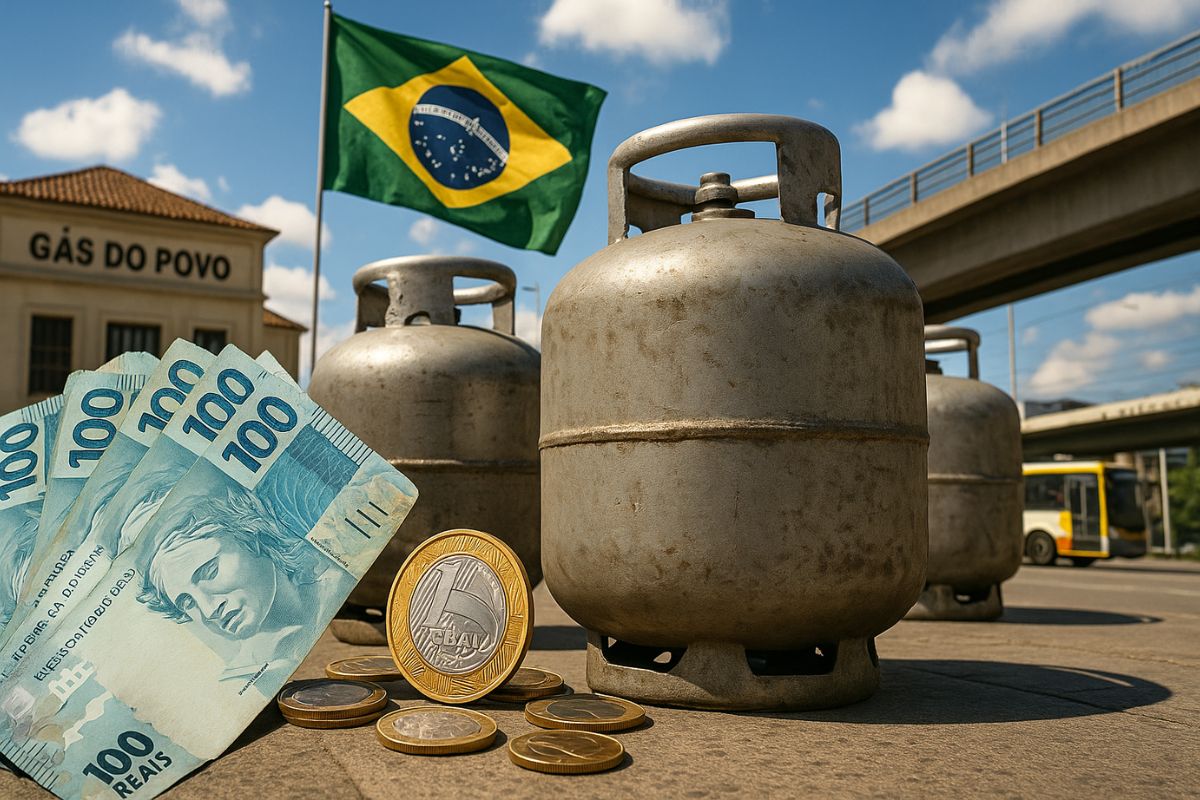
Differences of Up to R$ 30 Between the Value Set by the Government and the Real Market Price Lead Resellers to Question the Viability of the People’s Gas and Warn That the Cost May Make the Program Unfeasible in Several States
The People’s Gas program, launched by the federal government to distribute free gas cylinders to families registered in CadÚnico, faces resistance from distributors and sector associations. The entities claim that the reimbursement values set are below the market reality, with differences reaching R$ 30 for a 13-kilogram cylinder in some regions of the country.
The price table published in an extra edition of the Official Gazette of the Union defines the values that will be used to compensate the accredited resellers. However, the discrepancy between the official price and the real operational cost generated an immediate reaction from entities such as Abragás (Brazilian Association of Companies Representing the LP Gas Reselling Sector), which states that it only joined the program on the condition that the prices follow the regional averages of ANP (National Agency of Petroleum, Gas and Biofuels).
Regional Differences and Risks of Partial Adherence
In states like Amazonas and São Paulo, the value proposed by the government is respectively about R$ 30 and R$ 16 below the market average, according to sector data.
-
Brazilian city bets on the business environment to generate jobs and attract investments in the energy sector — secretary reveals strategy at Macaé Energy 2026.

-
50 viaducts, 4 tunnels, 28 bridges, and 40 kilometers of bike paths: BR-262 in Espírito Santo will receive 8.6 billion reais for the largest engineering project in the state’s history, inspired by the Immigrant Highway in São Paulo.

-
Brazil produces too much clean energy and doesn’t know what to do with it: over 20% of solar and wind capacity was wasted in 2025 while investors flee and 509 renewable generation projects were abandoned in the last year.

-
Piauí will produce a new fuel that replaces diesel without needing to change anything in the truck’s engine and reduces pollutant gas emissions by half: truck drivers from all over the Northeast are already celebrating the news that will arrive later this decade.


For local resellers, the gap makes participation unfeasible, as it does not cover transportation, storage, and operational costs.
“The values disclosed are out of touch with reality in various regions of the country, which may lead resellers not to join the program”, stated Abragás in a note, emphasizing that the dialogue with the government continues, but without adjustments, adherence will be limited.
The entity stresses that it is not opposed to the People’s Gas, but warns about the risk of economic and logistical imbalance, especially in more remote areas.
Distributors Request Technical Review of the Values
The Sindigás (Union of LP Gas Distribution Companies), which represents the major distributors in the country, classified the scenario as “challenging” and stated that it is still assessing the impacts on a case-by-case basis.
The union acknowledges the social importance of the People’s Gas, but warns that the national price standardization disregards cost differences between regions, state taxes, and transportation logistics, which vary drastically between capitals and interior cities.
Industry experts point out that the operational margin of resellers is narrow, and that poorly calibrated subsidies may discourage adherence, affecting the regular delivery of the benefit.
The lack of resellers in certain locations could force the government to seek more expensive logistical alternatives, compromising the program’s sustainability.
Potential for Expansion and Industrial Bottlenecks
The government estimates that the People’s Gas will assist up to 16 million low-income families, which would represent an increase of up to 8% in the national demand for LPG (Liquefied Petroleum Gas).
To cope with the expansion, the sector estimates that 5 to 10 million new cylinders will be needed in the coming months.
Companies have already begun negotiations with suppliers, but progress depends on predictability of compensation.
Without the review of the values, manufacturers may delay deliveries, and resellers may reduce stocks, affecting the distribution pace.
A Social Program Under Test
The People’s Gas is one of the main banners of President Luiz Inácio Lula da Silva‘s third term, designed to replace the old Gas Voucher and extend the social reach of energy policy.
The proposal aims to ensure universal access to cooking gas and reduce the impact of energy inflation on low-income families.
However, the debate on pricing exposes a recurring challenge in subsidized energy policies: balancing social impact with economic viability.
Without a regionally tailored compensation model, the risk is to generate disinterest from resellers and difficulties in implementation in states where logistical costs are higher.
The People’s Gas has the potential to become the largest social gas supply program in the country, but it faces a technical and economic impasse even before reaching national scale.
The revision of prices set by the government will be crucial in determining whether the program advances with broad participation or faces increasing resistance from the sector.
And you, do you think the People’s Gas can work with the current prices? Or do you believe that the resellers are right to request regional corrections of the values? Let us know in the comments if you have already noticed a price difference for the cylinder in your city and how it impacts the daily life of the population.










-

-

-

3 pessoas reagiram a isso.