





 Portuguese
  English
  Spanish
  4 min of reading
  0 comments


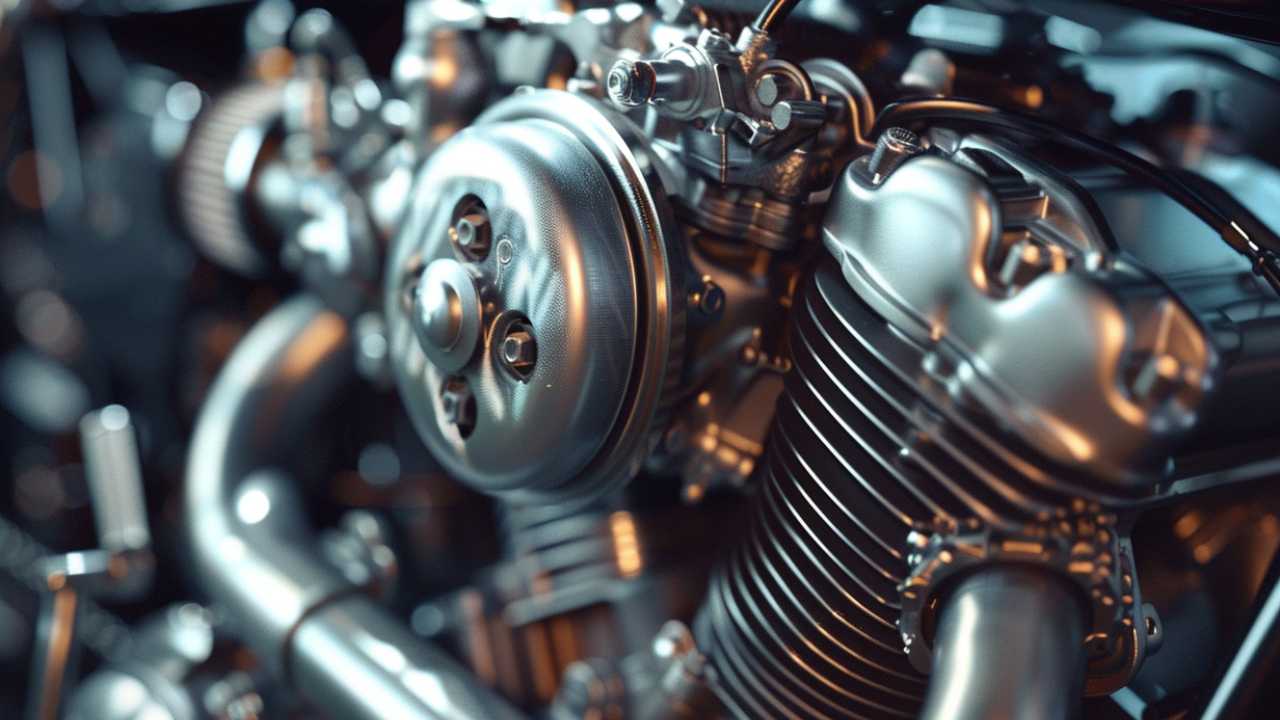
Discover The Fascinating Evolution Of Inline Engines Since Their Invention In The 19th Century By Nikolaus August Otto. Learn How These Engines Transformed The Design And Efficiency Of Modern Vehicles, From Motorcycles To Light Trucks, Through Innovations That Continue To Impact The Global Automotive Industry.
Since the creation of the modern internal combustion engine by Nikolaus August Otto in the 19th century, the pursuit of improvements and innovations has not stopped. A significant milestone in this journey was the development of inline engines, which offer a range of advantages over older configurations.
The first engines created by Otto were horizontal models, but soon the industry saw the need for more compact and efficient designs. This was when Gottlieb Daimler and Wilhelm Maybach, two former employees of Otto, designed the first vertical engine, nicknamed “grandfather clock” for its peculiar appearance. This design was crucial for the development of the first internal combustion motorcycle in history.
Inline Two-Cylinder Engine, Like The Fenix Model In 1895, Allowed Vehicles To Reach Higher Powers And Efficiencies
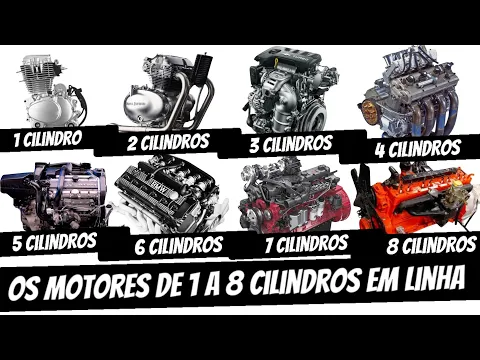

The introduction of the inline two-cylinder engine, like the Fenix model in 1895, allowed vehicles to reach higher powers and efficiencies. This arrangement initially equipped cars from the French manufacturer Panhard et Levassor, demonstrating a significant evolution compared to single-cylinder models. Over time, manufacturers expanded this configuration to three, four, and even eight cylinders, seeking an ideal balance between power, efficiency, and reduced vibrations.
-
OMODA & JAECOO grows in Europe in 2026 with an integrated strategy of sales, innovation, local production, and technological advancement in the United Kingdom, Italy, and Spain.
-
OMODA & JAECOO expands after-sales service in Brazil with competitive maintenance, a 7-year warranty, and high availability of parts for technological SUVs.

-
OMODA & JAECOO appoints Alessandra Souza as executive marketing director in Brazil and accelerates brand expansion with a focus on innovation, networking, and hybrid portfolio.

-
Jaecoo 7 with super hybrid SHS system exceeds 1,200 km of combined range with a 1.5 turbo engine, high-density battery, and intelligent energy management.

One Of The Greatest Challenges In Inline Engine Engineering Is Managing Vibrations
One of the greatest challenges in inline engine engineering is managing vibrations. Primary and secondary balance needs to be meticulously adjusted to avoid excessive wear and ensure the longevity of the engine. Technologies such as counterweights are employed to keep the engine balanced, even as the number of cylinders increases.
The Different Types Of Internal Combustion Engines, From 1 To 8 Cylinders
One-Cylinder Engine
The one-cylinder engine is the simplest and is widely used in small motorcycles and machines like lawnmowers. It is economical and easy to maintain, but vibrates quite a lot, which can be uncomfortable and limits its use in larger vehicles.
Two-Cylinder Engine
Two-cylinder engines offer more power than single-cylinder engines and are slightly smoother. They are popular in larger motorcycles and some compact cars. However, they still need mechanisms to control vibrations.
Three-Cylinder Engine
With three cylinders, the engines are mainly used in small cars, providing a good mix of fuel economy and reasonable power. They are more efficient than two-cylinder engines but also require technologies to reduce vibrations due to the odd number of cylinders.
Four-Cylinder Engine
This is the most common type of engine in cars due to its balance of power, efficiency, and costs. Four-cylinder engines are relatively simple to manufacture and maintain, offering good performance for most car users.
Five-Cylinder Engine
Five-cylinder engines are less common and are somewhat of a middle ground between four and six-cylinder engines. They offer smoother operation than four-cylinder engines but are not as large or expensive as a six-cylinder engine.
Six-Cylinder Engine
Six-cylinder engines are known for their smoothness and are often used in luxury and sports cars. They do not require many adjustments to control vibrations, making them ideal for those seeking performance and comfort.
Seven-Cylinder Engine
Very rare and almost never used in cars, seven-cylinder engines can be found in some special applications such as marine engines. They are complex and do not provide significant benefits over six-cylinder engines for most automotive applications.
Eight-Cylinder Engine
Eight-cylinder engines are powerful and used in high-performance vehicles such as sports cars and large trucks. They provide a lot of power and torque but consume more fuel and are more expensive to maintain.
Inline Engines Are Among The Most Popular
Today, inline engines are among the most popular for a variety of applications, from motorcycles to light trucks. They offer a configuration that allows easy combustion balancing, resulting in a smooth and efficient operation. Furthermore, with the evolution of emission and fuel efficiency technologies, these engines continue to be a relevant choice for the modern automotive industry.
Inline engines represent an effective and enduring solution that continues to evolve with the automotive industry. Share your opinion in the comments: what inline engine configuration do you prefer and why?









Seja o primeiro a reagir!