





 Portuguese
  English
  Spanish
  3 min of reading
  2 comments


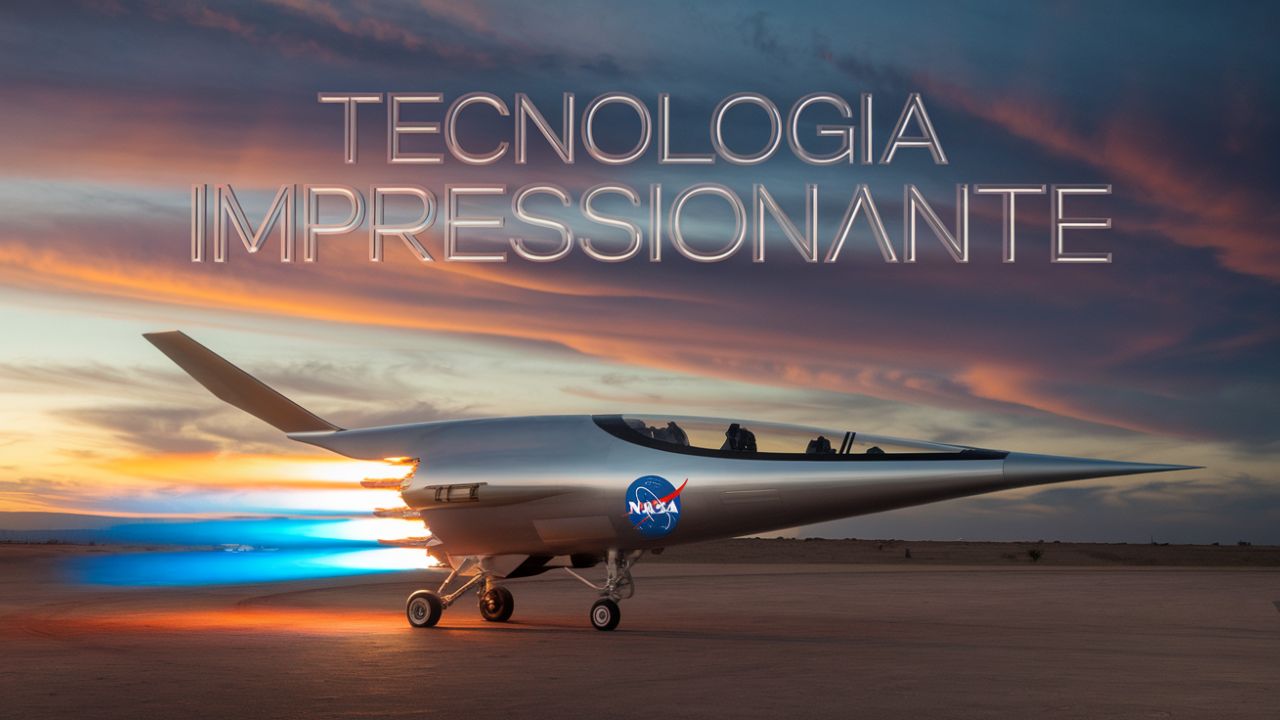


NASA Tests X-59 Supersonic Quiet Aircraft Engine for the First Time with Max Afterburner, Marking a Historic Advancement in Aviation Focused on Supersonic Speed and Sonic Boom Reduction.
An aircraft capable of soaring through the skies at supersonic speeds, but without that frightening boom that makes you jump out of your seat. Sounds like science fiction? Not anymore! The engine of NASA’s X-59 quiet supersonic aircraft has just made a huge leap in that direction, operating for the first time with maximum afterburn. This not only marks a technological advancement but also redefines what we understand by supersonic aviation.
What Is the X-59 and Why Is It Revolutionary?
The X-59, the centerpiece of NASA’s Quesst mission, is much more than just a fast airplane. It represents the ambition to fly at supersonic speeds without causing the traditional sonic booms. These loud noises have always been the biggest obstacle to the acceptance of supersonic flight over populated areas.
The Quesst mission (Quiet SuperSonic Transport) has a clear goal: to prove that it is possible to fly above the speed of sound without disturbing those on the ground. The X-59 utilizes an innovative design that controls how sound waves propagate, reducing the booms to something more akin to a soft “thump”.
-
Chaos On Airplane Could Be Expensive: Proposal Aims To Prevent Disruptive Passengers From Flying For Up To 1 Year In Brazil And Face Fines Of Up To R$17,500

-
Man Arrested After Halting Takeoff of Fire Department Helicopter During Child Rescue in Guaratuba

-
With 37 Tons of Cargo, Over 8,000 km Range, and Ability to Land on Unpaved Runways, the Airbus A400M Demonstrates How Europe Created a Military Giant That Transports Armored Vehicles, Aerially Refuels Fighters, and Operates in Conflict Zones and Humanitarian Missions Worldwide
-
Emergency Landing in Campos Amarais After Bird Strike on Small Plane


With a long, slender nose, the X-59 looks like it’s from a futuristic movie. This shape is crucial for smoothing out shock waves created during flight. Every piece has been designed to maximize efficiency, safety, and, of course, silence.
The Maximum Afterburner Engine Test: An Important Milestone

On December 12, the F414-GE-100 engine of the X-59 was tested with its maximum afterburner. What does this mean? Basically, the engine was pushed to the limit to ensure it can meet the demands of supersonic flight.
This engine is no ordinary one. It is equipped with an afterburner, a device that adds extra fuel to the airflow to generate more power. During the test, the engine operated at temperature and airflow within ideal parameters, showing that it is ready for takeoff.
Another crucial aspect of the test was to check how the engine works in conjunction with other systems of the aircraft. And the result? Impeccable synchronization, essential for the success of the first flight.
How the X-59 Promises to Change the Future of Aviation
The X-59 is not just a technological innovation; it is a glimpse of what air transport could become.
By eliminating the problem of sonic boom, the X-59 could make supersonic flight a viable option for commercial flights. Imagine crossing continents in a matter of hours, without sacrificing comfort or tranquility.
Thanks to its advanced design, the X-59 promises to fly almost like a ghost. This technology can open the doors for supersonic routes over land, something that was previously unthinkable.
What to Expect from the X-59 in 2025?
The first flight of the X-59 is scheduled to take place in 2025, and expectations are high.
NASA and Lockheed Martin are working together to ensure everything is ready. Ground tests have already shown that the engine is up to the challenge.
Despite the progress, there are still issues to resolve, such as certifications and additional testing. But if all goes well, the X-59 could redefine aviation standards.
The engine of the X-59 quiet supersonic aircraft is a glimpse of the future that awaits us: faster, quieter, and more efficient airplanes. If the X-59 delivers on its promises, it won’t just be a victory for technology, but a leap for all humanity.










Schou, tenho minha filha na área de aviação, o que tenho muito orgulho,… …
Será uma revolução na aviação aérea civil, más com certeza será mais uma arma de opressão americana para ameaçar qualquer país que não se alinhar com os interesses americanos, aí os russos e chineses desenvolveram tecnologia similar, depois França, Alemanha, Inglaterra, Índia,,,,, e assim o mundo será um lugar cada vez mais seguro e pacífico porque pelo menos umas dez nações terão a capacidade de explodir tudo,kkkkkk