





 Portuguese
  English
  Spanish
  3 min of reading
  6 comments


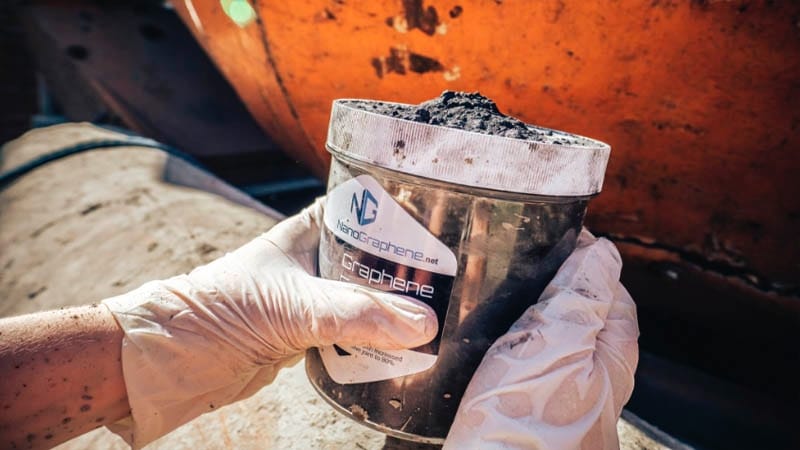

Graphene Is Revolutionizing The Construction Industry, Bringing A Series Of Benefits Such As Reduced Carbon Footprint, Material Savings, And Cost Reduction
The construction industry is gaining a powerful ally: graphene. This mineral is transforming the construction industry worldwide. The incorporation of graphene into concrete is bringing significant benefits, such as reduced carbon footprint, material savings, and cost reduction.
With these advantages, graphene is establishing itself as an essential component for the future of construction, standing out for its strength and efficiency.
What Is Graphene?
After all, what is graphene? Graphene is a remarkable substance that possesses a number of incredible properties. It is incredibly strong, about 200 times stronger than steel. Additionally, it is an excellent conductor of heat and electricity. It also has interesting light absorption capabilities.
-
Natville puts R$ 700 million on the table for new factories in the Northeast, generating jobs and boosting the local economy.

-
Naval reform transforms 40-year-old sailboat purchased for $5,000 into a residential yacht: structural repair of hull/keels, Awlgrip painting, engine replacement with Beta Marine, autopilot, sealing of chain plates, and complete interior retrofit for $25,479.

-
Firjan proposes to ANTT the acceleration of works on BR-101 in Northern Fluminense to improve logistics, urban mobility, and regional competitiveness.

-
Couple that traveled by Kombi through many countries moves forward with the land in the south of SC: machines level the refuge in the woods, reinforce embankments, set up a construction camp, and train chainsaw operators to speed up the building process.

Graphene actually comes from graphite, specifically from graphite crystals. Graphite is a mineral used, among other things, to produce pencil leads. Scientists have known about the existence of graphene for a long time, but no one knew how to extract this two-dimensional crystal of one-atom thickness from graphite.
The Graphene Revolution Is Already Underway

In 2004, two researchers from the University of Manchester, Professor André Genn and Professor Kostya Novoselov, managed to isolate graphene. This achievement earned them the Nobel Prize in Physics. From this discovery, a race began to find the most lucrative use for graphene.
Graphene In Construction
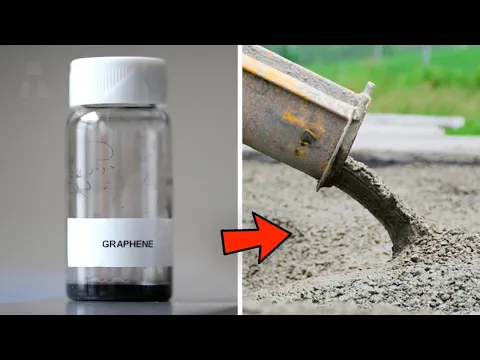
Graphene is an extremely versatile material, and by combining it with other elements, we can produce different materials with superior properties. In construction, graphene has played a fundamental role, especially in the production of a very specific concrete.
The production of cement for concrete in construction is highly polluting and is one of the leading causes of global carbon dioxide emissions. However, the addition of small amounts of graphene significantly strengthens the concrete, reducing the amount of concrete needed for equivalent constructions. This reduces the carbon footprint and construction costs.
Furthermore, as the structure is reinforced with graphene, the need for steel reinforcements is reduced, saving time and materials. The graphene-reinforced concrete is called “concretene.”
In Italy, This Incredible Mineral Was Used As A Super Polymer Modifier To Improve The Performance Of Asphalt Pavement
Liquid concrete takes its solid form through chemical reactions, such as hydration and gelation. The mineral acts as a mechanical support and as a catalytic surface during hydration, resulting in a final concrete with improved strength, durability, and corrosion resistance.
In addition to concretene, graphene has also been used in other areas of construction. For example, in the reconstruction of the Via Dote Polcevera bridge in Italy, graphene was used as a super polymer modifier to improve the performance of asphalt pavement.
3D Printing Technology For Reinforced Concrete
Additionally, 3D printing technology for reinforced concrete with graphene, called C-Print, is being developed by the tunneling company HS2 in London. This technology promises to bring significant environmental and financial benefits by reducing the amount of concrete needed and construction time.
Graphene is revolutionizing the construction industry, bringing a series of benefits such as reduced carbon footprint, material savings, and cost reduction. Although it is still a more expensive material, the savings made by reducing unnecessary materials are significant.
Although changes in the construction industry are happening gradually, it is undeniable that the graphene revolution is already underway. With its unique properties and minimal carbon footprint, this incredible mineral has the potential to transform the way we build and positively impact the environment.
I’d Love To Know What You Thought Of This Discovery. Let Us Know In The Comments Section If You Are A Construction Professional. Don’t Forget To Leave 5 Stars And Turn On CPG Notifications To Keep Up With All The News. See You Next Time!







Onde encontrar grafeno para **** na construção civil
O GRAFETO ATRAÍ Meteoro ☄️🚨?
Excelente informação. Evolução na construção civil e vários outros seguimentos, cuja tecnologia passou a utilizar o grafeno melhorando desemoenho, inclusive, produtos que necessitam de alta condutividade e diminuir o peso. Tipo equipamentos da informática, laboratoriais, estruturas dos meios de transporte terrestre, aéreo e marítimo. Menor peso, menos consumo de combustíveis, de agregados, melhor custo-benefício, aumenta a economia e lucratividade aos empreendedores.