





 Portuguese
  English
  Spanish
  3 min of reading
  0 comments


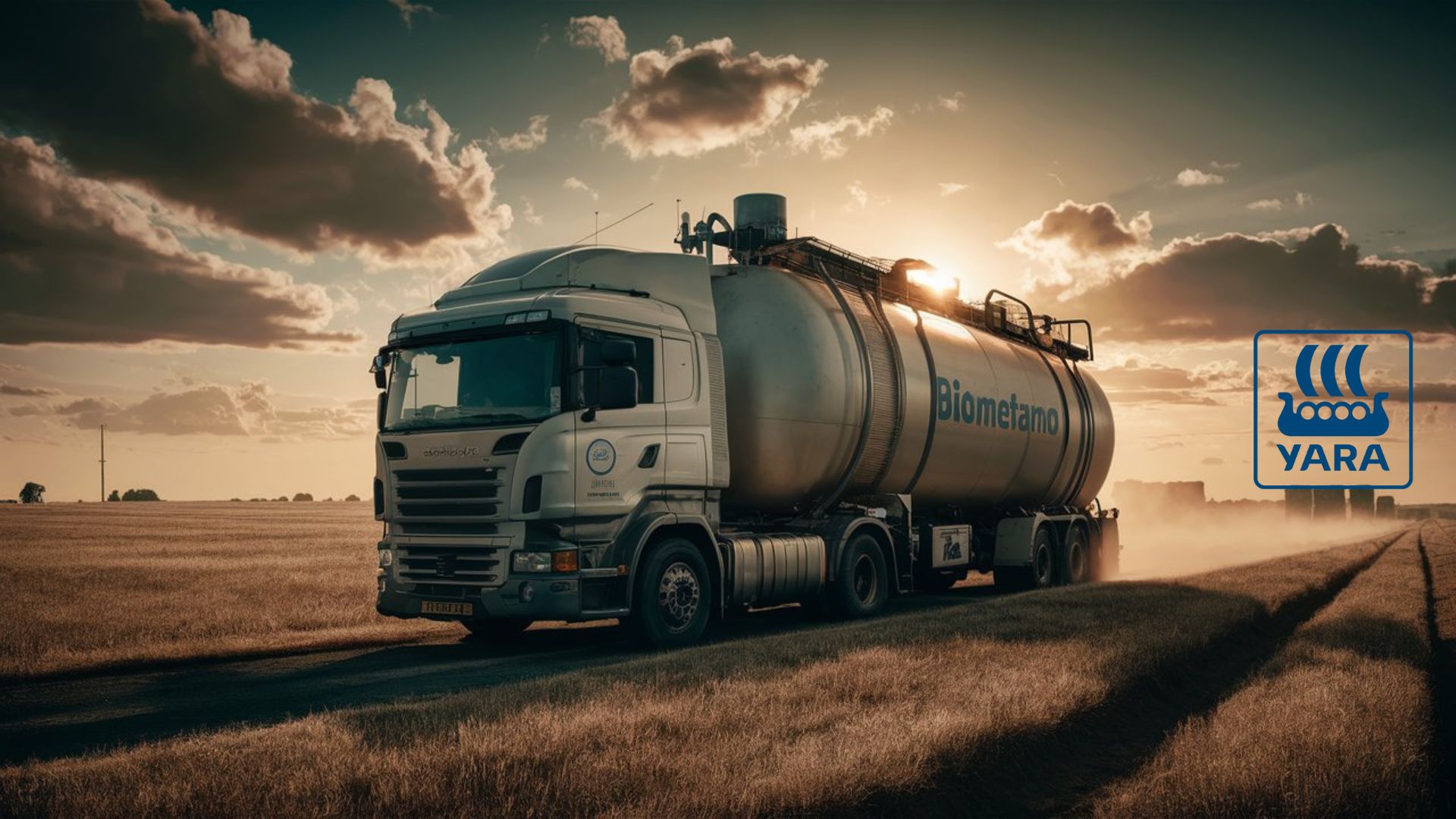
How Biomethane Is Transforming Sustainable Ammonia Production and Driving the Transition to Cleaner Energy
Yara Bets on Biomethane for Sustainable Ammonia Production
Yara, a Norwegian company and leader in fertilizer manufacturing, made a groundbreaking decision to adopt biomethane as a substitute for natural gas in the production of sustainable ammonia. In September 2023, the company officially launched this operation at its Industrial Complex in Cubatão, São Paulo. This choice brings an impressive reduction of up to 75% in carbon emissions compared to traditional ammonia, which relies on fossil sources.
Due to this innovation, the company expects to produce between 6,000 and 7,000 tons of sustainable ammonia per year, which should generate 15,000 tons of fertilizers annually. According to Yara itself, the first batches of this ammonia have already begun to be used in the Brazilian market in October 2023, reinforcing the company’s commitment to energy transition.
Biomethane: A Renewable Source Driving Green Energy
Biomethane, supplied by Raízen, is produced from agro-industrial waste such as vinasse and filter cake. The biomethane production plant, located in Piracicaba (SP), began operations in 2022, with the capacity to process up to 60,000 cubic meters of gas per day. This gas is transported directly to Yara’s Industrial Complex, where it replaces conventional natural gas.
-
Petrobras evaluates suspension of sales to distributors and considers canceling the cooking gas auction following guidelines from the Federal Government.
-
Lula reveals a masterstroke by Petrobras to undo a deal made by Bolsonaro, which involves the return of an important refinery that currently produces less than half of what was expected and makes Brazil dependent on international diesel.
-
A study confirms that the natural gas sector will reduce greenhouse gas emissions in Brazil by 0.5% and accelerate the energy transition by 2026.

-
Petrobras implements a severe adjustment and confirms a 55% increase in the price of aviation kerosene with a proposal for installment payments for the companies.


According to Daniel Hubner, vice president of industrial solutions at Yara, the conversion to the use of biomethane in the industrial plant was carried out swiftly and without the need for significant investments in infrastructure. Therefore, in an interview with EXAME magazine, Hubner stated: “The main transformation was to replace a finite fossil molecule with a renewable and infinite molecule.”
Despite this advancement, the company revealed that achieving complete decarbonization of the plant would require at least 10 additional projects similar to the one in Piracicaba. Thus, biomethane represents an important step, but challenges remain to scale up its use.
Infrastructure and Energy Transition Challenges
On the other hand, the conversion to the use of biomethane has proven to be quite accessible. As the process did not require significant investments in infrastructure, the company was able to advance quickly on the project. However, the high cost of natural gas in Brazil still presents a significant obstacle to the competitiveness of ammonia production.
In September 2023, at the Brazilian Energy Transition Forum, Hubner emphasized the need for more effective public policies to enable the energy transition. He highlighted that, “talking about energy transition is essential, but it is even more important to ensure the survival of companies in this process.”
Sustainable Ammonia: A Viable Future with Proper Policies
Before expanding the production of sustainable ammonia, Yara seeks to consolidate a consumer market that values the product. In this context, the first strategic partnership was announced in August 2023 with the cooperative Cooxupé, Brazil’s largest coffee exporter. Thus, the goal of this alliance is to reduce the carbon footprint of coffee production by 40% already in the 2024 harvest.
Furthermore, Yara reported that it is in negotiations with citrus producers and other crops, strengthening integration among different sectors of the green economy. In statements to the Valor Econômico newspaper, the company stated that “the future of green energy depends on joint initiatives and the creation of markets that value low-carbon products.”
Thus, sustainable ammonia is consolidating as a viable solution for the decarbonization of important sectors. However, structural policies and government incentives will need to ensure that production costs do not hinder large-scale adoption.
Impact on Agribusiness and the Fertilizer Market
Agribusiness plays a strategic role in increasing the demand for low-carbon fertilizers. Thus, in October 2023, Yara intensified efforts to promote partnerships with cooperatives and farmers, strengthening a more efficient and sustainable production chain.
In addition, the use of biomethane in fertilizer manufacturing positions Brazil as a global reference in green energy. The agricultural sector, in turn, stands out as one of the most capable of leading the energy transition, especially in high-value crops such as coffee and citrus.
Finally, the integration of technological innovation and market strategies will be crucial for the success of this model. With adequate incentives and robust partnerships, the sustainable future of ammonia production is within reach.







-

Uma pessoa reagiu a isso.