





 Portuguese
  English
  Spanish
  3 min of reading
  0 comments



Historical Proposal Wants To Reduce Workweek To 36 Hours, Guarantee Three Days Of Rest And Transform Work Model In Brazil! Business Sector Reacts As Debate Heats Up In Congress. Amendment Already Has 234 Signatures And Could Impact Millions Of Workers!
In the corridors of the National Congress, a controversial proposal promises to heat up the debate on labor rights. Federal Deputy Erika Hilton (PSOL) has officially expressed her intention to reduce the weekly work hours to 36 and abolish the 6×1 work schedule, a model widely used in Brazil. The initiative has already garnered enough support to advance in the Chamber but faces strong resistance from the business sector.
What Does Erika Hilton’s Amendment Propose?
Currently, the Constitution establishes a workweek of up to 44 hours, with shifts of up to eight hours a day. In the current model, many workers fulfill six consecutive days of work with only one day of rest. Hilton’s Proposed Amendment to the Constitution (PEC) aims to change this scenario, instituting a workday of eight hours, but limited to four days a week, thus guaranteeing a cycle of three days of rest.
The idea is to bring more quality of life to workers by reducing work hours without compromising productivity. This trend has already been discussed globally, with studies indicating that a shorter workweek can increase efficiency and reduce stress levels among the workforce.
-
Employee Fired After Accumulating 114 Days of Medical Leave in One Year, Labor Court Upholds Company’s Decision

-
Employee Fired While Treating Depression Wins in Court and Vale Is Required to Rehire Him Following Decision Based on the CLT and INSS Benefits

-
Workers Should Be Aware! March 6 Will Be The Fifth Business Day Of March And The Final Deadline For Companies To Pay Salaries According To The CLT

-
2026 FGTS Anniversary Withdrawal Is Released According to Birth Month, Sets Amounts by Balance Range, Establishes Deadlines for March and April, and Changes Rules in Case of Dismissal


Progress of The Proposal in Congress
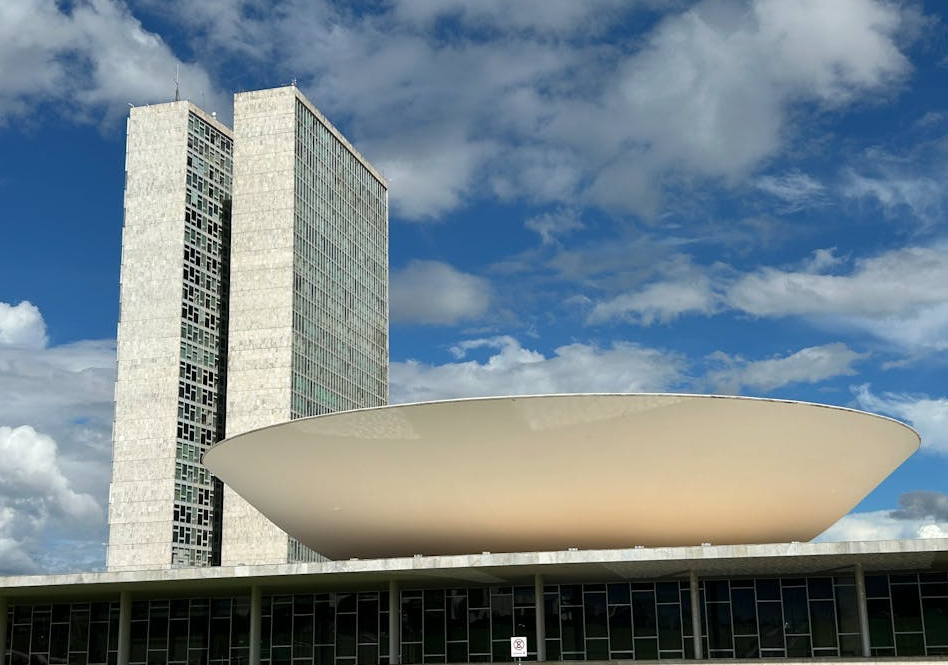
For a PEC to advance in the Chamber, 171 signatures are required. Erika Hilton exceeded this number and managed to gather 234 supports, an indication that the theme sparks interest and discussion among parliamentarians. Now, the deputy is preparing to discuss the proposal directly with the President of the Chamber, Hugo Motta (Republicanos), in search of advances in the legislative process.
Despite significant support, the proposal faces opposition from business sectors and center-right parliamentarians. The main argument against the PEC is the financial impact that the reduction of hours could generate for companies, especially those reliant on labor-intensive work.
Critics also argue that flexible hours should be negotiated directly between employers and workers, without constitutional imposition. However, the debate is far from being consensual, as countries like Germany and France have already adopted similar measures with positive results.
Vice President Geraldo Alckmin (PSB) has already spoken on the subject, highlighting that the global trend is to reduce working hours. However, the Palácio do Planalto has not yet made an official position on the PEC.
Impacts of Reducing Working Hours
According to InfoMoney, proponents of the proposal argue that reducing hours would bring direct advantages for workers, such as:
Less physical and mental strain;
More time for leisure and family bonding;
Increased productivity due to a more balanced work environment.
Experiments in companies worldwide indicate that well-rested workers are more efficient and make fewer mistakes. Finland and the United Kingdom have tested a four-day workweek with positive results, including employee satisfaction and improved mental health.
On the other hand, companies warn of the challenges of this change, such as:
Need to hire more labor to cover reduced hours;
Increased operational costs;
Possible impact on competitiveness, should other nations not adopt similar measures.
Many economists believe that transitioning to a shorter workweek should be done gradually and with tax incentives for companies that adopt the model.









-

Uma pessoa reagiu a isso.