





 Portuguese
  English
  Spanish
  3 min of reading
  0 comments


Ocean Battery System Promises to Revolutionize Offshore Energy Storage, Positioning Itself as the Best Available Solution
Renewable energy sources have proven to be extremely useful for the transition to a more sustainable energy model. However, the effectiveness of these sources is directly linked to the availability of efficient storage systems that can ensure the supply of energy when the sun doesn’t shine or the wind doesn’t blow.
The Ocean Battery emerges as an innovative solution in this scenario, offering an energy storage system inspired by the operation of hydroelectric dams, but with an underwater application.
How Energy Storage Works in the Ocean
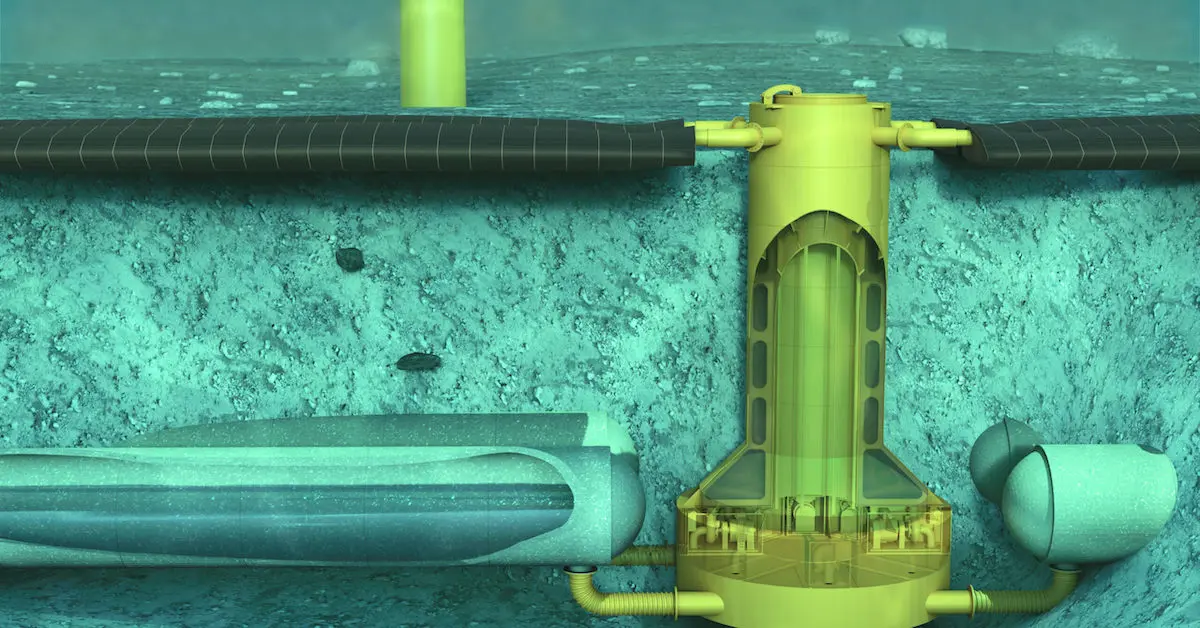
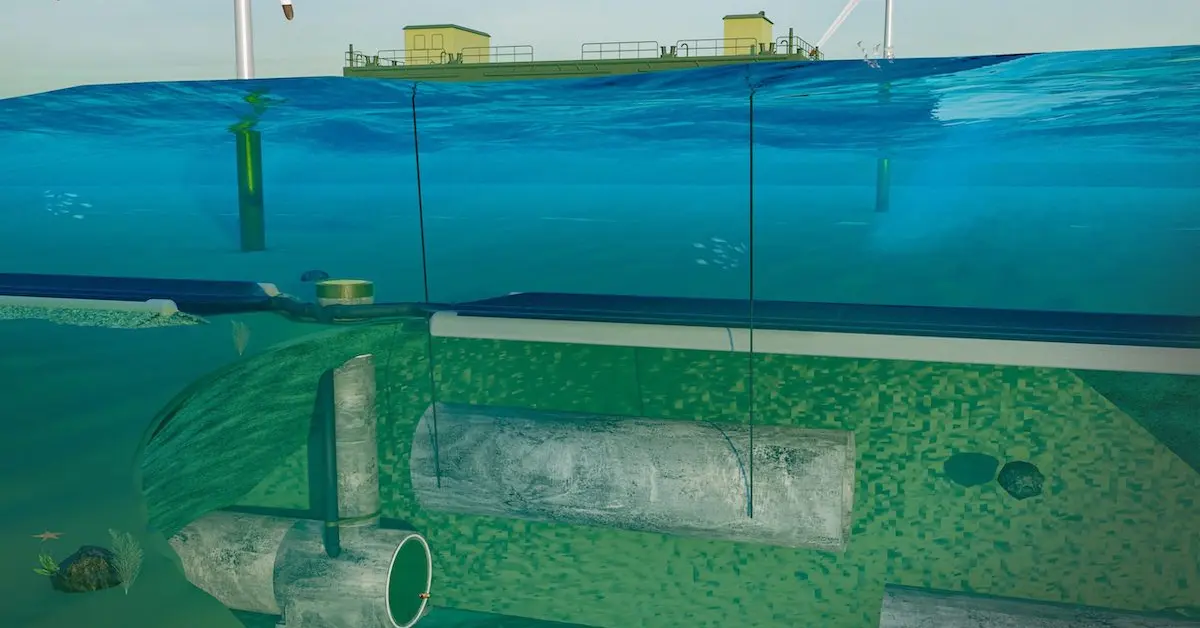
Developed by the Dutch startup Ocean Grazer, the Ocean Battery is designed to be installed on the sea floor, close to offshore renewable energy generators, such as wind turbines, floating solar farms, and tidal and wave energy systems. The system consists of three main components that operate together similarly to the mechanism of a hydroelectric dam.
-
Renewable energy advances over protected areas in Brazil, and a survey by the Energy Transition Observatory reveals silent impacts that challenge environmental conservation and pressure sensitive traditional territories.

-
Rio Grande do Sul accelerates energy transition: State invests in renewable technologies and consolidates decarbonization strategies and pathways to attract billions in new industrial investments.

-
With 160,000 m² of collectors, an area larger than 20 football fields, Silkeborg, in Denmark, hosts a solar thermal plant that heats 19,500 homes and could become the largest solar heating plant in the world.

-
A study reveals the expansion of renewable energy procurement in Brazil and shows how companies are taking advantage of opportunities to reduce expenses, ensure energy efficiency, and strengthen strategic environmental commitments.


On the sea floor, a concrete reservoir is responsible for storing up to 20 million liters of freshwater under low pressure. This reservoir is connected to a flexible bladder, also located on the sea floor, through a system of pumps and turbines.
The energy storage process occurs when excess electricity generated by renewable sources is used to pump water from the reservoir to the bladder.
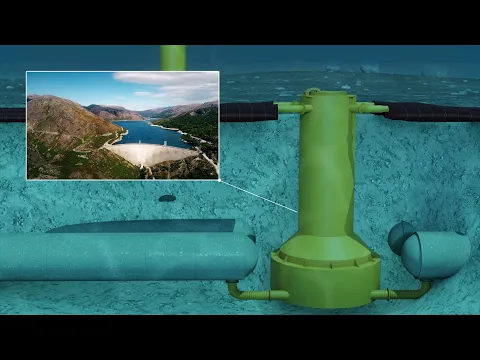
When energy is needed, the water, propelled by the natural pressure of the seawater, is released back to the reservoir, activating turbines along the way that generate electricity to be fed into the grid. Watch the video below.

Energy Efficiency of the Ocean Battery
The team behind Ocean Grazer claims that the system achieves an efficiency of 70 to 80%, being capable of performing an unlimited number of cycles over a lifespan that can exceed 20 years. Furthermore, the Ocean Battery is highly scalable: each concrete reservoir has a capacity of 10 MWh, and adding more units allows increasing the total capacity. If necessary, additional pumping and turbine units can be incorporated to increase energy production more rapidly.
Despite being promising, the concept of the Ocean Battery is not unique in the field of underwater energy storage. Similar projects have been explored by other initiatives, such as Subhydro, which proposed pumping seawater out of tanks on the ocean floor, releasing it back to generate power when needed.
Another example comes from MIT, which developed a concept based on hollow concrete spheres for energy storage. There are also approaches using buoyancy, where electricity is used to submerge balloon-like containers, which, when released, generate electricity.
These various projects indicate that there is no single ideal solution for renewable energy storage. Faced with a global challenge, it will be necessary to adopt a varied set of creative and innovative solutions to meet different demands and contexts.
Partnership Between Ocean Grazer and Stantec
Recently, Stantec announced its participation as a technical consultant in the development of the Ocean Battery project. The company, which offers technical knowledge and consulting, is collaborating with Ocean Grazer to create a modular and scalable solution for large-scale energy storage, integrating with renewable sources such as wind turbines and floating solar farms.
John Ord, director of energy business at Stantec in the UK and Ireland, emphasized the importance of innovation in the context of the transition to a low-carbon energy matrix. He stressed that, despite the great potential of offshore energy sources, efficient storage of this energy is essential to ensure its availability when and where it is most needed.
Ord highlighted: “Pioneering concepts like those of Ocean Grazer push the boundaries of what is possible. Having proper guidance on the complex aspects of technology and engineering is the best way to turn these ideas into reality.”









Seja o primeiro a reagir!