





 Portuguese
  English
  Spanish
  4 min of reading
  0 comments


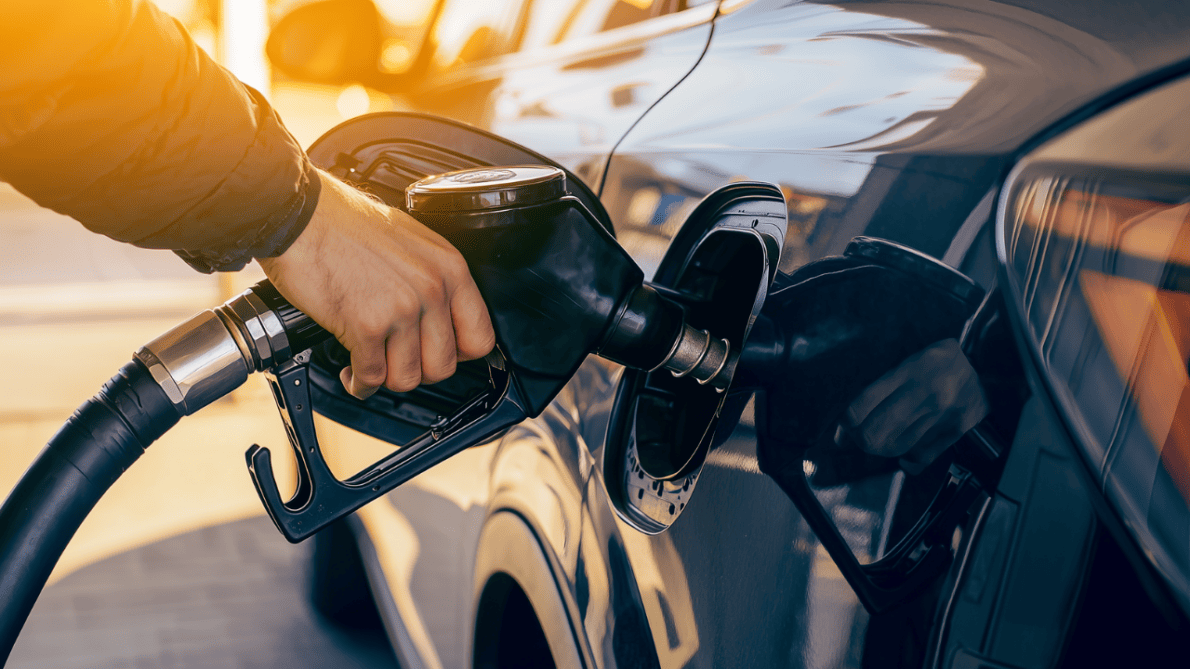
Understand How The Evolution Of Flex Fuel Engines Changes The Way To Choose Between Ethanol And Gasoline, Impacting Your Economy
The flex fuel car market, which allows the use of gasoline and alcohol, has undergone transformations in the last two decades, challenging drivers to reevaluate old concepts about fueling. With the advancement of flex engine technologies, the choice between fuel has become more complex and personalized.
The Evolution Of Flex Fuel Engines
Since their introduction, flex fuel engines have won the hearts of Brazilian consumers, becoming predominant in the automotive market.
These engines, which allow the simultaneous use of gasoline and ethanol, were developed to offer more versatility and convenience to drivers.
-
Honda performs miracles in fuel consumption with a hatch that marks 13.2 km/l in the city and 15 km/l on the highway, leaving Polo, HB20, 208, and Onix behind and becoming a reference among compact cars without resorting to turbo or hybrid systems.

-
China alone accounts for 70% of trade within the BRICS, while Brazil establishes itself as an essential supplier of food and minerals: understand how the group, which already represents nearly 40% of the world’s GDP, is changing the game.

-
Starting in May, those who do not have registered biometrics will not be able to apply for Bolsa Família, sickness benefits, or unemployment insurance: understand the new rule that changes access to benefits for millions of Brazilians.

-
Six diseases that seem common but can prevent the renewal of the driver’s license for the elderly throughout Brazil and surprise experienced drivers — could any of them affect you without showing clear signs?


Over the years, these engines have undergone various technological innovations that not only increased their efficiency and performance but also improved durability and performance under different operating conditions.
The popularity of ethanol in Brazil is also linked to environmental factors.
Ethanol is a renewable fuel, produced from sugarcane, and its use reduces the emission of polluting gases.
Additionally, the use of ethanol can help decrease dependence on oil, an important goal for the country’s sustainability.
Changes To The 70% Rule
Historically, the 70% rule was used as a reference for deciding whether a driver should opt for gasoline or alcohol.
This formula suggested that if the price of ethanol were lower than 70% of the price of gasoline, fueling with alcohol would be more advantageous.
However, with the new flex engines and their improved efficiency, this simplistic rule no longer applies.
The dynamics of the market and fluctuations in fuel prices make the analysis more complex, requiring drivers to be better informed.
How To Calculate The Best Fuel Option
To identify the most economical choice between gasoline and alcohol, drivers should consider the specific fuel consumption of their vehicles.
The Inmetro provides information on the average consumption of each type of fuel for different car models.
With this data, a simple arithmetic operation can help determine the maximum cost of ethanol that would justify its use instead of gasoline.
A practical example can help with understanding: If a car consumes 10 km/l with gasoline and 7 km/l with ethanol, and the price of gasoline is R$ 5.00 per liter, while ethanol costs R$ 3.50, we can calculate the cost per kilometer.
With gasoline, the cost is R$ 0.50 per km (R$ 5.00 / 10 km).
With ethanol, the cost is R$ 0.50 per km (R$ 3.50 / 7 km). In this case, both fuels have an equivalent cost, and the driver can decide based on other factors, such as personal preferences or vehicle performance.
The Role Of The Driver In Fueling Decision
With this change in scenario, the responsibility for choosing the fuel falls on the drivers.
It is essential that they pay attention to their vehicles’ performance and price variations at the pumps.
Moreover, drivers should consider other aspects, such as fuel quality, which can affect engine performance and consumption efficiency.
The decision between alcohol and gasoline goes beyond a fixed formula; it requires careful and informed evaluation by the consumer.
It is essential for drivers to make regular comparisons and be willing to adapt their fueling practices based on market conditions.
The Era Of The Flex Car And The Adaptation Of Gasoline And Alcohol Consumption Habits
With the continuous evolution of the flex car universe, consumption habits also need to adapt to this new reality.
Drivers must educate themselves and utilize the tools available to optimize fueling costs.
The choice of the appropriate fuel is not just a matter of preference, but a way to ensure savings and efficiency in vehicle use.
Furthermore, it is important for consumers to be aware of public policies that encourage the use of renewable fuels, such as ethanol.
The Brazilian government has implemented measures to favor the production and consumption of ethanol, which could positively impact the prices and availability of this fuel in the market.
The Future Of Fuels And The Impact On The Economy
As the world shifts towards a more sustainable energy matrix, the role of renewable fuels, such as ethanol, becomes increasingly relevant.
The evolution of flex engines and changes in consumption habits can contribute to a more sustainable future, where the combination of advanced technologies and renewable fuels results in reduced emissions of polluting gases and a greener economy.
In this new scenario, understanding the dynamics between gasoline and alcohol and changes in legislation and technology is crucial for consumers to make smarter and more economical choices when fueling their vehicles.
The revolution in fueling is not just a change in how to fill the tank but an opportunity to rethink mobility and sustainability in Brazil.
SOURCE: NEWSMOTOR








Seja o primeiro a reagir!