





 Portuguese
  English
  Spanish
  4 min of reading
  3 comments


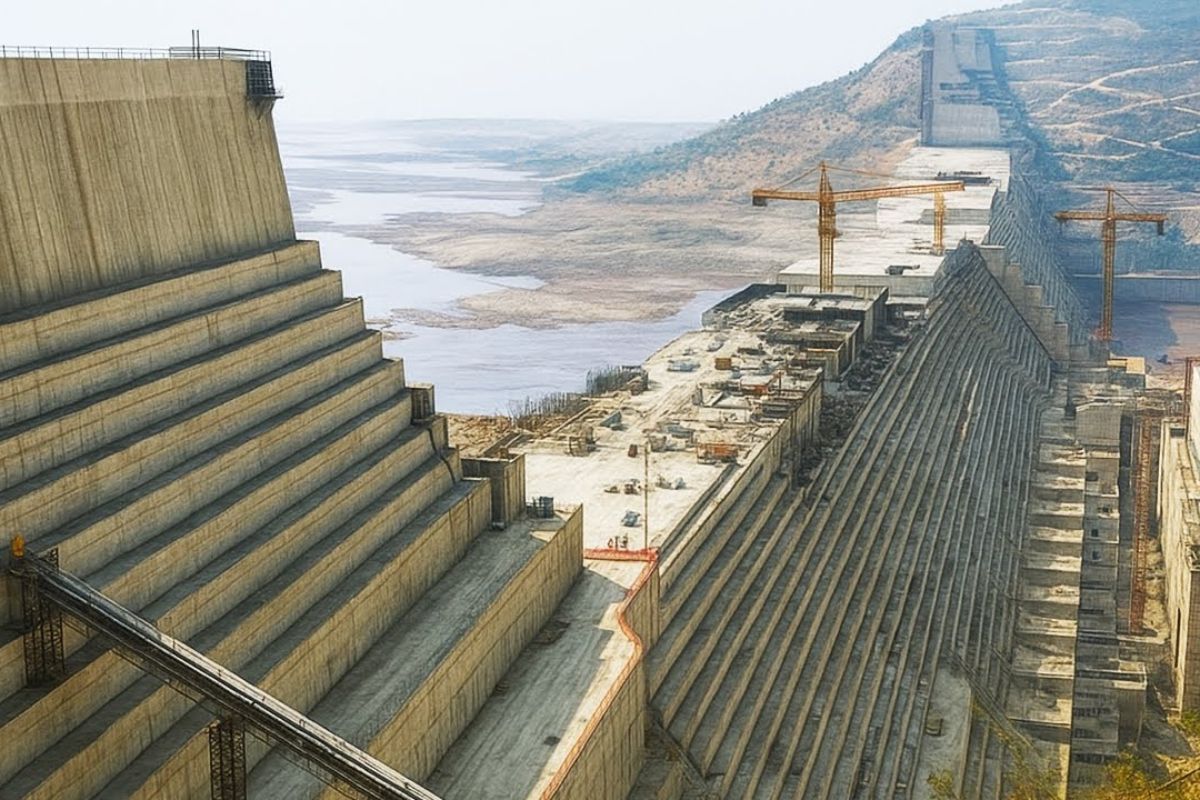


The Ethiopian Mega Dam on the Blue Nile, Budgeted at US$ 5 Billion, Repositions Ethiopia as a Regional Power Hub, Alters Balances Between Egypt and Sudan, and Exposes How a Single Reservoir of 74 Billion m³ Can Rewrite Water Geopolitics in Africa
The Ethiopian mega dam Grand Ethiopian Renaissance Dam was built on the Blue Nile, about 30 km from the border with Sudan, at a point that accounts for a significant portion of the flow downstream to Egypt. The project spans 1.8 km in length, stands 145 m tall, and has a reservoir capable of holding 74 billion m³, a volume that allows for modulating the flow for power generation and flood management.
With two power houses and 13 turbines planned, the installed capacity exceeds 5,000 MW, a level that doubles Ethiopia’s current electricity supply and creates exportable surpluses. The dam is already operating partially, and filling began in 2020, consolidating the reservoir as the new energy axis of Northeast Africa.
Where the Project Is Located and Why This Place Changes the Game
Located in western Ethiopia, the structure intercepts the Blue Nile, which accounts for over 80 percent of the volume heading to Sudan and Egypt.
-
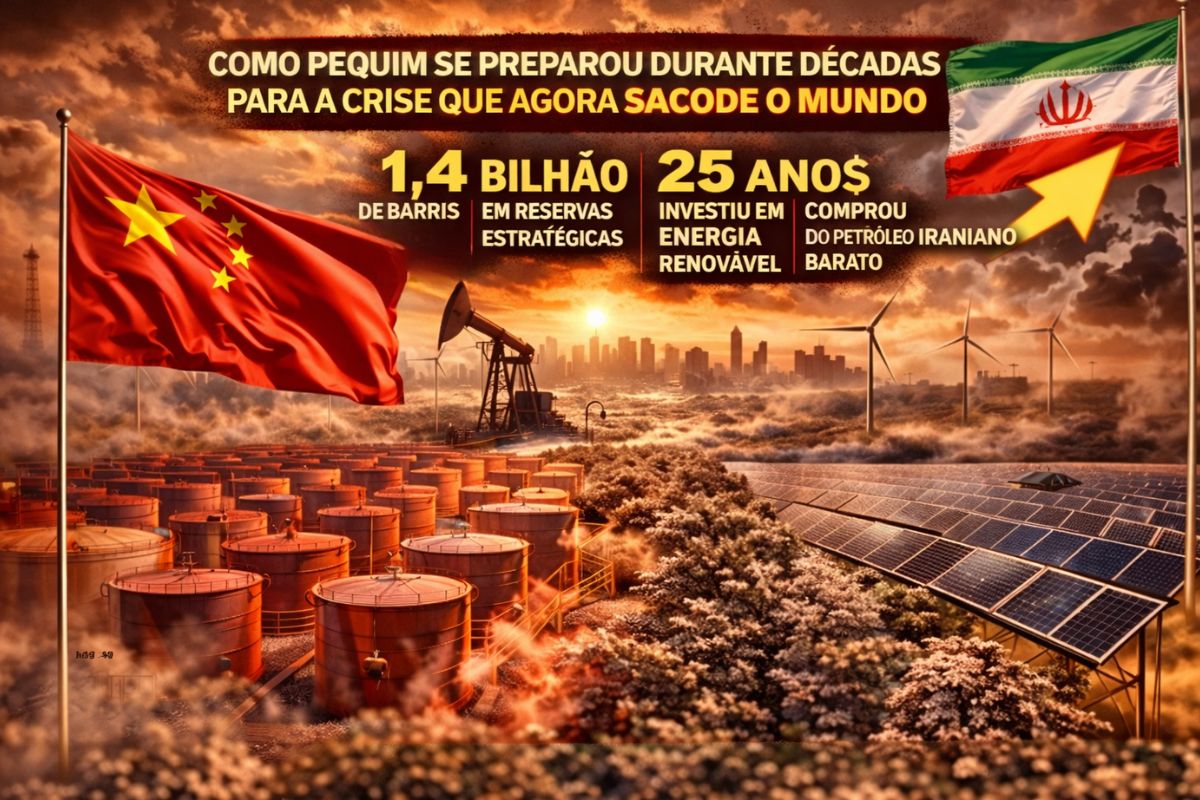
China has accumulated up to 1.4 billion barrels of oil in strategic reserves, invested 25 years in renewable energy, and purchased 80% of cheap Iranian oil: how Beijing has prepared for decades for the crisis that is now shaking the world.
-
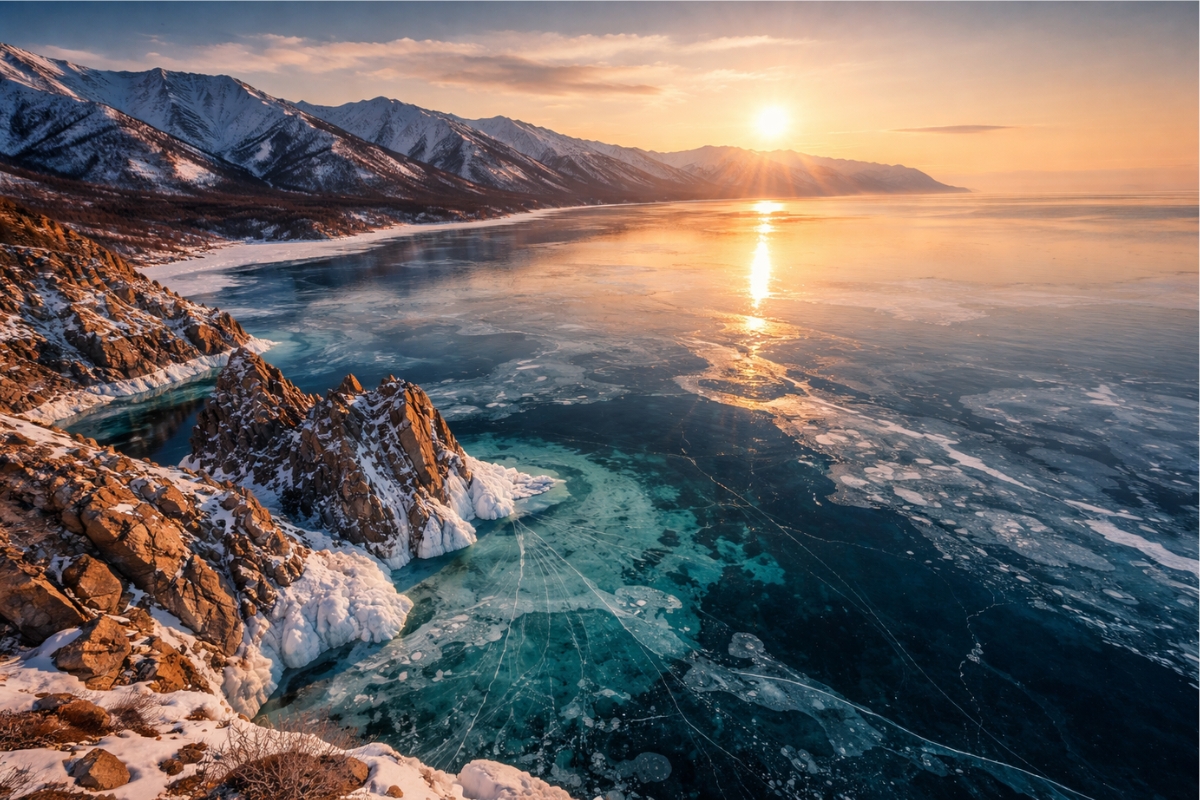
A single lake holds 20% of the planet’s non-frozen freshwater and is also the deepest and oldest on Earth.
-
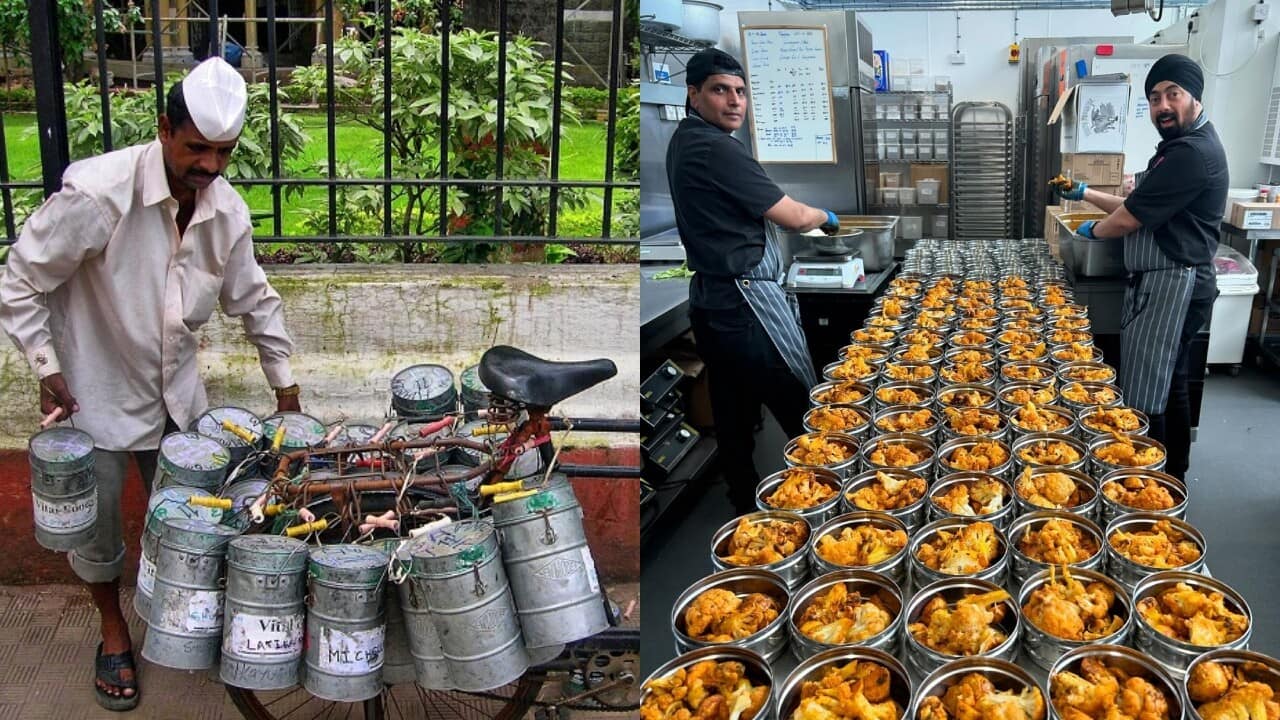
How 5,000 Indian dabbawalas manage to deliver around 200,000 lunchboxes a day in Mumbai for over 130 years using bicycles, crowded trains, and a manual system that continues to operate with impressive accuracy.
-
While restoring a historic mansion from 1910, a brick structure with an old turbine that generated energy from the Rio do Testo emerged, along with a hidden door and a rare floor concealed under layers of wax.

Controlling this stretch means directly influencing water security downstream, which explains the sensitive nature of each filling and operational decision.
The mountainous and rocky terrain was pivotal for a tall dam, with foundations anchored in the riverbed and auxiliary works such as spillways and dikes.
The geographical position combines engineering and strategy, allowing continuous generation while reorganizing the flood and dry seasons schedule.
How Much It Generates and How the Electric Power Is Structured
The plant houses two power houses with Francis turbines and a design intended to operate as a large reservoir.
More than 5,000 MW positions Ethiopia among the African leaders in hydropower capacity, with the potential to export energy to neighbors such as Sudan, Djibouti, and Kenya.
The logic is simple and powerful.
A large reservoir allows for seasonal regulation, smoothing out flood peaks and keeping turbines running for more hours in the year.
Economically, the country gains leverage for industrialization, rural electrification, and reduction of blackouts that still limit essential services.
Who Wins and Who Fears: The Perspective of Each Country
For Ethiopia, the Ethiopian mega dam represents sovereignty, dignity, and a leap in development primarily funded by internal resources.
Jobs, technical training, and national pride accompany the project that promises cheaper and more reliable energy.
For Egypt and Sudan, the debate is existential. 97 percent of the fresh water consumed in Egypt comes from the Nile, and flow variations can affect agriculture, cities, and social stability.
Sudan seeks benefits from flood regulation and energy, but also monitors operational and coordination risks.
Why the Issue Turned into a Historical and Legal Dispute
The tension has roots in old agreements, such as the 1959 division between Egypt and Sudan, which did not consider the upstream countries.
Ethiopia rejects fixed limits on water release, arguing that this violates its sovereignty and the flexibility needed for electrical operation.
Negotiation rounds alternate with impasse periods.
Technical studies indicate that transparent coordination reduces impacts, but political convergence is the real bottleneck.
The conflict is less hydraulic and more diplomatic, with risk perceptions varying according to harvest, drought, and internal security.
How the Operation of the Dam Can Affect the Flow of the Nile
The filling began in 2020 and progressed in stages.
Gradual filling strategies, associated with wet years, tend to minimize losses downstream, while drought periods require more coordination.
The key lies in the flood calendar, the operation curve, and communication protocols.
In a permanent regime, generation depends on the reservoir level and electrical demand, not just on natural flow.
Data transparency, seasonal forecasts, and operational triggers allow for agricultural planning in Egypt and Sudan while ensuring electrical revenue for Ethiopia.
What Changes in Energy, Logistics, and Regional Survival
With the Ethiopian mega dam, Ethiopia doubles its electricity supply and could become a export hub, integrating regional grids and reducing production costs.
This effect breaks down barriers to industrialization, expands access to energy for millions of people, and attracts investment.
For Egypt and Sudan, predictability of flow is synonymous with food on the table, jobs in the field, and urban functionality.
Without joint planning, any severe drought can trigger alarms.
With coordination, the system can even reduce flood damage and stabilize agriculture.
The Current State and Possible Next Steps
The construction is practically completed, with partial generation already started and an outlook for turbine activation advancement.
Satellite images show the water mirror consolidating, and the rocky foundation was sized for long-term durability.
From an institutional perspective, there is a lack of converting technical dialogue into a political agreement.
Data-sharing mechanisms, operation committees, and contingency plans are feasible steps to mitigate mistrust and convert the dam into a regional asset for water and energy security.
The Ethiopian mega dam could be a lever for development or a point of permanent friction, depending on governance.
In your view, what should be the priority: ensuring cheap energy for Ethiopia, shielding Egyptian agriculture with strict rules, or creating a flexible protocol that changes according to the hydrological year? Tell us in the comments which indicators should be publicly available in real time such as reservoir level, turbine flow, forecasted precipitation, and how you would balance energy, water, and food security in an agreement that everyone would accept.






A civilidade dos governantes fará a diferença! Nesse caso todos saem ganhando: Etiópia (energia) Egito e Sudão (Normalização da vazão do Nilo e da produção de alimentos através da Irrigação). Os envolvidos precisam se reunirem e acertar os ponteiros quanto as atribuições e custos de cada um, após a barragem pronta! … O Mundo agradece em forma de desenvolvimento regional! 👏👏👏
É um caso típico de quantificar os serviços prestados pelo sistema natural antes e depois da intervenção. Os novos quantitativos de benefícios seriam então rateados se possível, na mesma proporção quando da ausência do sistema. Há de se esperar que os benefícios aumentem a montante e a jusante da intervenção. Um empreendimento que não atenda esses requisitos não devem ser implementados até que haja acordos, sob risco de desestabilização política, onde todos perdem.
Eu acho que a energia tinha que vir de cima do sol e não do rio que se fragiliza no avançar do tempo.