





 Portuguese
  English
  Spanish
  3 min of reading
  0 comments


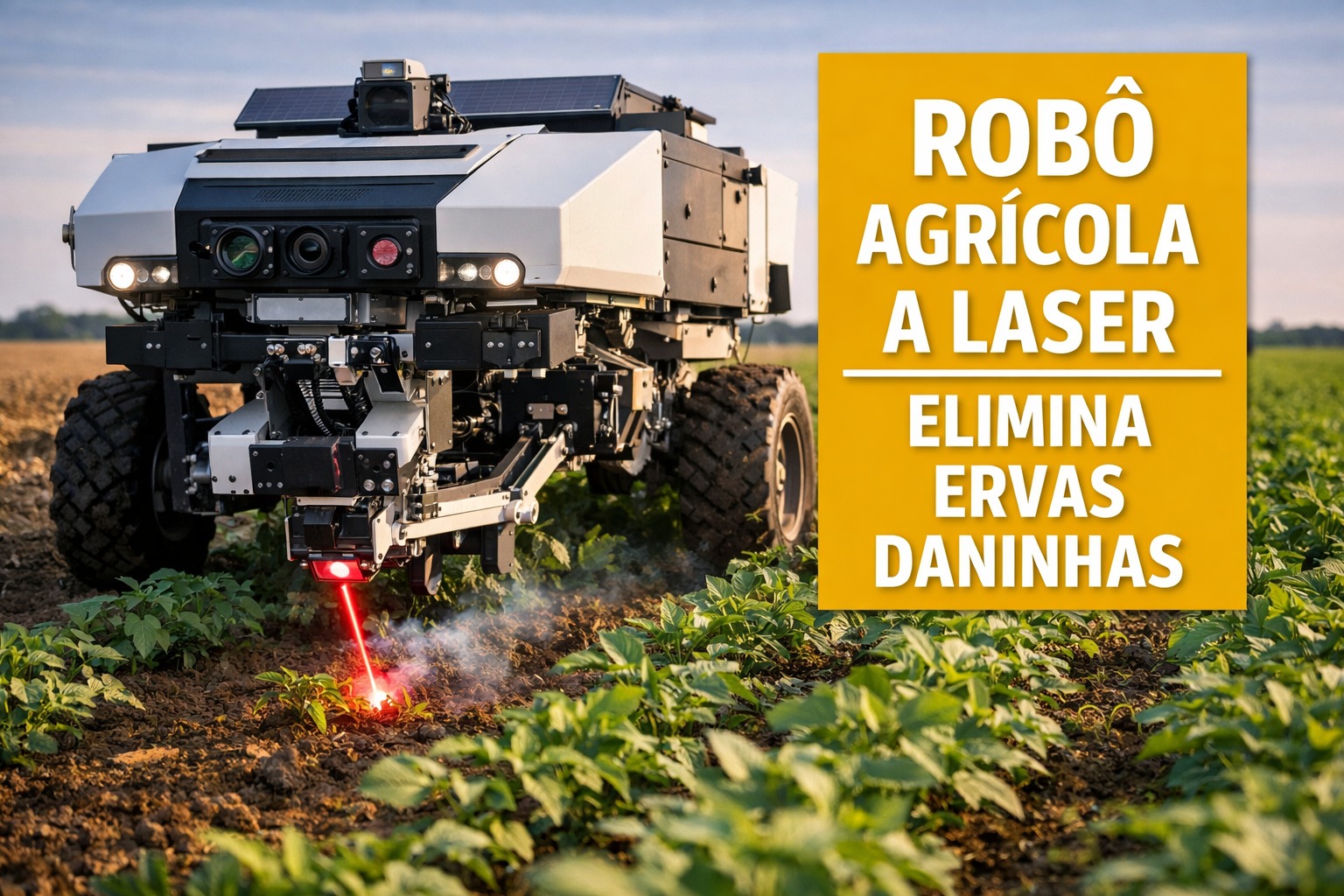
Advanced Agricultural Robots With Laser Technology Advance in Selective Control of Weeds, Reducing Herbicides, Preserving Soil and Water, Maintaining Productivity and Consolidating Automation as a Viable Alternative in Modern Agricultural Management
Automation in weed control is advancing from the lab to the field, with laser agricultural robots that reduce herbicides, maintain productivity, operate continuously, and respond to environmental, food, and water demands in crops, urban areas, and home gardens.
Advancement of Automation in Invasive Plant Management
Automation emerges as a concrete alternative to the intensive use of herbicides, replacing broad spraying with targeted interventions guided by intelligent systems and agricultural robotics.
Agricultural robots and embedded software allow for the identification and elimination of weeds without affecting the main crop, reducing chemical dependency and the associated environmental impact.
-
Motorola launched the Signature with a gold seal from DxOMark, tying with the iPhone 17 Pro in camera performance, Snapdragon 8 Gen 5 that surpassed 3 million in benchmarks, and a zoom that impresses even at night.

-
Satellites reveal beneath the Sahara a giant river buried for thousands of kilometers: study shows that the largest hot desert on the planet was once traversed by a river system comparable to the largest on Earth.

-
Scientists have captured something never seen in space: newly born stars are creating gigantic rings of light a thousand times larger than the distance between the Earth and the Sun, and this changes everything we knew about stellar birth.

-
Geologists find traces of a continent that disappeared 155 million years ago after separating from Australia and reveal that it did not sink, but broke into fragments scattered across Southeast Asia.

The proposal addresses growing concerns about residues in soil, water, and food, while maintaining operational efficiency and consistent productive results in the field.
Functioning of the Laser Weed Hunting Robot
The robot combines computer vision, sensors, and autonomous operation to differentiate cultivated plants from invasive ones with spatial precision in real time.
Cameras capture images of the soil and vegetation, processed by algorithms trained to recognize shape, color, texture, and typical patterns of unwanted species.
Upon identifying the weed, the system calculates the exact position and directs a high-precision laser beam to the vital point.
The localized thermal damage compromises the growth of the invasive plant, preventing widespread spraying and reducing persistent chemical residues in the environment.
Trials in greenhouses and experimental fields calibrate power, safety, and operational distance, ensuring effectiveness without risks to crops or the surroundings.
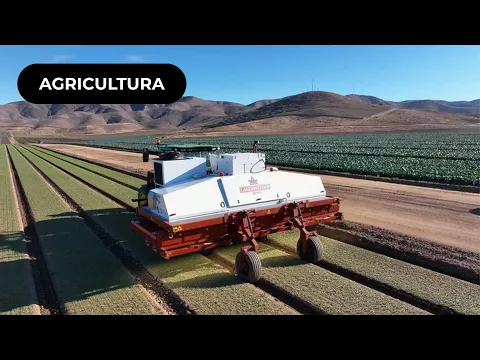

Continuous Operation and Application in Different Environments
In many models, the robot operates continuously, day and night, according to field conditions and established safety settings.
This capability enhances the efficiency of management in extensive crops, lawns, public parks, and home gardens with less human intervention.
The selective approach intervenes only where pests are present, promoting rational management and reducing the traffic of heavy machinery over the soil.
Environmental, Economic, and Operational Benefits
Laser control reduces the use of herbicides in productive and urban areas, preserving beneficial organisms and local biodiversity.
The reduction of chemical inputs contributes to water and soil quality, aligning with national and international environmental goals by 2030.
The automation of repetitive tasks reduces operational costs in the medium and long term, as well as increases the predictability of management.
The integration with precision agriculture strengthens data-driven decisions, connecting sensors, maps, and automated field routines.
Technical and Economic Challenges to Overcome
The high initial costs still limit adoption by small producers, requiring technical infrastructure and specific training for operation.
The trend points to price reductions with large-scale production and the maturation of the specialized agricultural robotics market.
Another challenge involves the learning curve of computer vision systems, which require robust regional databases.
Constant updates and testing in different climates, soils, and light conditions are necessary to maintain performance and safety of the laser.
Outlook for Agricultural Robots and Precision Agriculture
Startups and established companies are increasing investments to integrate laser robots with drones, soil sensors, and satellite monitoring.
This movement strengthens a connected ecosystem of precision agriculture, with continuous data collection and automatic adjustments of management.
The outlook includes robots of different sizes, greater automation of routines, and software platforms that continuously learn in the field.
As a precursor, the evolution of technology reinforces the transition from chemical practices to selective solutions, marking a structural change in agricultural management.






-

4 pessoas reagiram a isso.