





 Portuguese
  English
  Spanish
  6 min of reading
  1 comment


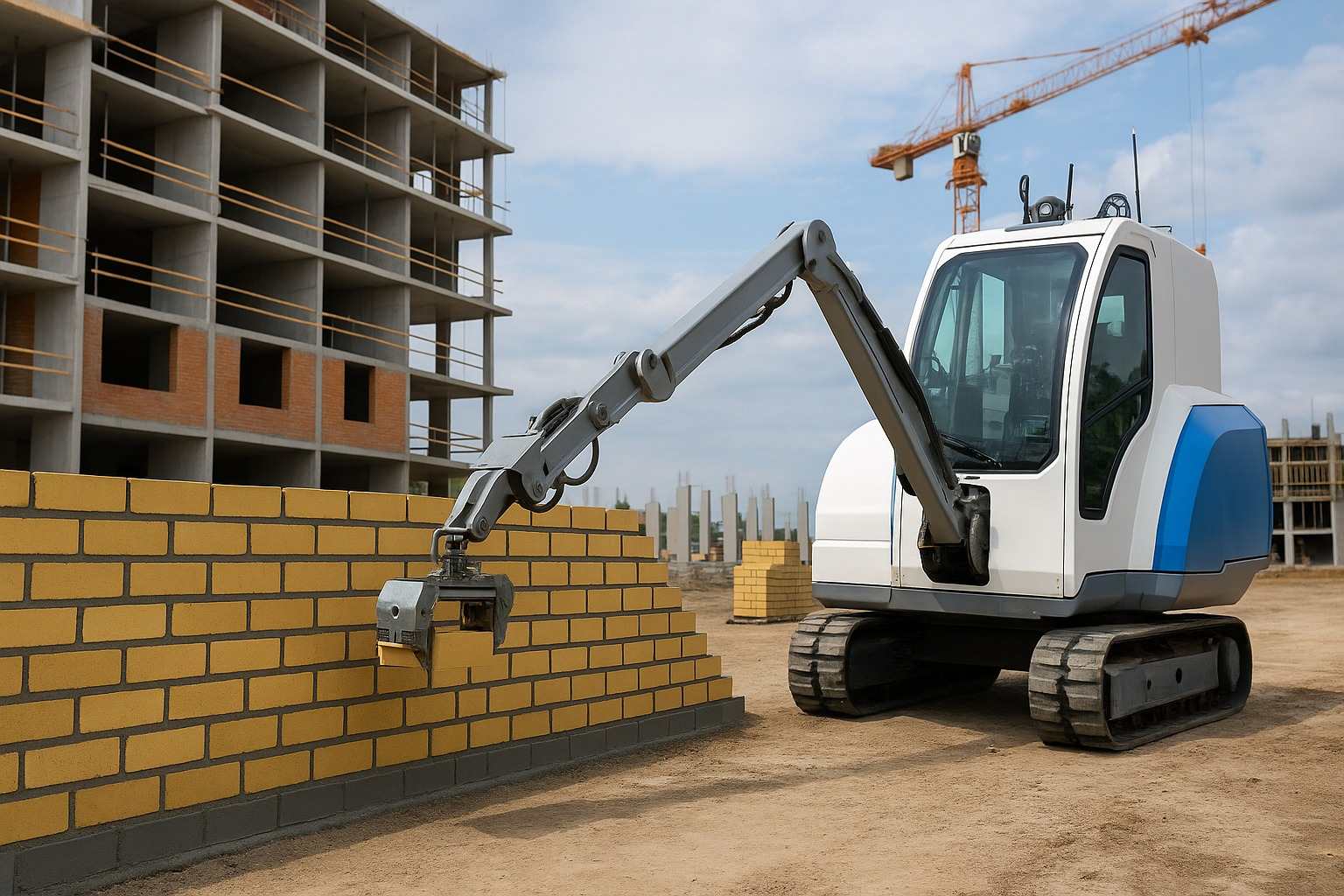


With Robot Arms Laying A Thousand Bricks An Hour And 3D Printers Building Entire Houses In Two Days, The Construction Industry Is In The Middle Of A Revolution. The Work Of Masons Is Changing Quickly And Could Be Dominated By Smart Machines
The construction industry is one of the most traditional sectors of the economy, with centuries-old methods passed down from generation to generation, helping to build houses and generate jobs.
Still, the pressure for productivity, safety, sustainability, and a shortage of skilled labor has forced an accelerated transformation.
In this context, robotic technologies, artificial intelligence (AI), 3D printing, and digital integration are converging to profoundly change the role of masons.
-
While the world looks at oil, the war with Iran is already disrupting helium supply from Qatar, affecting car and iPhone chips, threatening AI expansion, and putting pressure on aluminum packaging at the highest value in four years.

-
Global warming will expose a treasure hidden under the ice of Antarctica and may spark an international dispute over gold and valuable minerals.

-
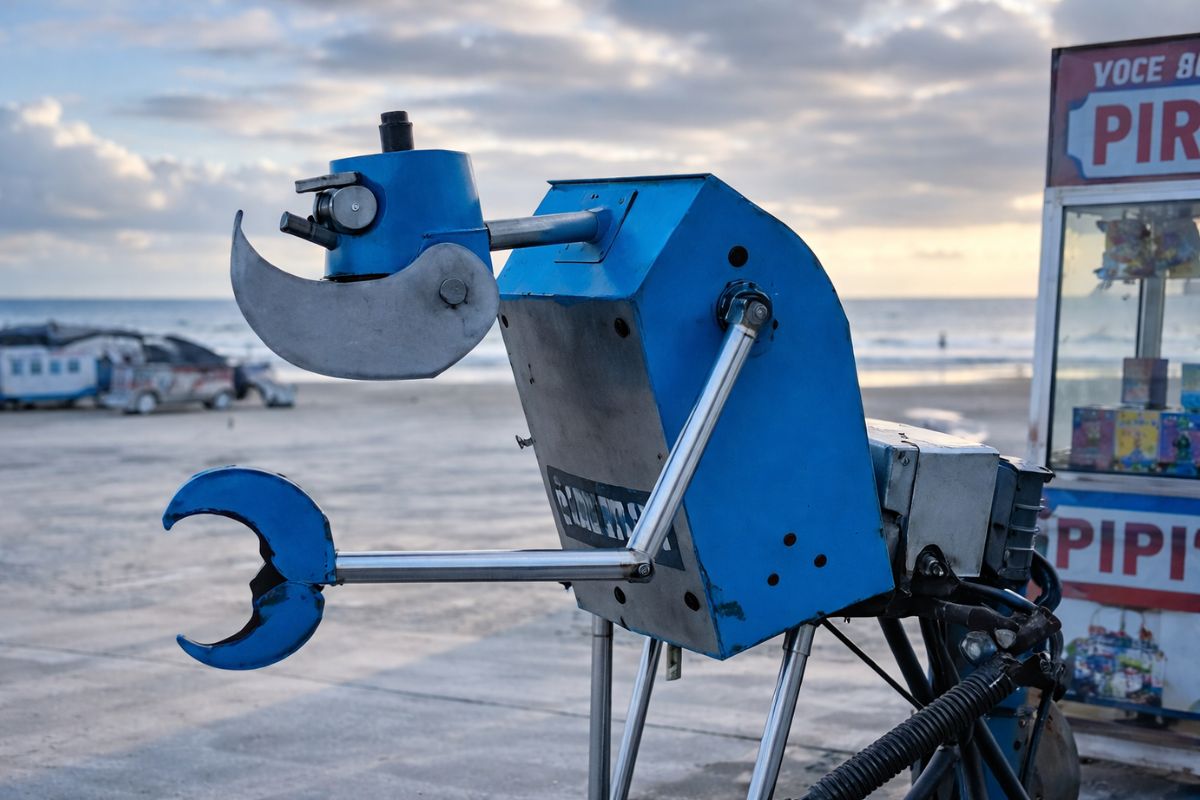
A street vendor from Praia Grande built a robot made of scrap from scooters and washing machines that pulls his popcorn cart on the beach, emits sounds, and interacts with customers, becoming an attraction on the coast of São Paulo.
-
The specifications of the Xiaomi 18 Pro Max have been leaked, and the highlight is a dual 200 MP camera with a new 22-nanometer technology that promises to consume less energy and capture details in shadows and bright areas using LOFIC HDR.


Several recent studies and practical cases have already shown that tasks that were previously exclusively human are beginning to be taken over by robots—not necessarily to eliminate the worker, but to redesign their functions.
Research Overview: What The State Of The Art Reveals
A 2024 study titled “Substitution of Workforce with Robotics in The Construction” examines variables that affect human efficiency and productivity after the adoption of robots in construction.
This study concludes that, under suitable conditions (modular design, strict tolerances, repetitiveness), automation can generate significant gains and occupy part of the space currently held by human masons.
The article warns that not all tasks are equally substitutable: functions that require improvisation, adaptation, or complex judgment will still have limitations for automation. However, repetitive and standardized activities are strong candidates for substitution.
Theoretical Pillar: BIM, Human-Robot Collaboration, and Machine Learning
Another recent study, “Exploring Three Pillars of Construction Robotics Via Dual …” (2024), identifies three central pillars for robotic construction: BIM (Building Information Modeling), human-robot collaboration (Human-Robot Collaboration, HRC), and Deep Reinforcement Learning (DRL).
These three elements, combined, allow robots to digitally understand the project, collaborate with humans, and adapt their actions through continuous learning.
The study “The Role of AI in On-Site Construction Robotics” (2025) organizes the evolution of robots on-site according to the “Sense-Think-Act” framework.
The survey shows that autonomous systems have reduced repetitive work by 25% to 90% and decreased exposure to risks by up to 72%, depending on the type of task.
The scientific production on robotics in construction grew by about 320% between 2015 and 2022, focusing on autonomous navigation, human-robot interaction, and sustainable automation. China and the United States lead these studies.
These results form a conceptual framework: it is not just about hardware (robots), but about software, digital integration, adaptive collaboration, and environmental perception.
Practical Examples and Real Cases
HP SitePrint: Robot That “Prints” The Layout On The Floor Of The Construction Site
One of the most tangible and publicized cases is the HP SitePrint, a robot that reads 2D plans and executes precise markings on the floor of the site (lines, points, text) to guide the infrastructure for walls, piping, electrical installations, etc.
It operates attached to a Total Robotic Station and can achieve precision of up to ±2 mm (≈ ±3/32 in) in layout and ±0.8 mm in floor deviation.
Moreover, HP claims that SitePrint can deliver up to 10× productivity gains in layout marking, reducing errors and rework.
In a real application, at the Penn Station project (New York), SitePrint was used to accelerate internal markings for walls and ducts, with good acceptance on-site.
This type of robot does not “lay bricks,” but replaces a step normally performed by masons and technicians: manual marking with chalk, measuring tape, or leveling. It delegates delicate and repetitive tasks to the machine, freeing humans for supervisory or specialized execution roles.
Structural Fixations With Dual-Arm Robot
An interesting technical case is the study “Dual-Arm Construction Robot for Automatic Fixation …” (2024), which proposes a robot with two arms that positions and fixes structural components onto concrete surfaces, even in tight spaces.
Tests have shown that the modular system can be transported in parts, handling reactive forces during fixation and operating autonomously in tasks that were previously manual and require heavy effort. This demonstrates how parts of structural assembly can be automated, shifting some of the work from traditional masons.
Human-Centered Companion Robots
While much is said about replacing labor, some research emphasizes collaboration. “Towards Human-Centered Construction Robotics: A Reinforcement Learning-Driven Companion Robot …” (2024) proposes a “companion” robot that assists carpentry workers, adapting to the context and collaborating in the stages where humans require support.
This hybrid approach (robot + human) shows another path: not all replacement will be abrupt. In many cases, the robot will be an assistant or physical extension of the worker, especially in the early moments of transition.
Barriers and Challenges That Limit Complete Substitution
Despite significant advances, there are technical, economic, and organizational obstacles that delay the full occupation of human spaces:
- Unpredictable and Disorderly Environment
Construction sites are dynamic environments with dust, transient obstacles, variations in terrain, and continuous interference. Autonomous robots need robustness to handle unforeseen events. - Adaptation to Project Variability
Each construction is distinct in shapes, tolerances, and architectural demands. Robots need versatility to change tasks and material types quickly. - Implementation Cost and Return on Investment (ROI)
Investing in robots involves high initial costs (machines, sensors, digital integration). The return depends on scale, project repetitiveness, and long-term savings. - Digital Integration and Standardization
Automation depends on precise BIM models, interoperability between systems, and fluid data exchange between office and job site. In many sites, this infrastructure is still rudimentary. - Social Acceptance and Training
The transition requires masons to shift their profile to that of operator, programmer, or robot supervisor. This demands training, cultural change, and acceptance in the sector. - Safety and Reliability
Robot errors or failures can create structural risks, accidents, and damages. Autonomous systems must have safe fallback and monitoring mechanisms.
The New Role of Masons in The Automated Scenario
With the advancement of the described automations, the traditional masonry professional will see their role transformed:
- Robot Operator/Pilot: Many masons will transition to roles controlling, monitoring and adjusting robotic systems.
- Supervisor of Critical Tasks: There will still be a human need in the more delicate or unique moments of the construction.
- BIM System Integration and Digital Execution: The worker of the future will be fluent in reading digital models, coordinating with job site software, and calibrating robots.
- Preventive Maintenance and Calibration: Machines require lubrication, part replacement, and parameter adjustments—functions that can be fulfilled by specialists from construction.
Therefore, it is not just “replacement,” but a professional metamorphosis.
Prospective Vision: How Much Of This Space Can Robots Take?
Analyzing trends and cases:
- Highly repetitive tasks, leveling, marking, and layout are already automated today with robots like HP SitePrint.
- Fixed structural components (with dual-arm automation) are starting to be tested in controlled environments.
- Robotic vision and coordination systems (multiple robots) are on the immediate horizon, helping robots to “see and react” as a team.
- 3D printing in concrete represents a more dramatic leap: in it, the very “wall laying” is transferred from the mason to the machine.
- With the evolution of cost-benefit and scalability, masonry robots could become economically viable in residential constructions, not just industrial ones.
In an optimistic scenario, a significant portion—perhaps 30% to 60%—of masonry and assembly work could be under automation in the next 10 to 20 years, especially in standardized constructions (repeated buildings, modular housing, modular infrastructure).
However, fine functions, unforeseen interventions, and artistic or esoteric aspects will likely remain under human control for longer.
The future of the construction industry will be hybrid: robots and humans will work together, with a clear division of tasks. Recent studies show that the occupation of spaces currently belonging to masons is already underway—especially in repetitive phases, marking, fixing, and coordination.
Concrete cases such as HP SitePrint, structural fixation systems with dual-arm robots, and visual coordination between robots demonstrate that technologies that recently seemed like fiction are already operational or in advanced testing stages.
Complete replacement is unlikely in the short term, but the transformation of the professional profile is inevitable. Masons will cease to be mere “hands-on workers” to become operators, technologists, and integrators of automated systems.
If you want, I can compose a translated (or adapted to Brazil) dossier with graphs, productivity data, and local forecasts for direct use in your writing. Would you like me to put that together for you?








“Se quiser, posso compor um dossiê traduzido (ou adaptado ao Brasil) com gráficos, dados de produtividade e previsões locais para uso direto em sua redação. Você quer que eu monte isso para você?” Os caras nem leem o resultado da IA, kkkkk