





 Portuguese
  English
  Spanish
 4 min of reading
  2 comments


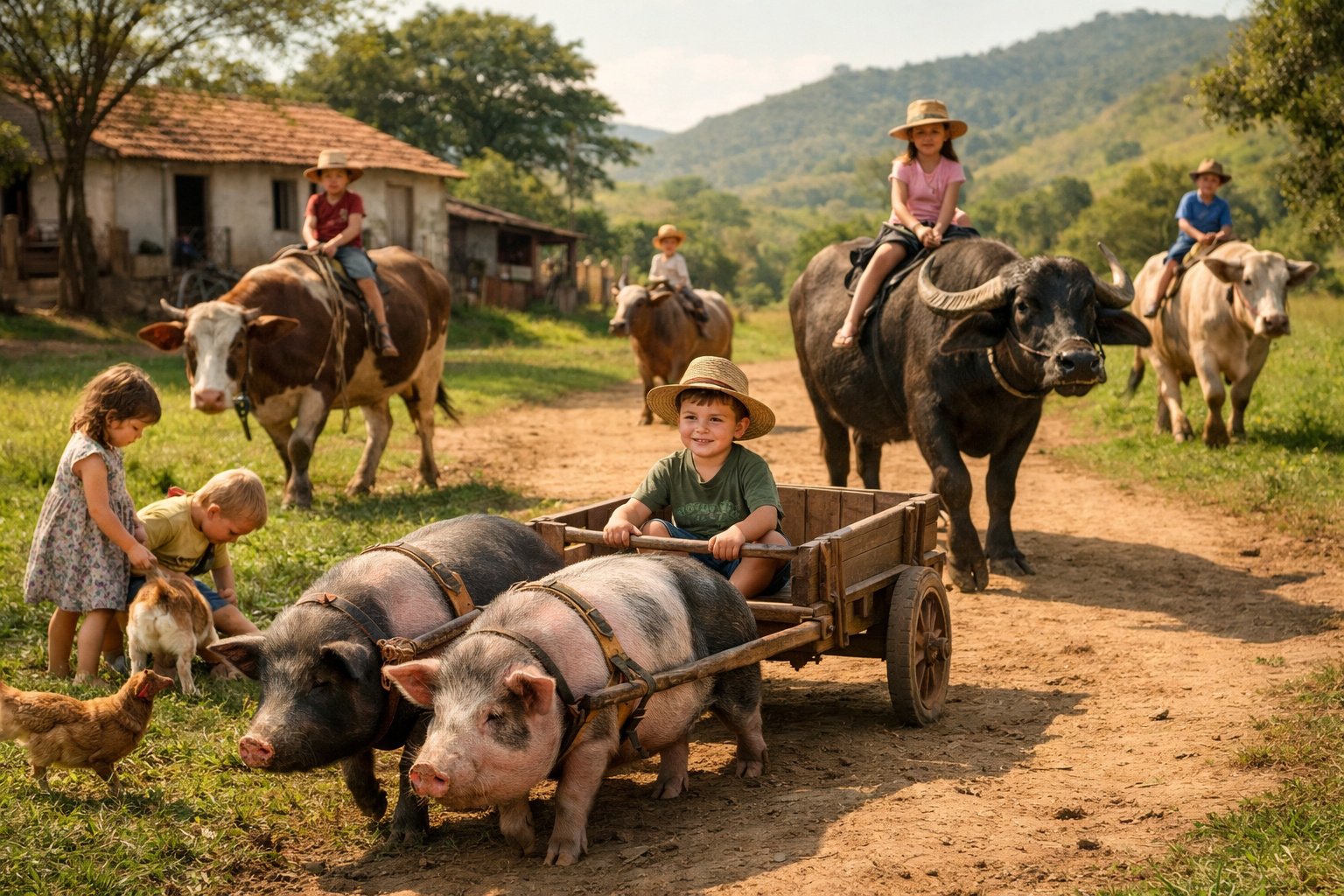


Farm in Poço Fundo, in Southern Minas Gerais, Attracts Attention by Displaying a Rare Coexistence Among Large Animals, Children, and Residents in a Setting That Blends Simplicity, Affection, Rural Tradition, and a Routine That Touches Those Who Watch
In a time marked by haste, violence, and a distancing between humans and nature, a small farm in the interior of Minas Gerais has been catching the attention of Brazil and the world. Located in the municipality of Poço Fundo, in the southern part of the state, the site has become popularly known as the “farm where Noah released the animals”, directly referring to the impressive diversity of species living together in total harmony. Cattle, buffalo, pigs, donkeys, chickens, dogs, and children share the same space in a gentle, calm, and, above all, respectful manner.
This information was initially shared in videos published on social media and video platforms, which quickly reached millions of views, turning the farm into a true national phenomenon. According to records made on site, what stands out is not just the number of animals, but the level of gentleness and the trust built between them and the owner, known as Vino, a 65-year-old farmer, born and raised on the farm.
The Farm Where Noah Released the Animals and the Love That Transforms Coexistence

First of all, it is important to understand that the farm’s differential is not in sophisticated techniques or modern investments, but in something increasingly rare: love, patience, and daily coexistence. On site, large animals walk freely among people, pass under each other’s legs, enter the house, roam around the kitchen with the wood stove burning, and obey simple commands like sit, lie down, or approach calmly.
-
Friends have been building a small “town” for 30 years to grow old together, with compact houses, a common area, nature surrounding it, and a collective life project designed for friendship, coexistence, and simplicity.

-
This small town in Germany created its own currency 24 years ago, today it circulates millions per year, is accepted in over 300 stores, and the German government allowed all of this to happen under one condition.

-
Curitiba is shrinking and is expected to lose 97,000 residents by 2050, while inland cities in Paraná such as Sarandi, Araucária, and Toledo are experiencing accelerated growth that is changing the entire state’s map.

-
Tourists were poisoned on Everest in a million-dollar fraud scheme involving helicopters that diverted over $19 million and shocked international authorities.


Moreover, oxen like Dourado and Baiano draw attention for their large size and, at the same time, for their extremely gentle behavior. Children climb on the animals, walk around them, and interact without any signs of aggression. According to Vino, this gentleness is not taught through violence, but built with affection from a young age. “I have never hit any animal,” the producer reports, explaining that trust is the result of years of continuous care.
As a result, the scene reminds many visitors and internet users of a real-life version of the biblical episode of the Ark of Noah, where different species coexist in balance. This comparison, although symbolic, reinforces the emotional impact caused by the images and the routine recorded on site.
Gentleness, Impressive Numbers, and a Rare Routine in the Minas Gerais Farm

While it wows, the farm also impresses with its numbers. According to recorded accounts, there are over 200 chickens, dozens of pigs, cattle, buffalo, donkeys, and dairy cows. Milk production is an essential part of the routine: some cows produce about 5 liters per milking, enough to supply the family, visitors, children, and even the animals themselves, like pigs that nurse directly from the cow.
Additionally, the milk consumed is 100% natural, with no use of chemical medications or industrial vaccines. As explained by the producer, care is taken with natural remedies, such as tobacco and wild herbs, a traditional practice in the Minas Gerais farm. This choice reinforces the idea of healthier food and strengthens the connection between the countryside, food, and well-being.
Another notable point is the varied diet of the animals. Pigs and cattle consume everything from corn and natural scraps to unusual foods like pasta, cookies, and even popsicles, which surprises onlookers. Despite the curiosity, what stands out is the abundance and constant care, reflected in the animals’ healthy state and good development.
Tradition, Solidarity, and the Social Impact That Goes Beyond the Farm

More than just a space for coexistence between humans and animals, the farm has also become a social support point. Part of the recorded routine involves collecting cans, selling popsicles, and donations directed to the Association of Parents and Friends of Children with Disabilities in Poço Fundo. According to reports presented in the video, the association currently serves about 140 children, many of whom have disabilities or are on the autism spectrum.
As explained, the costs of treatments such as physiotherapy can reach R$ 3,000 per month, an unfeasible amount for many families. Therefore, the work of fundraising and awareness has become a fundamental part of the farm’s visibility. The exposure on social media does not seek personal gain but aims to expand the reach of donations and sensitize viewers.
In this way, the so-called “farm where Noah released the animals” ceases to be just a curious setting and transforms into a symbol of empathy, care, and solidarity, demonstrating that the simple life in the countryside still carries values capable of touching people of all ages.
Source: Jean in the Farm









Parabéns!!! Continue assim. Deus agradece a harmonia
Parabéns amigos do sítio esse é um exemplo de armonia e como preservar esse presente que Deus criou e deixou para nos se todos tivessem essa atitude viveríamos num mundo bem melhor continuem assim e Deus continuará vos recompensando em tudo