





 Portuguese
  English
  Spanish
  6 min of reading
  0 comments


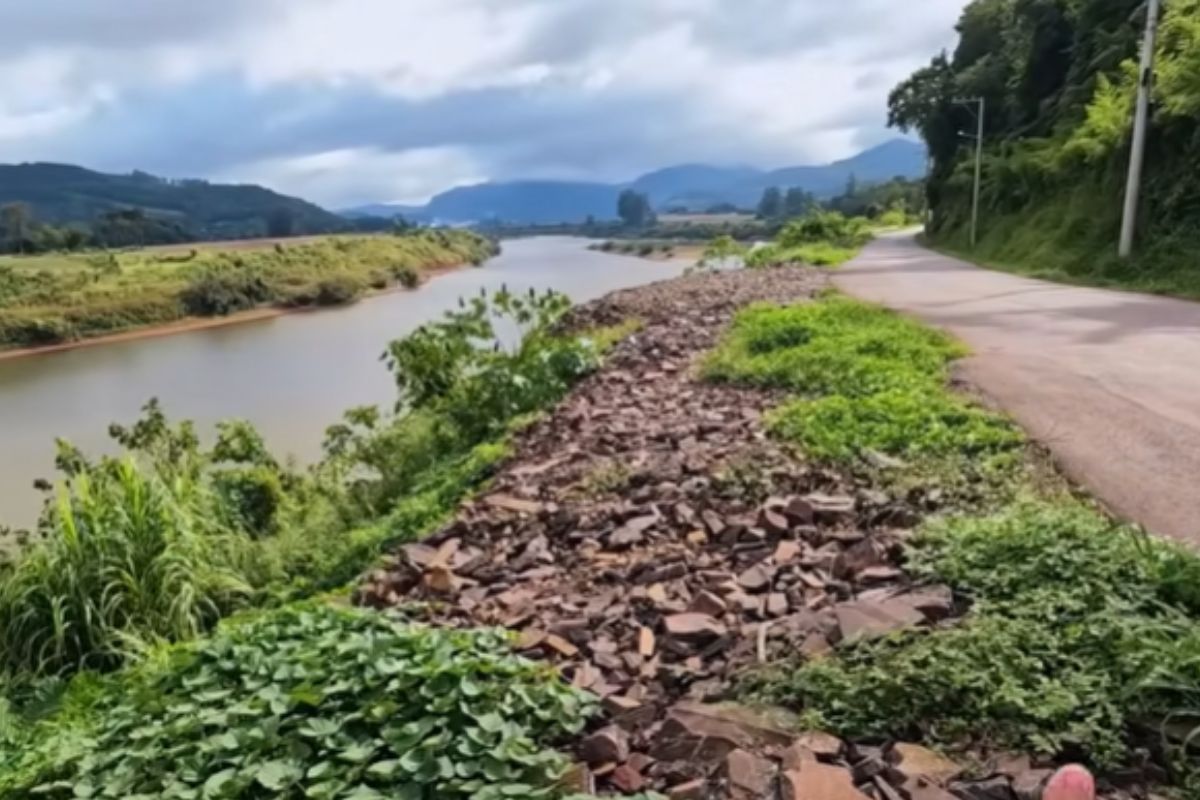
The flood of 2024 turned streets into rivers, destroyed more than 100 houses, and left Roca Sales with marks that still stand out, even after the partial reconstruction of the center and the return of part of the routine.
The flood remains visible in Roca Sales not only in the memories of those who lived through the days of water and mud but also in the abandoned houses, empty lots, makeshift structures, and the new high bridge being built to try to improve water passage and reduce the risk of another disaster.
Less than a year after the largest recent climate tragedy in Rio Grande do Sul, the city still mixes reconstruction and open wounds. There are planted flowers, reorganized streets, and businesses resuming operations, but there are also destroyed properties, areas where the river swept everything away, and residents who continue to live temporarily.
Walking through the center and the most affected areas, the feeling is that the flood hasn’t truly passed. It left the surface, but it remained in the landscape, in rental prices, in decisions about where to live, and in the fear that the water will return to occupy the same paths.
-
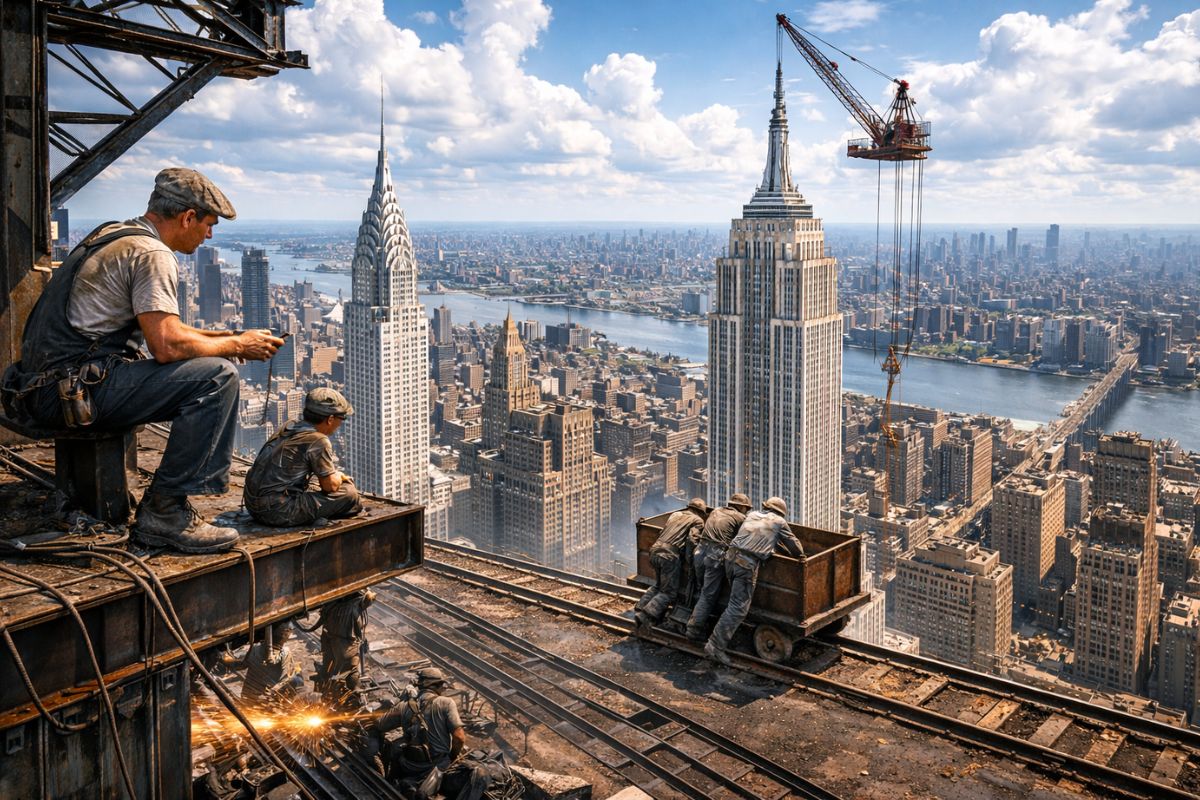
102 stories in 13 and a half months during the worst crisis in the U.S.: how the Empire State beat the Chrysler, used Mohawk workers and trains, gained a spire, and became a scene in King Kong.
-
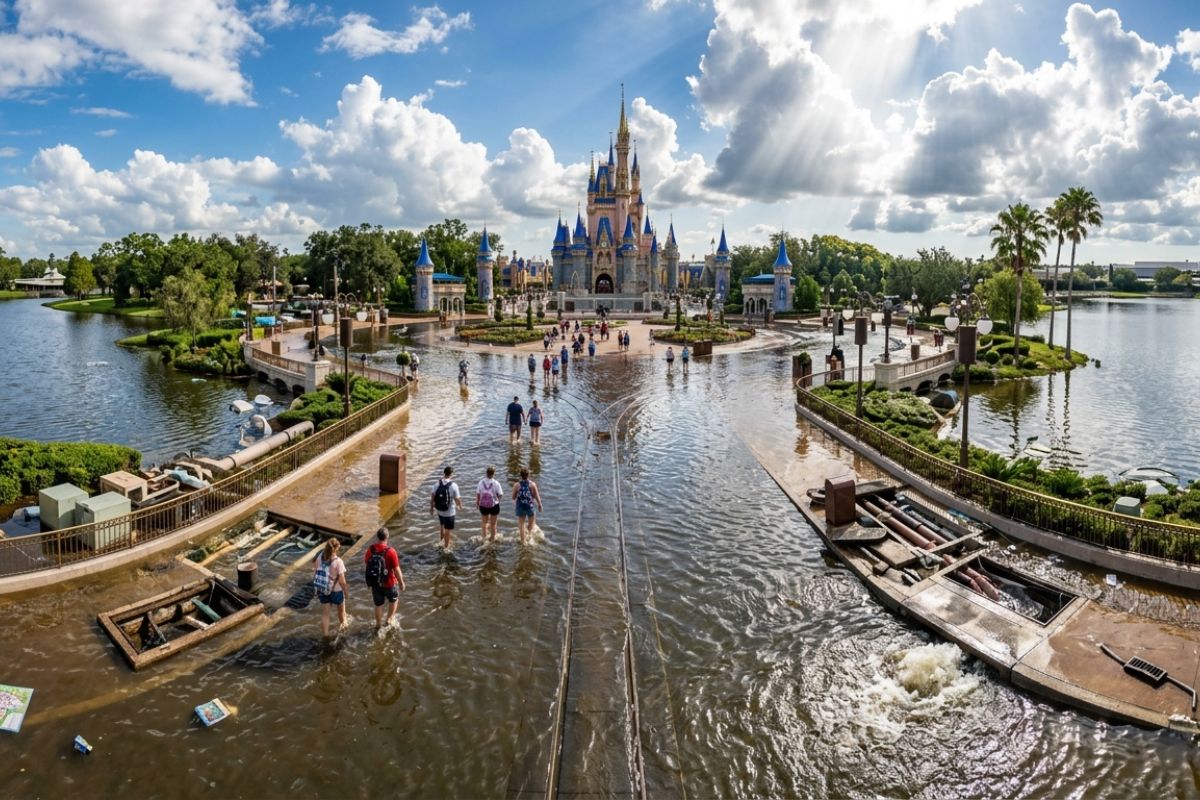
Disney spent $25 billion to tame the swamp, but the Magic Kingdom floods with knee-deep water: tunnels, pipes, and giant lakes exist, but the drains get clogged in the right storm.
-
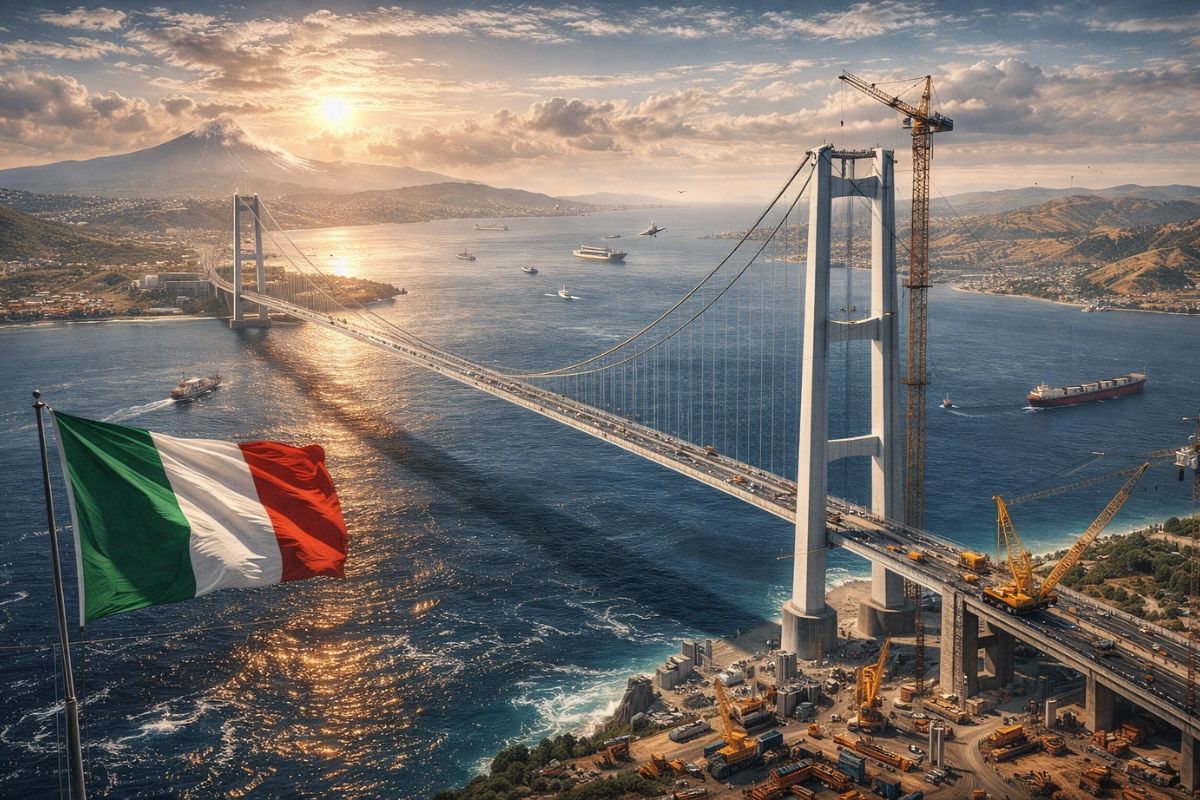
Italy is spending 16 billion dollars to build the largest suspension bridge in the world right over two active geological faults where monsters from Greek mythology had already warned about the dangers of the Strait of Messina.
-
Small house with natural light becomes a trend in sustainable architecture and shows how smart designs reduce energy consumption and enhance comfort in compact spaces.

Flood turned the city into a scene of water and mud

The account shows that, at the height of the tragedy, many parts of Roca Sales were completely submerged. In some places, only higher parts of the landscape were visible, while entire streets disappeared under the water.
In the city center, the scene that followed was one of mud, destruction, and difficulty even to walk. The sides of the roads became impassable, cars passed through only a few points, and the flood rewrote the visual layout of the city, as if the river had invaded every available space.
Streets turned into rivers in the middle of Roca Sales
One of the most striking images described in the video is that of the train track that crosses the city center. The place, which normally marks passage and urban reference, became a true river during the tragedy.
This section helps to gauge the force of the water. The flood not only occupied the streets but altered the very logic of urban circulation, invading areas that were normally seen as solid and recognizable. Instead of asphalt or cobblestone streets, what was seen was a current flowing through the city.
More than 100 houses were destroyed

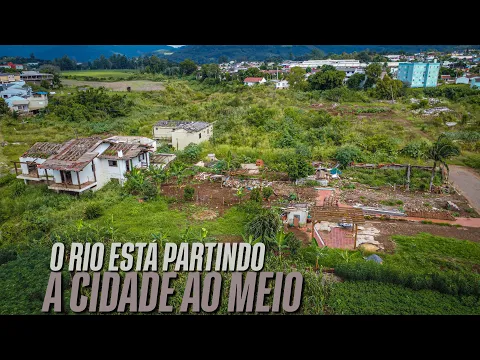
Among the heaviest impacts of the flood is the loss of housing. According to the account gathered along the way, the city had more than 100 houses destroyed, with entire areas completely swept away by the water.
In one of the sections shown, the reference is even harsher: in a specific area, 42 houses were completely swept away.
The city was marked by voids where there were once well-built houses, in addition to houses that remain standing but in a state of abandonment or without prospects for renovation.
The center was reorganized, but still carries improvisation and absence
Today, part of the center has already been redone. There are well-kept streets, planted flowers, a rebuilt bus stop, and points where the landscape seems organized again. Still, the improvisation is visible.
In several places, the reconstruction coexists with gaps. There are lots where no houses can be seen anymore, sections where only foundations remain, partially destroyed properties, and spaces that seem to be patched up just to allow life to move forward. The center has resumed functioning, but it has not returned to what it was.
High bridge tries to prevent new water bottlenecks

One of the main symbols of this adaptation attempt is the new bridge under construction in the city center. According to the account, there was previously a lower point, almost like a large drain, which ended up hindering the river’s flow.
Now, the proposal is to build a higher bridge to facilitate water passage in a future extreme episode. The project represents more than a road intervention. It shows that the city is trying to learn from the flood and reduce a bottleneck that may have worsened the disaster.
River left cliffs, erosion, and unrecognizable land

In addition to invading houses and businesses, the flood also deeply affected the soil. The video shows cliffs torn away, makeshift barriers with stones, and sections where the river completely altered the terrain’s configuration.
In some places, the impression is that the river may further reshape the area in the future. There are locations where the water opened a passage with such force that it seems to have left a new possible path within the city itself, feeding the fear that a future flood could cause even greater damage.
Commerce was also hit hard

The damage was not limited to housing. According to the account, supermarkets, gas stations, construction material stores, and appliance stores were affected by the flood.
The small town felt this in a concentrated way. At one point, the impression given is that practically no supermarket escaped and that all gas stations were hit.
When the flood attacks commerce en masse, it does not only destroy structures but also affects supply, employment, and the sense of normalcy.
Rentals changed and residents returned to risk areas
Another important effect of the flood appeared in the rental market. According to a resident cited in the video, prices rose sharply in areas where the water does not reach, while in risk regions, prices plummeted.
This created a perverse movement. Many people began to return to areas subject to new flooding because they can no longer afford rent in safer locations. The tragedy, in this case, does not end with the water’s departure. It continues to push families into difficult choices between risk and housing costs.
Reconstruction exists, but the temporary still dominates many lives
Throughout the journey, it becomes clear that part of the population has rebuilt, part has given up, and part still lives temporarily. There are those who have built new houses, those who have returned to patched-up properties, and those who still depend on assistance received outside the public power.
This scenario reinforces the extent of the mark left by the flood. It is not just about rebuilding walls but reorganizing an entire life after losing home, business, rent, neighborhood, and sense of security.
Roca Sales tries to move on, but the flood continues in the landscape
Even with the city more recognizable than in the days of mud, the landscape of Roca Sales still constantly speaks about the disaster. Destroyed houses, crooked roofs, empty lots, rebuilt streets, and emergency works tell the same story from different angles.
The flood of 2024 left not only physical damage. It altered the layout of the city, the relationship with the river, the price of housing, and the confidence of those who need to decide whether to stay or leave.
Therefore, walking through Roca Sales today is still walking through a city that tries to recover while living with the very concrete memory of water.
In your opinion, after a flood of this magnitude, is it more correct to rebuild in the same place or completely rethink the areas where the city could be hit again?






Seja o primeiro a reagir!