





 Portuguese
  English
  Spanish
  3 min of reading
  0 comments


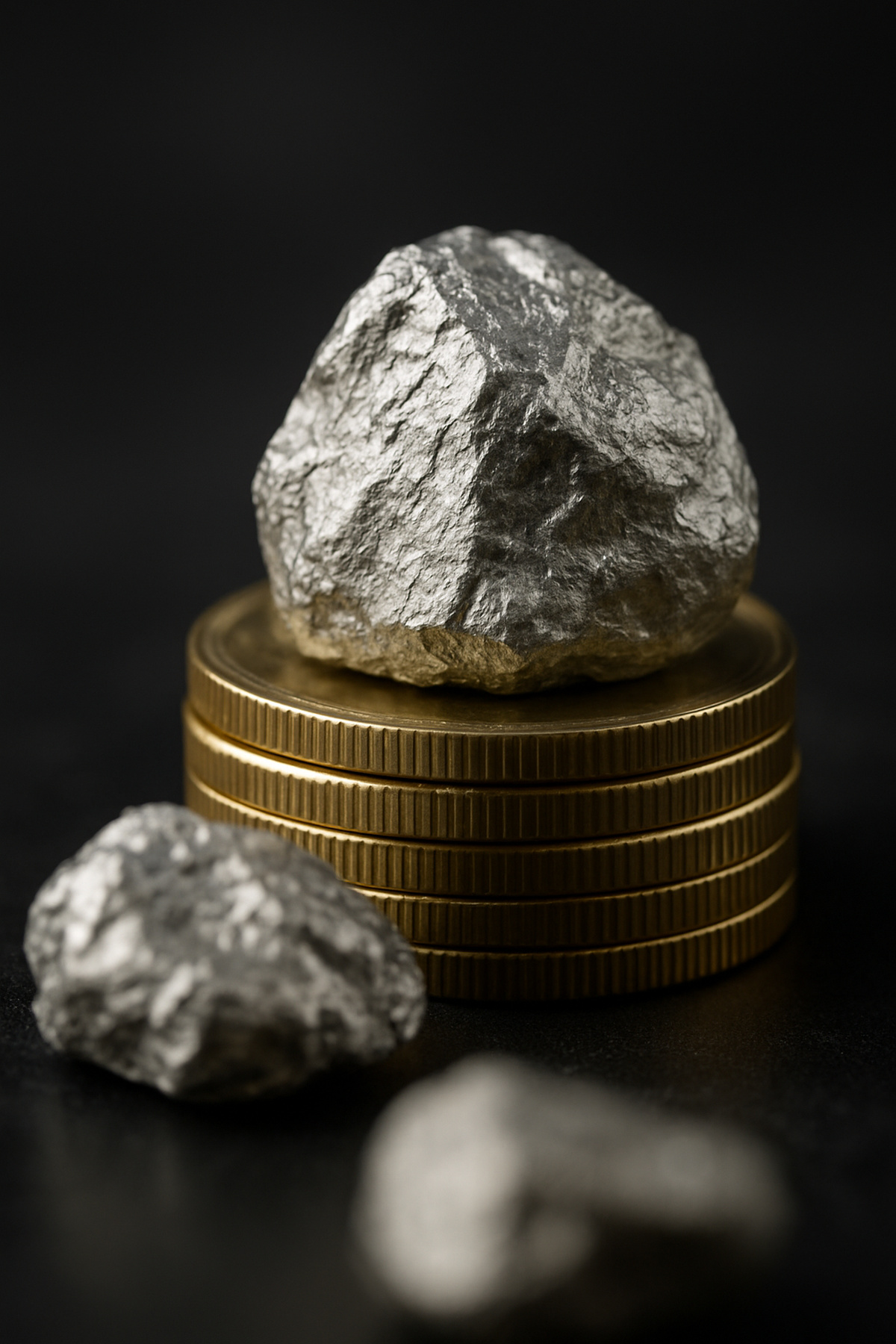
Rare Metal, Twice as Expensive as Gold, Has Restricted Production, Growing Demand, and Challenges to Meet Environmental Requirements in 2024
One of the most valuable metals in the world, rhodium, faces a critical supply and demand scenario. In 2024, its price reached US$ 7,150 per ounce, more than double that of gold, which was priced at US$ 3,550 during the same period.
Limited Production in Specific Countries
The global supply of rhodium is extremely restricted. Only two countries concentrate the world’s production:
- South Africa: responsible for about 80% of rhodium, obtained as a by-product of platinum mining.
- Russia: with approximately 15% of the total, sourced from nickel mining.
This dependence makes the market vulnerable to geopolitical and economic factors. Thus, any instability directly affects the global availability of the metal.
-
Russian researchers found in a volcanic crater in Kamchatka a new mineral with a crystalline structure that had never been observed in a laboratory, and petrovite has a molecular architecture that battery scientists want to replicate synthetically to create more efficient electrodes.

-
Antarctica hides the deepest terrestrial abyss on the planet beneath the Denman Glacier, a canyon buried 3,500 meters below sea level that only appears by radar and reveals a colossal geography invisible beneath the polar ice.
-
Brazil receives a flood of electrified Chinese cars, but doubt scares owners and workshops: when batteries, modules, and parts start to fail, unprepared mechanics may be left behind, and drivers may face waiting times, high costs, and a new bottleneck in automotive maintenance.

-
Companies admit to laying off for this reason, but research reveals an uncomfortable backdrop: 59% use artificial intelligence to justify cuts, while only 9% say they have fully replaced functions, and workers try to understand the real risk.




Annual Availability and Critical Scarcity
Annual rhodium production does not exceed 30 tons, according to estimates released in 2024. Therefore, the volume is insufficient to meet the growing demand.
The complexity of extraction and high costs hinder rapid increases in production. Thus, scarcity persists and pressures strategic sectors, such as automotive.
Demand Grows with Environmental Standards
The global demand for rhodium increases by about 8% per year, according to technical data from 2024. This growth is directly linked to stricter environmental regulations.
The metal is essential in automotive catalysts, which reduce pollutant emissions. About 85% of all rhodium produced is consumed by the automotive industry, which is responsible for meeting increasingly stringent environmental standards.
Therefore, as governments expand anti-pollution regulations, the demand for the metal continues to grow.
Electric Vehicles Also Pressure the Market
Although they reduce emissions, electric vehicles do not eliminate the use of rhodium. In 2024, studies confirmed that these models still rely on the metal for auxiliary generators and in specific industrial processes.
Thus, even with the advancement of electrification, rhodium consumption does not decrease. On the contrary, it grows in parallel, increasing pressure on the limited supply.
Insufficient Recycling to Balance Supply
According to Johnson Matthey, the world leader in catalytic technologies, only 12% of the rhodium used is recycled. Additionally, technical losses during refining make recovery partial and inefficient.
This data, recorded in 2024, reinforces the trend of worsening scarcity, as recycling does not keep pace with demand.
Economic and Industrial Impacts
The imbalance between production and consumption drives up costs for vehicle manufacturers and industrial sectors that depend on rhodium. At the same time, governments reinforce environmental standards, increasing pressure on companies.
With production concentrated in two countries, geopolitical risks also gain weight. Any crisis in South Africa or Russia could compromise global supply.
What to Expect from the Future of Rhodium?
Experts indicate that, without technological substitutes, dependence will remain high. Thus, prices are likely to remain at elevated levels, solidifying rhodium as a strategic metal for the global economy.
Meanwhile, the automotive and energy industries seek solutions to balance environmental sustainability and economic viability in light of resource limitations.





-

-

2 people reacted to this.