





 Portuguese
  English
  Spanish
  5 min of reading
  80 comments


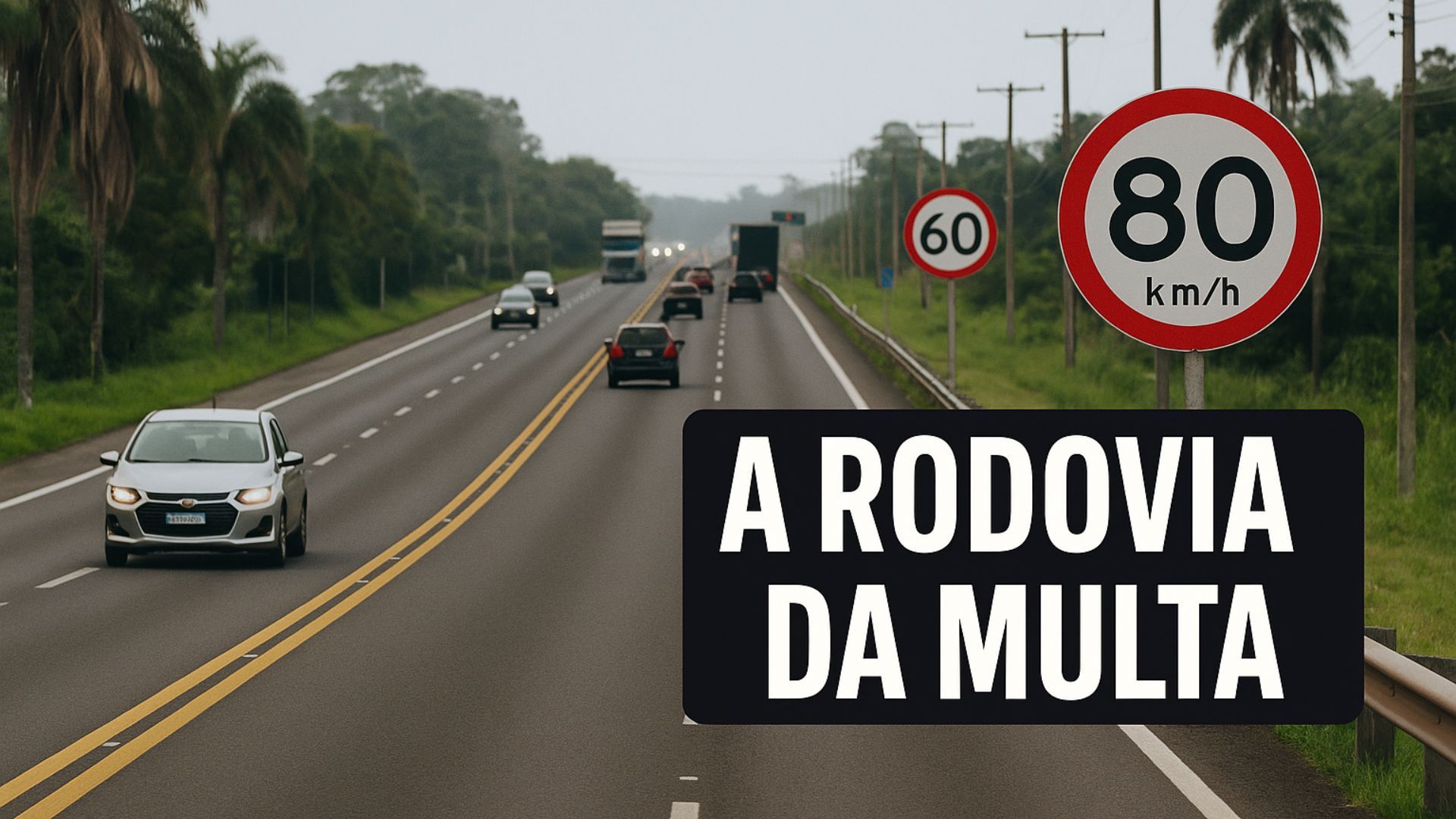


Urban Section of SP-055 in Itanhaém Concentrates Complaints About Fines, Rapid Changes in Limits, and Supervision Action, Raising Questions About Signage Clarity, Technical Criteria Adopted, and Impact on Daily Driving of Drivers Who Use the Highway as Main Access to the Paulista Coast.
Drivers passing through the Padre Manuel da Nóbrega Highway (SP-055) in Itanhaém, on the São Paulo coast, say they are being caught off guard by speeding fines in a stretch where the limit changes quickly.
The complaints are concentrated between the neighborhoods of Cibratel and Gaivota, the urban area of the highway where, according to recurring reports, the maximum speed alternates between 80 km/h and 60 km/h in a few meters, while supervision is seen as frequent.
The combination of rapid limit changes and supervision in the area has become a topic of discussion among users, traffic safety experts, and the concessionaire responsible for the road.
-
Friends have been building a small “town” for 30 years to grow old together, with compact houses, a common area, nature surrounding it, and a collective life project designed for friendship, coexistence, and simplicity.

-
This small town in Germany created its own currency 24 years ago, today it circulates millions per year, is accepted in over 300 stores, and the German government allowed all of this to happen under one condition.

-
Curitiba is shrinking and is expected to lose 97,000 residents by 2050, while inland cities in Paraná such as Sarandi, Araucária, and Toledo are experiencing accelerated growth that is changing the entire state’s map.

-
Tourists were poisoned on Everest in a million-dollar fraud scheme involving helicopters that diverted over $19 million and shocked international authorities.


On one side, motorists claim that the signage, although present, does not favor a safe and predictable speed adjustment.
On the other hand, there is a defense that the reduction of the limit and the supervision seek to curb speeding in an area with urban traffic and greater pedestrian exposure.
Where Are the Complaints on SP-055 in Itanhaém
The most cited point by drivers is the segment between Cibratel and Gaivota in Itanhaém, where residents, visitors, and vehicles circulate that use SP-055 as a corridor for trips to the coast.
Although the highway connects cities from Baixada Santista to municipalities in the Vale do Ribeira, the recent repercussion concentrates in this urban stretch, marked by lateral accesses and the typical movement of a dense area.

Those who drive through the area report that the predominant standard is 80 km/h, but that, at short intervals, there are stretches regulated at 60 km/h, followed by a return to 80 km/h a few meters ahead.
The main criticism is not the existence of a lower limit.
The focus is on the speed at which the rule changes, which, in the assessment of these users, increases the risk of error for those unfamiliar with the layout or who do not notice the sign in time.
Fines and Perception of Surprise Effect
Some drivers say they only notice the limit change after they have already crossed the monitored point.
Thus, the perception of infraction, for these drivers, only occurs when they receive the notification of the fine.
On social media, criticisms tend to focus on signs considered unintuitive or positioned in such a way that, according to these reports, do not allow for a gradual and safe reduction.
This type of difficulty is mentioned more frequently in low visibility conditions or when traffic requires heightened attention.
There are also mentions of situations where the driver needs to divide attention between heavy traffic, lateral accesses, and the presence of pedestrians.
In this context, the rapid alternation between 80 km/h and 60 km/h, coupled with mobile supervision, is seen by users as a factor that increases the likelihood of unintentional infractions.
Mobile Supervision and Traffic Safety Argument
Entities and professionals linked to traffic safety highlight that mobile supervision, by acting at variable points, aims to reduce risky behaviors in sensitive locations.
The directive, in these cases, is to discourage speeding in stretches with a higher likelihood of conflicts between vehicles and pedestrians.
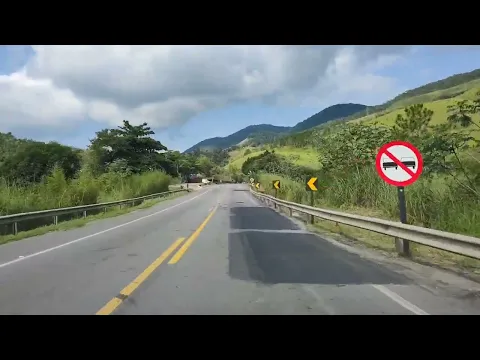

Experts mentioned by these entities point out that supervision tends to be directed towards segments with history of occurrences, higher population density, or intense flow.
Still, the debate remains when drivers claim that the signage does not provide sufficient predictability for driving adjustments in a short space.
What the Concessionaire Responsible for the Highway Says
Since November 2024, SP-055 has been part of the Lote Litoral Paulista, under the responsibility of the Concessionária Novo Litoral (CNL).
The company took over the management of approximately 212 kilometers of highways in the regions of Alto Tietê, Baixada Santista, and Vale do Ribeira.
In addition to Padre Manuel da Nóbrega, the set includes the highways SP-088 (Mogi-Dutra) and SP-098 (Mogi-Bertioga).
The concessionaire maintains that the speed limits are defined by technical criteria, such as curve radii, superelevation, lane incline, available visibility, and urban density.
According to the company, the stretch between Cibratel and Gaivota has not undergone any limit changes since the start of operations.
The CNL also states that the signage follows technical traffic manuals, which establish dimensions, distances, and positioning of signs.
Inspection teams traverse the highway daily to check visibility conditions, maintenance, and any needs for reinforcement.
Any change in limits, according to the concessionaire, depends on technical analysis and approval from the responsible public agencies.
What the Brazilian Traffic Code Establishes
The discussion about the Itanhaém section also involves the Brazilian Traffic Code.
Article 90 states that sanctions should not be applied when the signage is insufficient or incorrect.
The provision assigns the responsibility of implementing and maintaining signage to the agency responsible for the road, answering for absence, insufficiency, or improper positioning.
In the case of Padre Manuel da Nóbrega, there are no reports of a complete absence of speed signs.
The complaints focus on the rapid alternation of limits and the presence of supervision in the stretch.
Traffic engineering specialists affirm that signage must be clear, coherent, and predictable, allowing for a safe reaction from drivers.
Among the cited criteria are compatibility of the limit with the layout and the absence of contradictory messages in a short sequence.
Requests for Review and Transparency in Supervision
In addition to the re-evaluation of limit distribution, drivers demand more clarity about the criteria for choosing monitored points by mobile radars.
The main demand is for the driver to easily understand where and why the limit changes.
The objective, according to these reports, is to reduce the feeling of excessively punitive supervision and increase the predictability of driving.
In similar situations, experts recommend that drivers carefully check the data on received notifications.
If they identify a possible failure in signage, the recommendation is to consider filing an appeal with records of the location.
While the concessionaire and public agencies claim that supervision seeks to enhance traffic safety, the debate remains open about whether the current configuration of limits between Cibratel and Gaivota allows for speed adjustments with sufficient predictability for safe circulation.









Vivemos num país onde a população está sendo estrangulada para cumprir todo tipo de exigências onerosas criadas por políticos que não estão sujeitos a nenhuma regulação ou penalização por algum poder que não sejam os próprios.
Estradas como essa na Espanha têm limite de 120 km/h. O que se vê é preguiça desses engenheiros de M…! Preguiça de construir passarelas!
Isso simplesmente e arrecadação de multa, não estão preocupados em orientar nem em segurança, minha opinião