





 Portuguese
  English
  Spanish
  4 min of reading
  1 comment





With a Height of 335 M, the Rogun Dam Will Be the Tallest Dam in the World, Moving Millions of M³ of Rock and Elevating Engineering to Another Level.
Located on the Vakhsh River in Tajikistan, the Rogun Dam is being built to reach a height of 335 meters, which will make it the tallest dam ever constructed by humans. The project, led by Tajik authorities and executed by the Italian construction company Salini Impregilo (now Webuild), represents one of the most ambitious engineering endeavors of the 21st century.
The scale is so monumental that, when completed, Rogun will surpass all major known embankment dams — including Nurek (300 m), Jinping-I (305 m), and Ertan — establishing itself as a global technical landmark. The structure is being built as a rock-fill dam, a mass formed by millions of cubic meters of compacted rock, designed to withstand enormous hydraulic forces and operate in one of the most complex terrains in Central Asia.
The 335-Meter Dam: Taller Than the Eiffel Tower and Any Other Hydraulic Structure on the Planet
The projected height of 335 meters places Rogun in a category that no other dam has ever occupied. For scale:
-
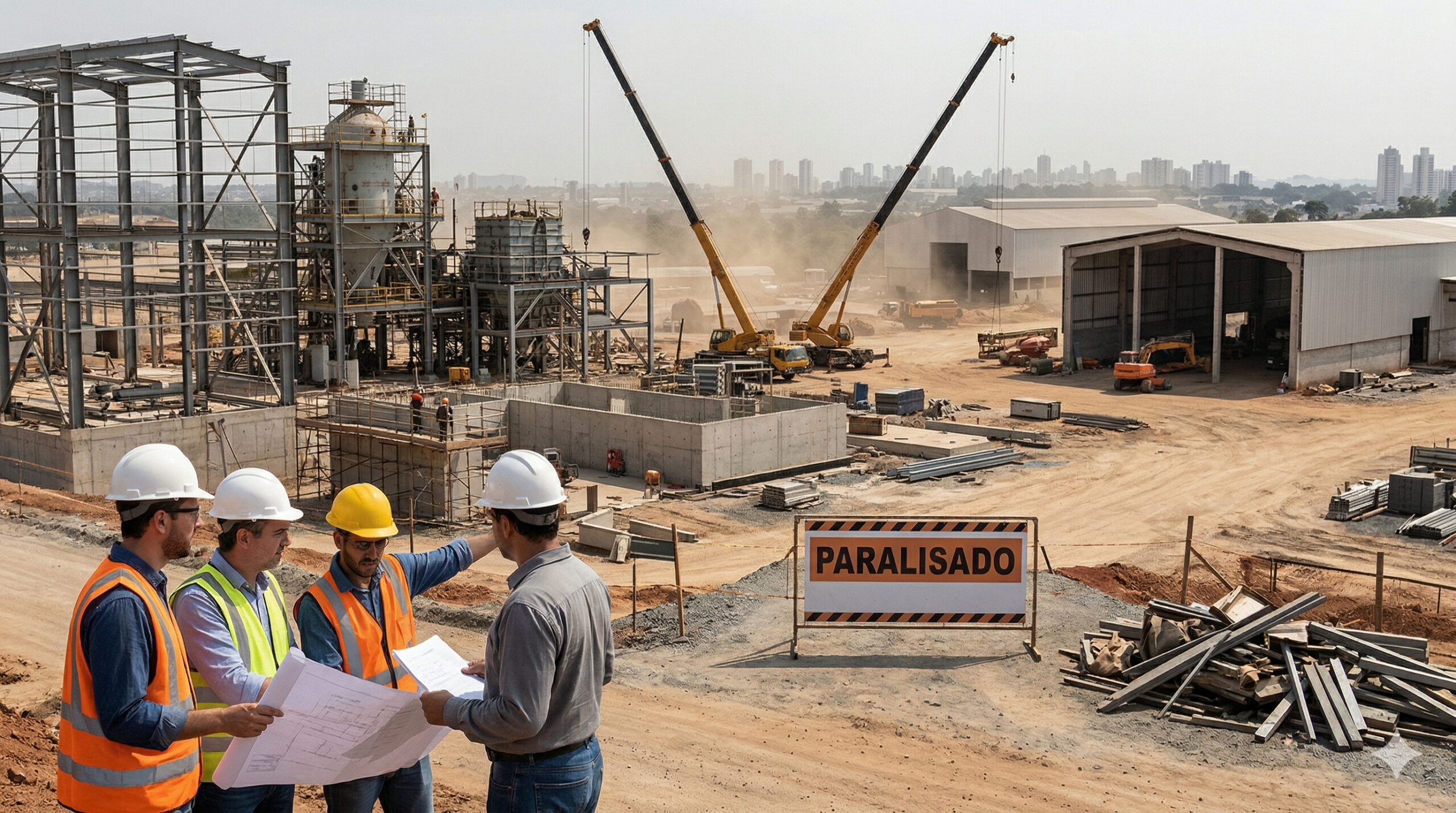
The lack of welders, electricians, and operators becomes a structural threat in 2025, with the construction industry and manufacturing already suffering from delays, cost pressures, and labor shortages in Brazil.
-
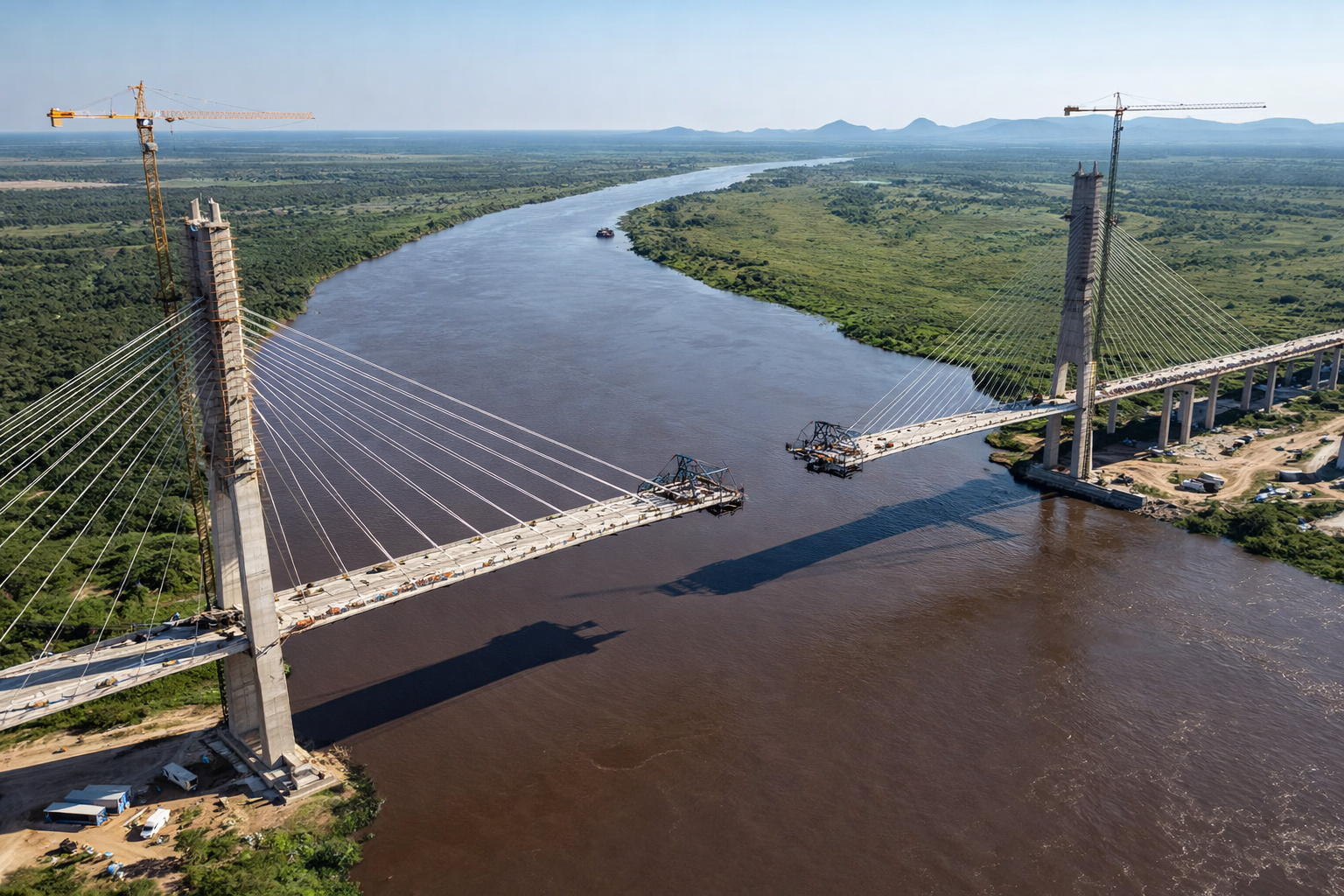
Brazil and Paraguay are just 46 meters away from a historic union on the bioceanic bridge that promises to revolutionize trade between the Atlantic and the Pacific.
-
With 55 km over the sea, a cost of US$ 20 billion, and enough steel to build 60 Eiffel Towers, China’s largest project has connected Hong Kong, Zhuhai, and Macau in a colossal bridge that defies the logic of engineering.

-
A trick with joint compound transforms a Styrofoam ceiling into a plaster-like ceiling: leveled panels, wires and mesh at the joints, sand, paint, and change the environment while spending little today.


- it is taller than the Eiffel Tower (324 m),
- surpasses the Grand Dixence (285 m),
- exceeds Nurek, previously considered the world record holder,
- and puts Tajikistan on the map of mega heavy engineering constructions.
The challenge isn’t limited to height: building a dam of this size in a mountainous region requires rigorous seismic studies, advanced river diversion techniques, complex underground galleries, and an infiltration control system capable of withstanding extreme pressures.


Millions of M³ of Rock: The Structural Heart of the Rogun Dam
Unlike concrete dams like Itaipu or Hoover, Rogun is being built as a rock-fill dam with an impermeable core, which means its stability depends on gigantic layers of compacted rock.
Estimates indicate that the total volume of material exceeds tens of millions of m³, making the earthworks one of the largest ever carried out in embankment hydraulic works.
Each layer of rock is selected, transported, and compacted with millimeter precision to ensure that the structure has appropriate density and permeability. This process is repeated countless times until the gigantic mass that will hold the reservoir is formed.
A Project Mobilizing Tunnels, Diversions, and Underground Works on a Continental Scale
Even before raising the main wall, teams had to open a series of preparatory works, including:
- diversion tunnels hundreds of meters long,
- auxiliary galleries to control flow rates,
- deep drainage and pressure relief systems,
- foundations excavated in highly irregular terrain.
The Vakhsh River, known for its turbulent waters and seasonal variations, required advanced temporary flow control solutions — something fundamental to allow the impermeable core to be installed safely.
National-Scale Energy: Almost 3,600 MW of Installed Capacity
When fully completed, the Rogun Dam will house six giant turbines, totaling 3,600 MW, which will allow Tajikistan to:
- double its energy capacity,
- export electricity to neighboring countries,
- reduce dependence on fossil fuels,
- stabilize its electrical system during dry periods.
The government’s goal is to transform Rogun into the country’s energy pillar, just as Itaipu is for Brazil and Grand Coulee is for the United States.
Engineering in an Extreme Environment: Seismicity, Climate, and Geology Challenge the Work Daily
Rogun is being built in one of the most challenging regions in the world:
- unstable terrain,
- active seismic faults,
- temperatures that fluctuate drastically,
- and a deep valley with limited access.
These conditions require the application of advanced geotechnical solutions, such as:
- lateral reinforcements with graded aggregate rocks,
- controlled compaction using high-tonnage vibratory plates,
- internal containment systems to prevent liquefaction,
- continuous seismic studies to calibrate the rock mass.
Few modern works combine so many critical factors simultaneously.
When Completed, Rogun Will Be a Definitive Landmark of World Engineering
Surpassing 335 meters is not just a record: it is proof that civil engineering continues to advance beyond limits previously considered impossible. The Rogun Dam represents:
- a technological leap for Tajikistan,
- an unprecedented geotechnical challenge,
- a new standard for embankment dams in seismic zones,
- and one of the largest structural undertakings of the 21st century.
With its colossal height, millions of m³ of compacted rock, and the capacity to transform the energy matrix of an entire region, the Rogun Dam is destined to become one of humanity’s greatest structural achievements.










Sei não, porosidade lateral ao longo do ravina rochosa uma vez formado o lago poderá provocar o colapso das encostas.