





 English
  Francês
  Alemão
  Italiano
  Japonês
  Norueguês
  Portuguese
  Spanish
  3 min of reading


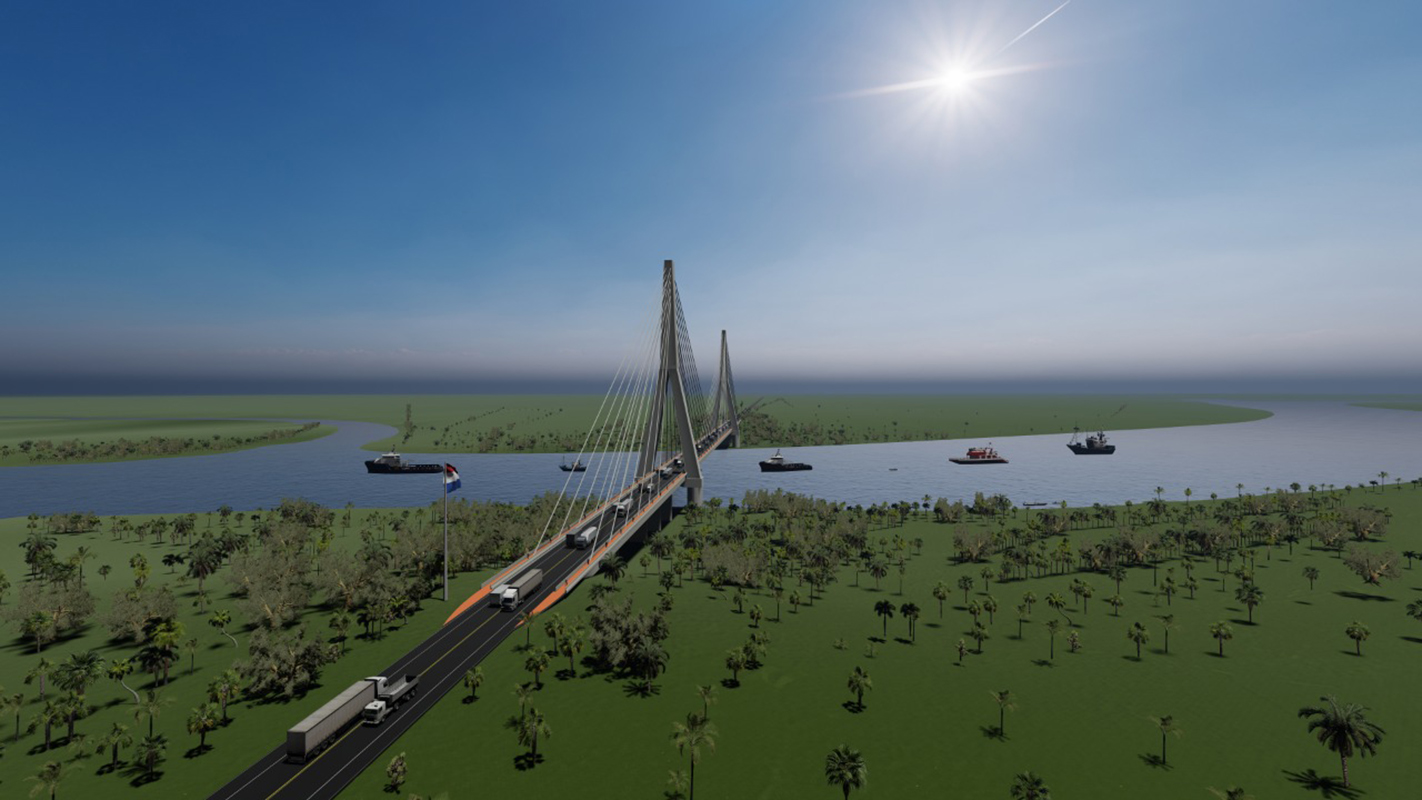
This Bridge Is The Main International Work Of The Bioceanic Route, A Highway Corridor Connecting Brazil, Paraguay, Argentina, And Chile From The Atlantic Ocean Coast To The Pacific Ocean Coast.
On Tuesday, October 1, authorities from Brazil and Paraguay met in Brasília and decided to create a Joint Commission to monitor and define the details of the construction of the bridge over the Paraguay River that will connect the municipalities of Porto Murtinho and Carmelo Peralta. Petrobras Exits The Natural Gas Distribution Segment In Uruguay.
This bridge is the main international work of the Route Bioceanic, a highway corridor connecting Brazil, Paraguay, Argentina, and Chile from the Atlantic Ocean coast to the Pacific Ocean coast.
-
Government unlocks R$ 554 million for a highway that has been requested for decades and accelerates the duplication of BR.
-
Without bricks, without cement, and without endless construction: the cardboard house that is assembled in modules and can be moved.

-
Billions of barrels on the equatorial margin could lead Amapá to double its oil production in Brazil — the state aims to enter the route of companies in the Campos Basin, attract investments, and boost jobs and businesses in the oil and gas sector.

-
Without bricks, without cement, and without endless construction: the cardboard house that is assembled in modules and can be moved.

The cable-stayed bridge model does not interfere with the river’s navigability, as the pillars will be erected on the banks at a height that allows vessels to pass underneath.
The estimated investment is US$ 75 million, to be funded by the binational Itaipu.
The bridge is expected to have a total length of 680 meters, from one bank to the other of the river. The span between the two pillars would be 380 meters, plus 150 meters from each pillar to the bank.
The height of the pillars that will support the cables (stay) would be 95 meters.
With the two new bridges, Itaipu contributes with basic infrastructure so that Brazil and Paraguay can expand trade between them and also with other countries in the region, from the long-awaited creation of the bioceanic corridor, connecting the ports of Santos and Paranaguá in Brazil to those in Chile.
The bioceanic corridor will reduce the travel time of commodities from Mato Grosso do Sul to the Asian market by 17 days, shipping from the ports in Chile instead of using the ports in Paranaguá (PR) or Santos (SP).
Paraguay launched the bidding for the executive project of the bridge in July, which will start in 2020 with a completion in three years, at a cost of R$ 290 million.
The 680m structure will be installed at km 1032 of the Paraguay River Waterway.
The neighboring country is also paving the 600-kilometer stretch of the route that crosses its territory. Starting from Campo Grande, the highway will cover 2,400 kilometers to the city of Antofagasta in Chile.
The first section, measuring 227 km, is following its schedule in two fronts – Carmelo Peralta and Loma Plata – with the first batch expected to be completed in September, covering 24 km. The work carried out by the Oceânico Road Corridor Consortium (Queiróz Galvão and Ocho A) will cost US$ 420 million.
- Petrobras Sells Landfields In RN For US$ 7.2 Million
- Petrobras Signals That Oil On The Northeast Coast May Have Come From Venezuela
- Port Of Paranguá Starts October By Hiring Maintenance Professionals








Seja o primeiro a reagir!