





 Portuguese
  English
  Spanish
  5 min of reading
  6 comments


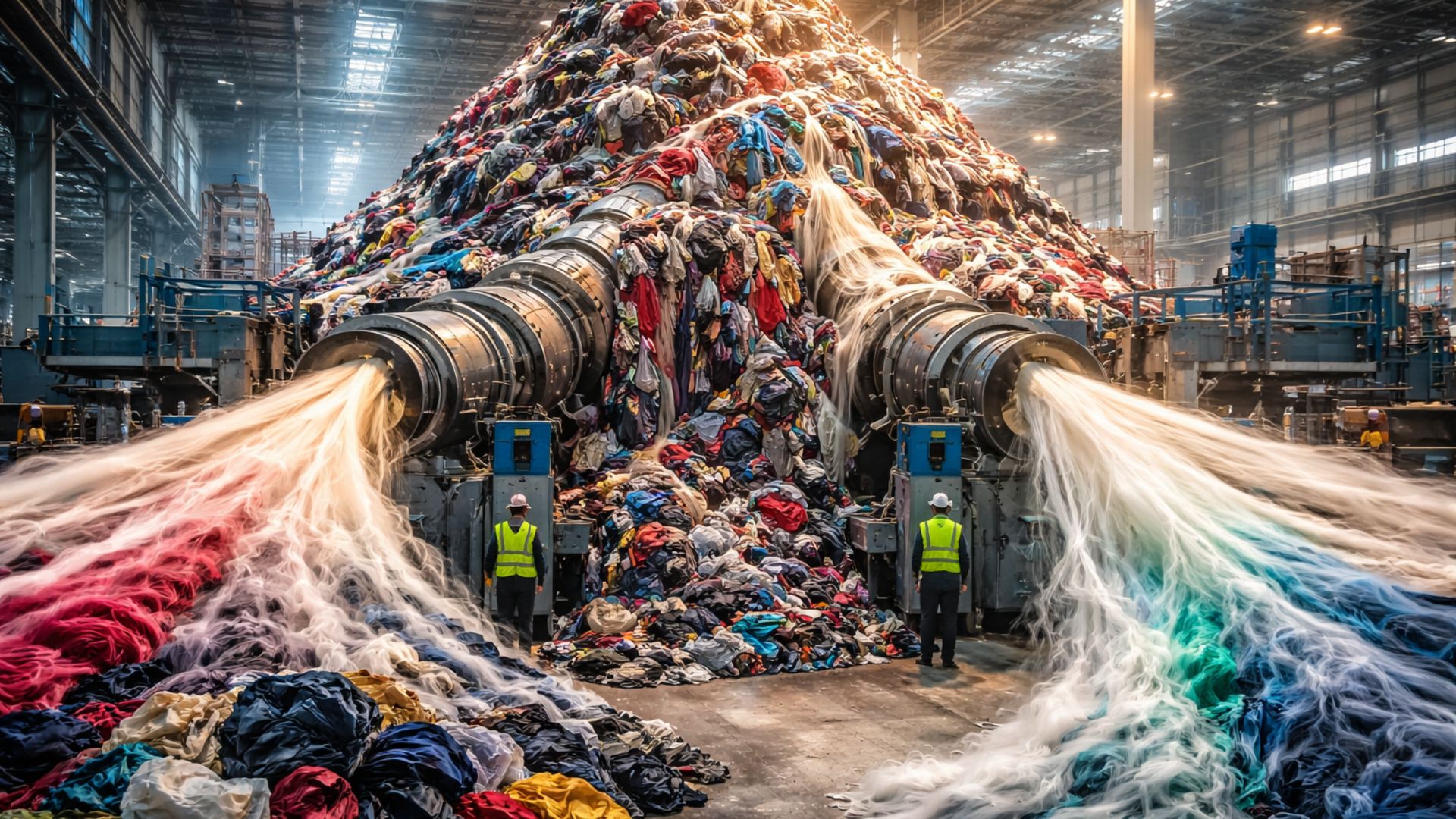


Textile Waste Ceases To Be Trash And Begins To Feed New Industries That Recover Fibers, Reduce Landfill Disposal, And Create Raw Material For Fashion. Advances In Technology And New Environmental Regulations Accelerate Global Race To Transform Used Clothes Into Valuable Industrial Inputs.
Textile waste has ceased to be treated merely as a consumption leftover and has begun to occupy a strategic space in the industry.
Used clothes, production scraps, and discarded fabrics are starting to supply factories designed to recover cellulose, polyester, and fiber blends, in an attempt to reduce dependence on virgin raw materials and contain a disposal flow that continues on a high scale.
Scale Of Textile Waste In Europe
In Europe, the magnitude of this liability helps explain the speed of the movement.
-
In Mexico, a 3,000-year-old Maya site with the dimensions of an entire city may have been built as a colossal map of the cosmos, created to represent the order of the universe and reveal how this people organized space, time, and rituals.

-
Japan wants to build a solar ring of 10,900 kilometers on the Moon to continuously send energy to Earth.

-
Weighing almost 1 ton, with temperatures of up to 3,000°C, the ability to launch 10,000 fragments within a radius of 1 km, capable of penetrating concrete and melting steel, Turkey’s terrifying bomb emerges as one of the most destructive non-nuclear weapons ever presented.

-
After a submarine disappeared beneath the “Doomsday Glacier,” scientists announce a new monstrous machine capable of operating at 3,000 meters depth to return to the heart of the ice and investigate a threat that could raise sea levels worldwide.


The European Environment Agency estimates that the European Union generated 6.95 million tons of textile waste in 2020, equivalent to about 16 kilograms per person.
Of this total, only 4.4 kilograms per person were collected separately for reuse and recycling, while the remainder ended up mixed with household waste.
In 2022, the capture rate was just below 15%, meaning that 85% of household textile waste has not yet been separately collected.
Outside of Europe, pressure is also rising.
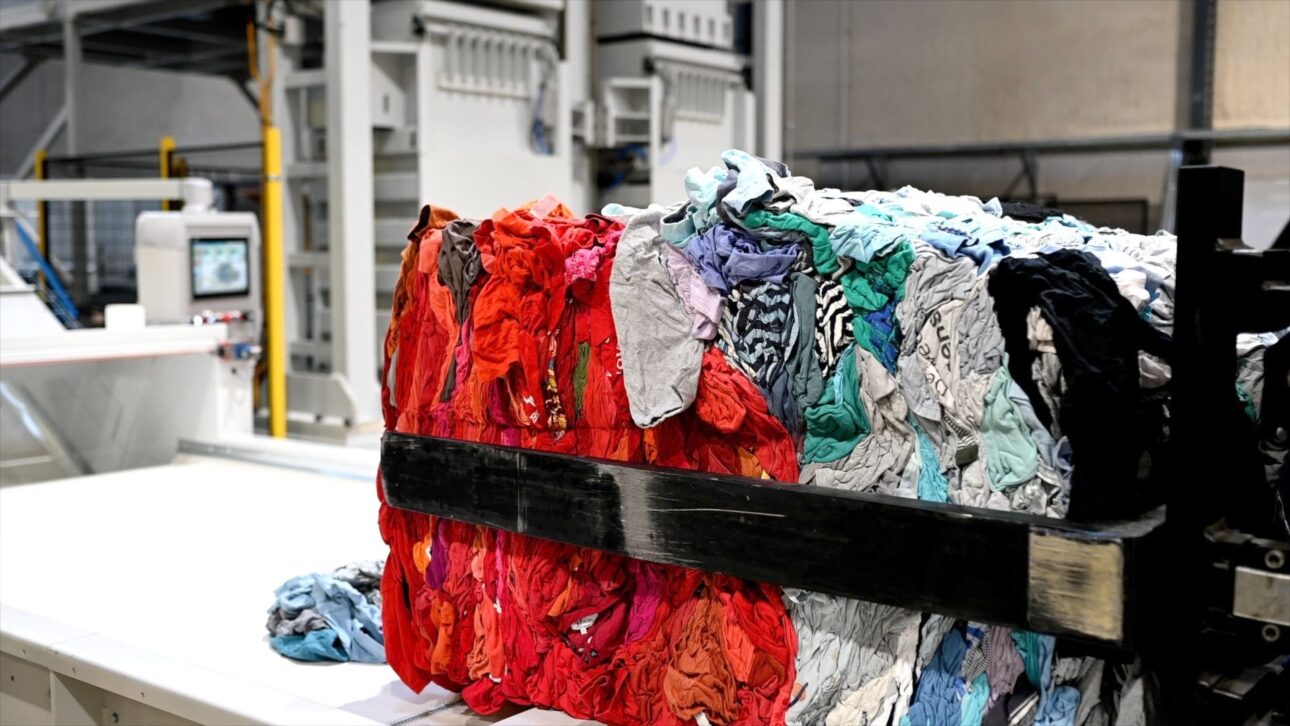
The United Nations Environment Program cites a figure of 92 million tons of textile waste per year worldwide, reflecting a chain that has expanded production and shortened the usage time of garments.
At the same time, the share of recycled fibers remains limited.
According to the latest report from Textile Exchange, they accounted for 7.6% of the global fiber market in 2024, and the portion from pre- and post-consumer textile waste remained below 1%.
Environmental Regulations Drive Textile Recycling
The regulatory response has gained strength in the European bloc.
Countries in the European Union are now required, starting from January 2025, to maintain systems for separate collection of textiles for reuse and recycling.
Additionally, the European Parliament concluded in September 2025 the review of rules that transfer the cost of collection, sorting, and recycling to producers through extended producer responsibility schemes.
This regulatory tightening occurs in an environment where clothing consumption remains high and the sector still recycles very little in a closed circuit.
The European Parliament itself states that less than 1% of used textiles in the world return to the market as new products, a figure that helps explain why governments and companies have begun to view textile waste as an industrial input, rather than a peripheral issue in the chain.
New Factories To Recycle Cotton And Polyester
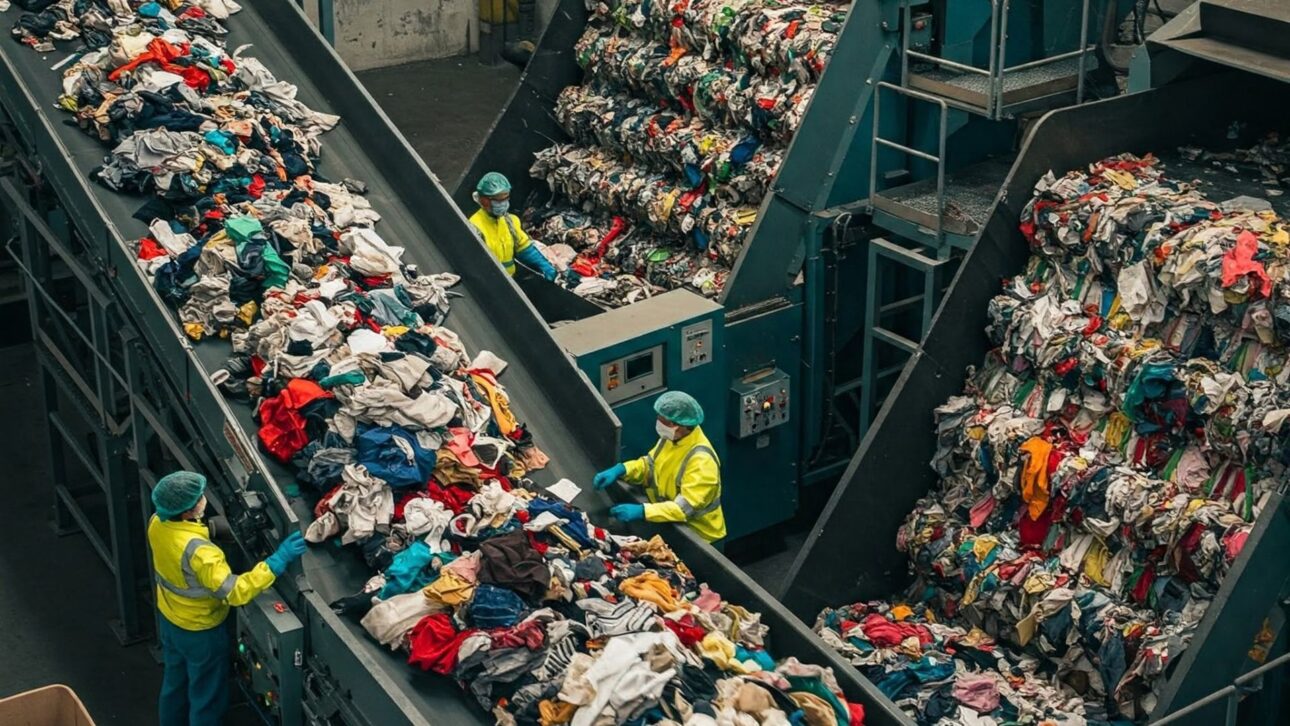
The most visible advancement of this change is in the opening and redesign of industrial plants focused on textile recycling.
Swedish Circulose announced on February 16, 2026 the resumption of commercial-scale production at its Ortviken plant in Sundsvall, touted by the company as the world’s first commercial textile chemical recycling facility.
The technology is aimed at recovering cellulose waste, converted into a pulp that can re-enter the chain as a base for regenerated fibers, such as viscose, lyocell, modal, and acetate.
On the polyester front, Reju announced in May 2025 that it has chosen the Chemelot industrial park in the Netherlands to establish its first textile regeneration industrial center.
According to the company, the unit is designed to process the equivalent of 300 million garments per year and will have a capacity of 50,000 tons annually of rBHET.
This input will then be repolymerized to produce new polyester.
The company also claims that this route can achieve 50% lower emissions than those of virgin polyester.
Recycling Of Blended Fabrics Remains A Challenge
One of the most difficult bottlenecks in recycling is the treatment of blended fabrics, particularly those that combine cotton and polyester.
On this front, companies like Circ are trying to make progress.
In May 2025, Reuters reported that the company received support from the French government and the European Union to build a plant in Saint-Avold, France, costing around US$ 500 million.
The facility is expected to begin operating in 2028, with a capacity to process 70,000 tons per year and generate 200 jobs.
The project was presented as a step towards recycling poly-cotton at an industrial scale, a segment seen as critical because a large part of today’s circulating clothing combines natural and synthetic fibers.
Without technologies capable of efficiently separating these components, much of this material ends up on low-value routes.
Among these are stuffing, rags, export for secondary sorting, or final disposal.

Technical And Chemical Barriers To Circularity
The expansion of these factories, however, does not eliminate technical obstacles.
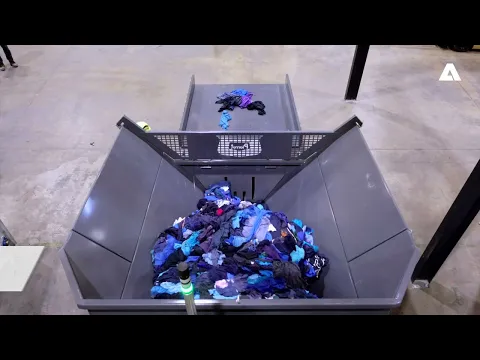
The European Environment Agency emphasizes that different processes require specific raw materials.
Correctly identifying the fibers, additives, and mixtures present in each piece is crucial for utilization.
In other words, it is not enough to collect more used clothing.
It is necessary to know exactly what is in each flow for recycling to result in material that can be utilized by the industry.
There are also barriers related to the presence of concerning chemical substances.
Among them are PFAS, which can compromise circularity by increasing contamination risk and limiting possibilities for reuse or recycling in specific applications.
Therefore, advanced sorting, traceability, and design for disassembly have begun to be treated as part of the same industrial equation.
Export Of Used Clothing Remains High
While this infrastructure is taking shape, a significant portion of used material continues to leave Europe.
The European Environment Agency reports that exports of used textiles have nearly tripled since 2000.
The volume increased from just over 550,000 tons to around 1.4 million tons in 2023. The final destination of this flow is not always transparent.
This reality fuels criticism that part of the problem continues to be shifted to other markets, without guarantees of effective reuse or quality recycling.
This scenario helps explain why textile recycling at scale has come to be regarded as a strategic industrial contest.
On one side, there is a growing mass of post-consumer and post-industry waste pressuring collection and management systems.
On the other side, brands and suppliers are seeking to reduce exposure to virgin fibers in a sector pressured by emissions, intensive water use, chemicals, and volatility of inputs.
At this intersection, discarded clothing ceases to represent merely an environmental and logistical cost and begins to be seen as valuable raw material for a chain attempting to close its own cycle.







Quer dizer que a gente descarta as roupas velhas, para depois comprar elas como se fossem novas. Ou seja, o lixo que jogamos fora, como; plástico, roupas velhas, etc… viram produtos têxteis, feitos com lixo, porque todo mundo sabe que o poliéster é plástico reciclado, misturado com substâncias químicas que trazem riscos sérios para a saúde humana. E o pior, é você pagar caro para comprar o lixo reutilizado como roupas, estofados, colchões, cortinas, travesseiros, etc…Esse é o futuro da ganância, onde o dinheiro está acima de tudo e de todos. É lamentável.
O que eu quero dizer é que já se usa pano de roupa velha usa pra fazer roupa nova kkkkkkkkkkk 🤣😂😂🤣
Tão falando disso agora? 2026? Já fazem isso a anos não é de agora eu sei disso pois minha mãe e costureira minha vizinha tbm tudo sobre o mundo da costureira nois sabe kkkkkkkkkkk 😂🤣🤣😂😂🤣