





 Portuguese
  English
  Spanish
 4 min of reading
  14 comments


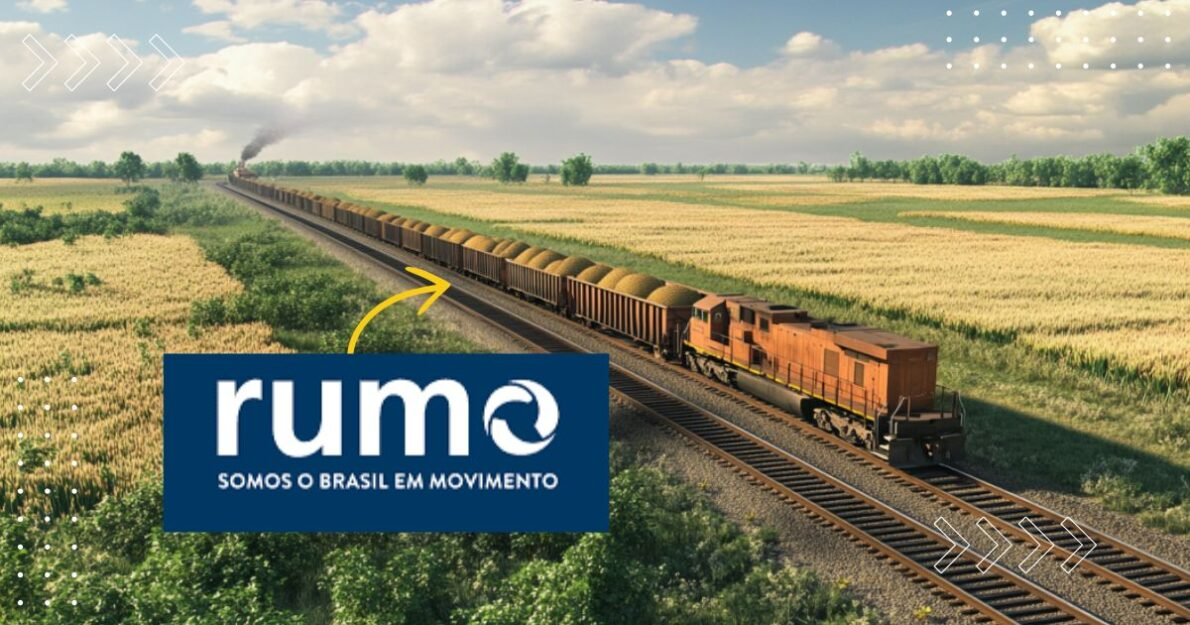


Rumo Logística Invests in Mega Railway to Revolutionize Railway Transport. Billion-Dollar Sustainable Project Aims to Alleviate Highways and Open New Markets.
The tracks of Rumo Logística are about to transform transportation in Brazil, especially for the agricultural sector of Mato Grosso, with an ambitious railway project not seen in decades.
In times when agribusiness seeks maximum efficiency and sustainable solutions, the construction of this railway over 700 km promises to have a profound impact and bring changes that go beyond the borders of the state.
At the heart of this transformation is the State Railway of Mato Grosso, a billion-dollar project aimed at modernizing the grain flow to the Port of Santos in São Paulo.
-
A new Brazilian shopping center worth R$ 400 million will be built in an area equivalent to more than 4 football fields, featuring 90 stores, 5 cinemas, a supermarket, a college, and parking for 1,700 cars, potentially generating 3,000 jobs.

-
Larger than entire cities in Brazil: BYD is building a 4.6 km² complex in Bahia with a capacity for 600,000 vehicles per year, but the discovery of 163 workers in conditions analogous to slavery has shaken the entire project.

-
With an investment of R$ 612 million, a capacity to process 1.2 million liters of milk per day, Piracanjuba inaugurates a mega cheese factory that increases national production, reduces dependence on imports, and repositions Brazil on the global dairy map.

-
Brazilian city gains industrial hub for 85 companies that is equivalent to 55 football fields.

With the first phase expected to operate in 2026, the railway will become a strategic point to ease road traffic and reduce the emission of polluting gases.
First State Railway in Brazil in Advanced Phase
The State Railway of Mato Grosso is the first with state authorization in the country and will extend for 730 km, interconnecting Rondonópolis and Lucas do Rio Verde, passing through Cuiabá.
The estimate is that the entire project will be completed by 2030, but the first 160 km should start operating as early as 2026, according to information from Rumo Logística.
In an interview on Monday (04), Pedro Palma, the company’s CEO, highlighted that this investment is just the beginning of a broader strategy to improve national infrastructure, which already includes strategic partnerships, such as with the American CHS at the Port of Santos.
To enable construction, Rumo has already invested more than R$ 14 billion and continues to invest.
According to Palma, the company aims to connect the agricultural potential of Mato Grosso to the global market more efficiently and with less environmental impact.
Currently, 30 subcontracted companies are working on the project and maintaining around 100 work fronts, employing approximately 4,500 workers.
Reduction of Bottlenecks and Integration with the Port of Santos
The new railway also connects to the Port of Santos, the main export point in the country.
This railway corridor has the capacity to reduce transportation time and logistics costs, providing relief on the overloaded highways of the state, which still handle most of the grain flow.
On average, the cost of railway transportation is lower than that of road transport, which favors the competitiveness of Brazilian products in the international market.
Another key point, according to Pedro Palma, is the environmental impact: rail transport reduces the emission of polluting gases by up to six times compared to road transport.
Additionally, Rumo commits to implementing measures that minimize impact on the local ecosystem and nearby communities, promoting environmental conservation and social responsibility.
Advancements in Construction and Infrastructure
Among the completed works are 19 viaducts and crossings, including the construction of a 160-meter viaduct that crosses BR-163/364.
This set of Special Works Aims to optimize road flow and increase safety for both workers and the local population.
According to Harley Silva, executive project manager at Rumo Logística, these constructions are essential for the efficiency of the project, as they prevent heavy vehicle traffic on the highways.
To further accelerate the project, the implementation of 200 km of tracks and the construction of a new cargo terminal have begun.
The estimate is that at the peak of construction, more than 5,000 new jobs will be created in the region, directly benefiting local economies and attracting workers from different parts of the country.
Expansion at the Port of Santos and Improvements in the Railway Network
With the expectation of an increase in grain export flow, Rumo is also investing in the expansion of its structure at the Port of Santos in São Paulo.
This expansion allows the railway to meet the growing demand of agribusiness, optimizing the flow of products such as soy, corn, and cotton to the international market.
In partnership with CHS, the company is also working to ensure that the infrastructure of the Port of Santos is ready to avoid future bottlenecks.
In terms of efficiency, Rumo has already doubled its transport capacity in Mato Grosso over the past ten years, increasing from 12 million to 25 million tons annually.
This increase occurred without an expansion of the network, but rather with the recovery and modernization of assets.
According to Pedro Palma, these investments aim to ensure that Brazil is prepared for future agribusiness expansion and that producers can rely on more reliable and sustainable logistics.
Challenges and Next Steps
The expectations are high, but the project faces challenges such as the need for public-private partnerships and an economic scenario that requires continuous adjustments.
However, Rumo is optimistic and sees this railway as the starting point for a new era of logistical development in the country.
This unprecedented state concession model in Brazil may inspire other states to invest in their railway infrastructures, especially in areas where grain flow depends on road transport.
Will this project be the example Brazil needs to transform its export logistics and make agribusiness even more competitive in the global market? Stay tuned for updates and share your thoughts in the comments.








ISSO É UMA IGNORÂNCIA SEM PRECEDENTES POIS ESSAS EXPORTAÇÕES SÓ TRAZ PREJUÍZOS PARA NOSSA NATUREZA E DESTRÓI NOSSO PAÍS EM TODOS OS SENTIDOS TROCAR NOSSA NATUREZA A TROCO DE DINHEIRO
Com bem mais de 50 anos de atraso, ainda bem começou.
Do Mato Grosso até o porto de Santos/SP, sor tem 16 municípios?