





 Portuguese
  English
  Spanish
  6 min of reading
  0 comments


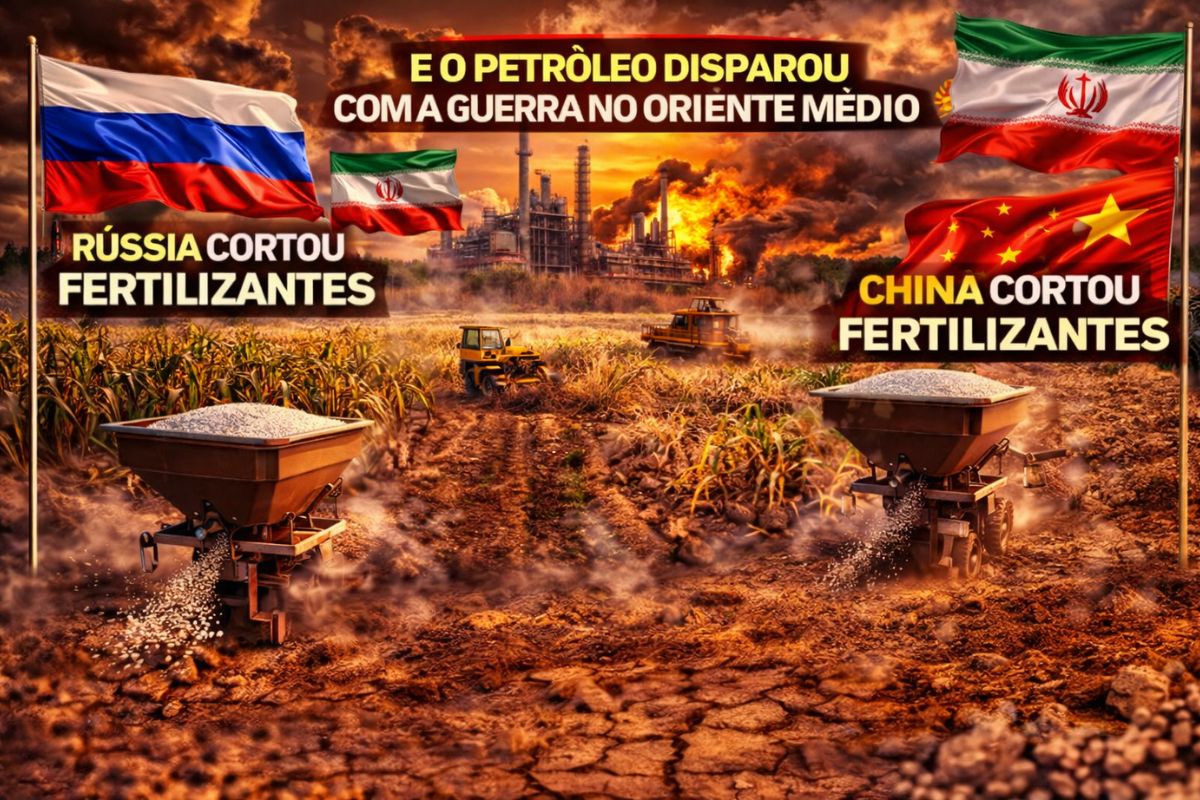
The suspension of fertilizers by Russia and China, combined with the increase of up to 25% in diesel prices caused by the war in the Middle East, has hit the sugarcane producers in the interior of São Paulo hard, who are already seeking alternatives with organic inputs while warning that the high costs will take months to be absorbed even after the end of the restrictions.
The sugarcane producers in the interior of São Paulo are facing a scenario that attacks from all sides at once. Russia, responsible for about 25% of fertilizers in the global market, suspended sales this week. China had already done the same earlier. And the war in the Middle East pushed diesel prices up with increases between 20% and 25%. The result is an explosion of costs that compresses the margin of those who plant sugarcane and that, according to sector representatives, will take months to be digested.
The situation is especially serious because diesel and fertilizers are the two inputs that weigh the most on the accounts of sugarcane producers. Together, they represent a dominant share of the operational costs of any sugar-energy crop. When both rise at the same time and for geopolitical reasons completely beyond the producer’s control, the effect is a financial pressure that can compromise entire harvests. The warning has already been given by the Sugarcane Planters Association (Aplacana) of the Monte Aprazível region in the interior of São Paulo.
Why Russia and China cut fertilizers at the same time

Russia is one of the world’s largest exporters of fertilizers, supplying about 25% of the volume traded globally. The decision to suspend sales this week is not isolated; it is part of a context of retaliations and realignments caused by the conflict in the Middle East.
-
It does not come from flowers, is produced only every two years, and more than 90% goes straight to Europe: meet the bracatinga honeydew honey from Santa Catarina, considered one of the rarest in the world and overlooked by Brazil itself.

-
They said no to 26 million dollars and would do it all over again: mother and daughter from Kentucky reject a million-dollar offer from a mysterious company that wants to build the largest data center in the state on more than 2,000 acres of rural land.

-
While corn requires rain and is expensive, sorghum produces almost the same volume per hectare at a cost up to 80% lower and uses less water, and it is revolutionizing dairy farming in the Triângulo Mineiro, where producers save hundreds of reais per hectare.
-
A rural producer from Urubici cries as he shows 50 tons of plums thrown on the ground because no one wanted to buy them, and in desperation, he records a video asking anyone to come to the property to pick the fruits before they rot.

When a supplier of this size turns off the tap, the global market feels it immediately: prices rise, availability falls, and importing countries must compete for what is left.
China had previously taken similar measures, restricting the export of fertilizers to ensure internal supply.
With the two largest global suppliers limiting sales, Brazil, which heavily depends on fertilizer imports to keep its agriculture competitive, is exposed. The sugarcane producers in the interior of São Paulo are among the first to feel the impact because the sugar-energy sector operates with margins that do not tolerate abrupt variations in inputs.
The simultaneous cut by Russia and China creates a cascading effect. The fertilizers that Brazil used to buy from these countries now need to be sourced from alternative suppliers, who charge more for smaller volumes.
The increase already recorded is about 20% in fertilizer prices, according to Júlio Cesar Moreira, executive manager of Aplacana in Monte Aprazível. And the trend, while the restrictions last, is for prices to remain under pressure.
How the war in the Middle East caused diesel prices to soar
Diesel is the fuel that powers the sugarcane chain from planting and harvesting machines to transport trucks. According to Aplacana, diesel accounts for between 30% and 35% of the total production costs of sugarcane producers. When the price rises by 20% to 25%, as it has in recent weeks, the impact is devastating.
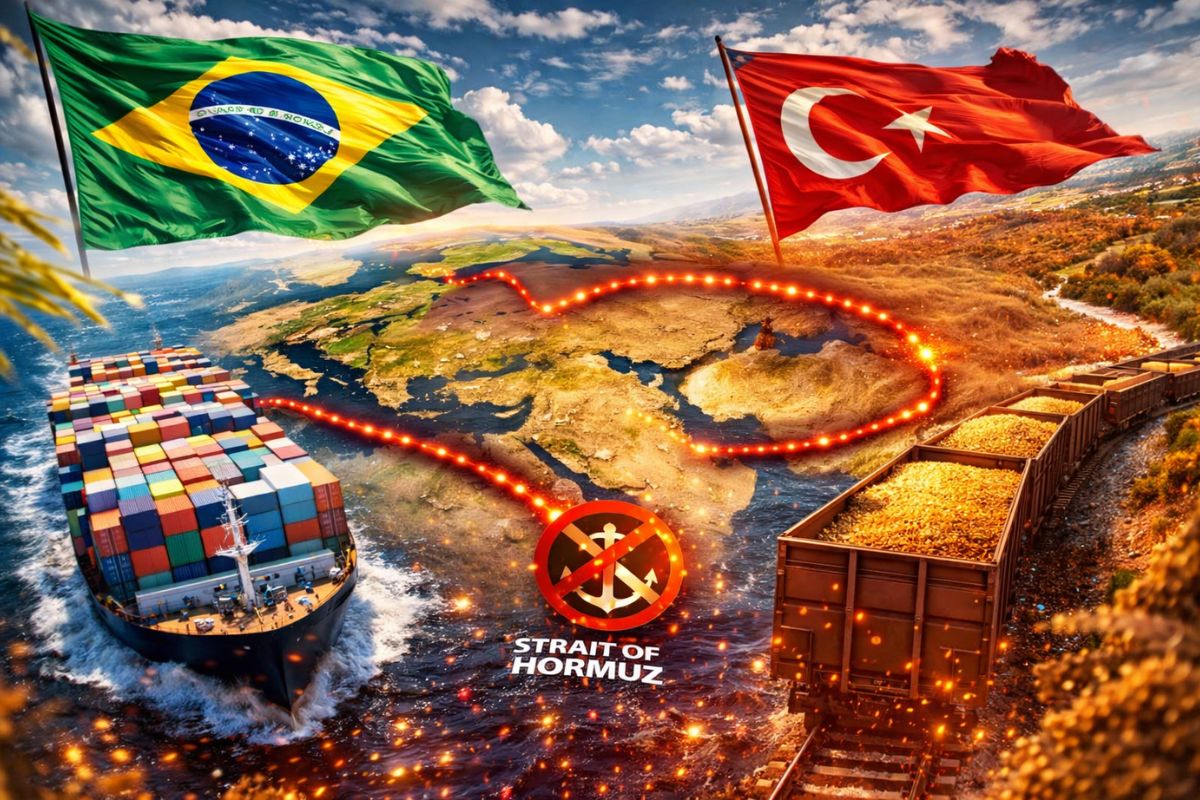
The war in the Middle East is the engine behind this increase. The conflict involving the United States, Israel, and Iran has affected oil transport routes, led to the closure of the Strait of Hormuz, and pushed the barrel price close to $120. The rising oil prices are directly transferred to diesel at Brazilian pumps, and the effect reaches the gate without a filter.
For sugarcane producers, higher diesel prices not only increase field operations costs. Freight costs also rise, and sugarcane needs to be transported from the field to the mill, often covering dozens of kilometers. Every additional real per liter of diesel multiplies along the entire chain, from soil preparation to the delivery of sugarcane at the mill’s conveyor. The result is a budget that is increasingly tight.
The numbers that show the size of the problem for sugarcane producers
The diagnosis made by Aplacana of Monte Aprazível translates into numbers what sugarcane producers are facing. Diesel: increase of 20% to 25%. Fertilizers: increase of about 20%. Freight: rising proportionally to diesel. These are three cost vectors rising at the same time, without the price of sugarcane paid by the mills keeping pace in the same proportion.
Júlio Cesar Moreira, executive manager of the association, explains that the combination is particularly dangerous for sugarcane producers because the sector operates with supply contracts that were closed before the crisis. Those who negotiated the delivery of the harvest at prices from months ago now need to produce with much higher costs, without being able to pass on the difference. Margins shrink and, in some cases, may disappear.
The scenario is worsened by the fact that sugarcane is a crop that requires upfront investment. The producer spends on fertilizers, diesel, and maintenance months before harvesting and receiving. When costs explode in the middle of the cycle, there is no turning back: the money has already been committed, and the only way out is to try to reduce expenses where possible.
The alternatives that producers are seeking to survive
In light of rising costs, sugarcane producers in the interior of São Paulo have begun to adopt containment measures. One of the main measures is the partial replacement of chemical fertilizers with organic inputs, such as vinasse and filter cake, by-products of the sugar-energy industry that can be used as fertilizer. The switch does not eliminate the need for mineral fertilizers but reduces the quantity imported.
Another strategy is to limit operations to the essentials. Instead of making all applications scheduled in the agronomic calendar, some sugarcane producers are prioritizing only the most critical steps to ensure the harvest.
It is a risk management decision: spending less now may mean lower productivity, but it avoids financial collapse. The alternative to saving is debt, and with high interest rates, this option also comes with a high cost.
Moreira from Aplacana emphasizes that these alternatives are temporary measures. As long as Russia and China maintain fertilizer restrictions and the war in the Middle East continues to pressure diesel prices, sugarcane producers will operate under financial stress.
The definitive solution depends on geopolitical factors that are completely beyond the reach of those who plant sugarcane in the interior of São Paulo.
Why the effects will take months to be absorbed
Even if Russia and China resume exporting fertilizers tomorrow and oil prices return to normal levels, sugarcane producers will not feel immediate relief.
The agricultural input supply chain has inertia: the fertilizers bought at high prices are already in stock, the expensive diesel has already been burned in the machines, and freight contracts have already been closed under current conditions.
According to Aplacana, the complete cycle of absorbing the high costs can take three to six months after the market normalizes. This means that, even in the best-case scenario, sugarcane producers will live with compressed margins until the second half of the year.
For the smaller producers, who do not have cash reserves to withstand months of low profitability, the situation can become unsustainable.
The warning from sugarcane producers in the interior of São Paulo is not alarmism; it is arithmetic. When the two most expensive inputs in production rise by 20% or more at the same time, and the price of the final product does not keep pace, the math does not add up. And those who pay the difference are the producers, who absorb the losses until the market rebalances if the balance comes before the next harvest.
With information from the portal of G1.
Are you a rural producer or involved in the sugar-energy sector? Are you feeling the impact of rising diesel and fertilizer costs in your region? Share in the comments how the situation is affecting production; this exchange of information among sugarcane producers from different regions is essential at this time.







Seja o primeiro a reagir!