





 Portuguese
  English
  Spanish
  4 min of reading
  0 comments


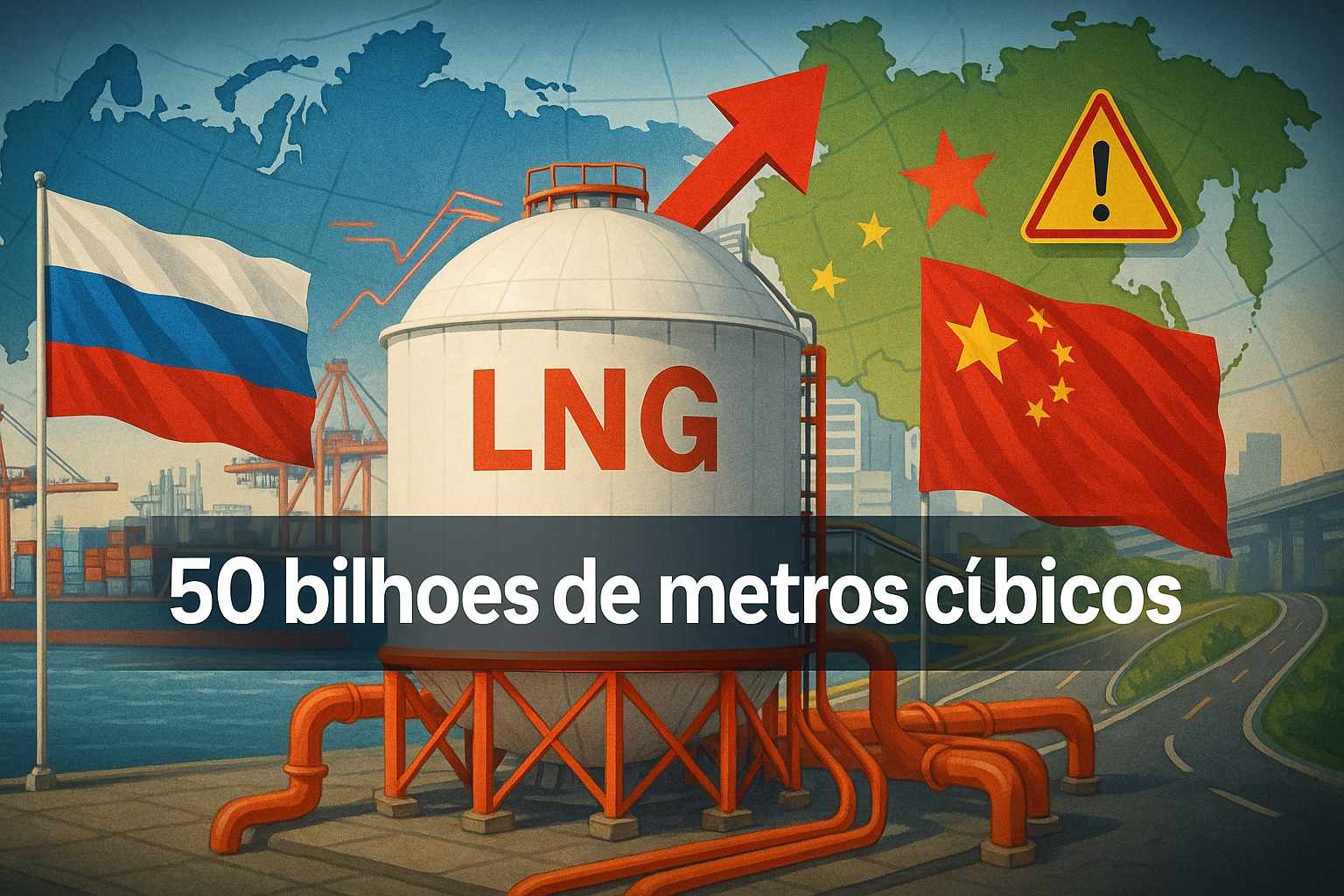
Russia And China Sign Memorandum For The Power Of Siberia 2 Pipeline, Which Provides For The Supply Of 50 Billion Cubic Meters Annually For Three Decades.
Russia and China have signed an agreement for the construction of the Power of Siberia 2 pipeline. The announcement was made following a meeting between Vladimir Putin and Xi Jinping in Beijing. The memorandum of understanding was confirmed by Alexei Miller, president of the Russian state company Gazprom.
According to Miller, the new pipeline will transport gas from Western Siberia to northern China, passing through eastern Mongolia.
The anticipated capacity is 50 billion cubic meters per year. The supply will be guaranteed for 30 years, in a move that reinforces the rapprochement between the two countries.
-
The government requests the Federal Revenue Service for a new system to automate the income tax declaration, reducing errors, time, and bureaucracy for millions of Brazilians.

-
Pix in installments, international Pix, and contactless payment without internet: the Central Bank revealed the new features coming to the tool that is already used by almost every adult in Brazil.

-
Mercado Livre has just started selling medications with delivery in up to three hours to your door, and this move could completely change the way Brazilians buy medicines on a daily basis.

-
In Dubai, rising tensions from the war in the Middle East are causing super-rich individuals to leave the Gulf and direct their fortunes to a new financial refuge in Asia.


Supply Details
The price of gas has not yet been defined but will be agreed upon in subsequent negotiations. In addition to Power of Siberia 2, Russia and China signed a separate agreement to increase the volumes of gas transported by the already operational Power of Siberia pipeline.
Miller emphasized that the project is strategically important for Gazprom. However, Beijing has yet to officially confirm the announcement.
The state agency Xinhua only reported that more than 20 agreements were signed, including those related to energy.
Impact Of Western Isolation
The West has drastically reduced its dependence on Russian energy since the invasion of Ukraine in 2022.
The European Union has set targets to end the import of Russian gas and oil by 2027. The United States banned Russian fossil fuels back in March 2022.
This scenario accelerated Moscow’s search for market alternatives. Therefore, the partnership with China emerges as a response to sanctions that have cut an important source of revenue for the Kremlin. The Power of Siberia 2 pipeline is part of this effort.
New Multipolar Order
Experts interpret the agreement as a significant political step. The signing should not be seen as insignificant, even if there are still obstacles.
Gazprom had been awaiting a definitive Chinese response for over a decade.
Now, the memorandum represents progress. For Granville, the gesture also symbolizes China’s strategic support for Russia amid the war in Ukraine.
He noted, however, that there is a gap between the memorandum and the final investment decision.
The case of the first Power of Siberia serves as an example: the initial understanding occurred in the 2000s, but only in 2014 was there an agreement on prices.
Context Of The SCO Summit
The signing of the memorandum occurred alongside the Shanghai Cooperation Organization (SCO) summit. Russia and China used the meeting to advocate for a new global economic and security order.
Xi Jinping stated that the world is experiencing a “new phase of turbulence” and that global governance has reached a “new crossroads.” The speech was interpreted as a criticism of the U.S. government.
The Chinese Stance
Beijing sought to conduct the negotiations carefully. Previously, China avoided commitments that could create friction with Washington.
However, the loss of over 120 billion cubic meters in exports to Europe increased Russian urgency. This would have given China greater leeway to negotiate favorable prices and conditions.
Xi Jinping has taken a firmer position against the U.S. According to him, the perception is that only with this stance do Americans back down.
He also mentioned the term “TACO,” an acronym for “Trump Always Chickens Out,” to illustrate the view that the former U.S. president hesitated in tariff decisions.
United Front Against The U.S.
The Shanghai Cooperation Organization seeks to present itself as a united block in the face of American pressure. For them, the central message is that the Global South is not willing to yield easily.
In this sense, the Power of Siberia 2 pipeline fits into a broader strategy.
It is not just about energy, but about strengthening political and economic alliances against sanctions and Western restrictions.
A Long Road Ahead
Despite the announcement, challenges remain. A memorandum of understanding does not guarantee the immediate execution of the project.
Negotiations regarding prices, deadlines, and financing still need to progress.
Even so, the political signal is clear. Russia and China have decided to deepen energy cooperation at a time of global tensions.
If realized, the project could reshape the flow of gas on the continent and mark a new phase in the partnership between the two countries.









Seja o primeiro a reagir!