





 Portuguese
  English
  Spanish
  4 min of reading
  1 comment


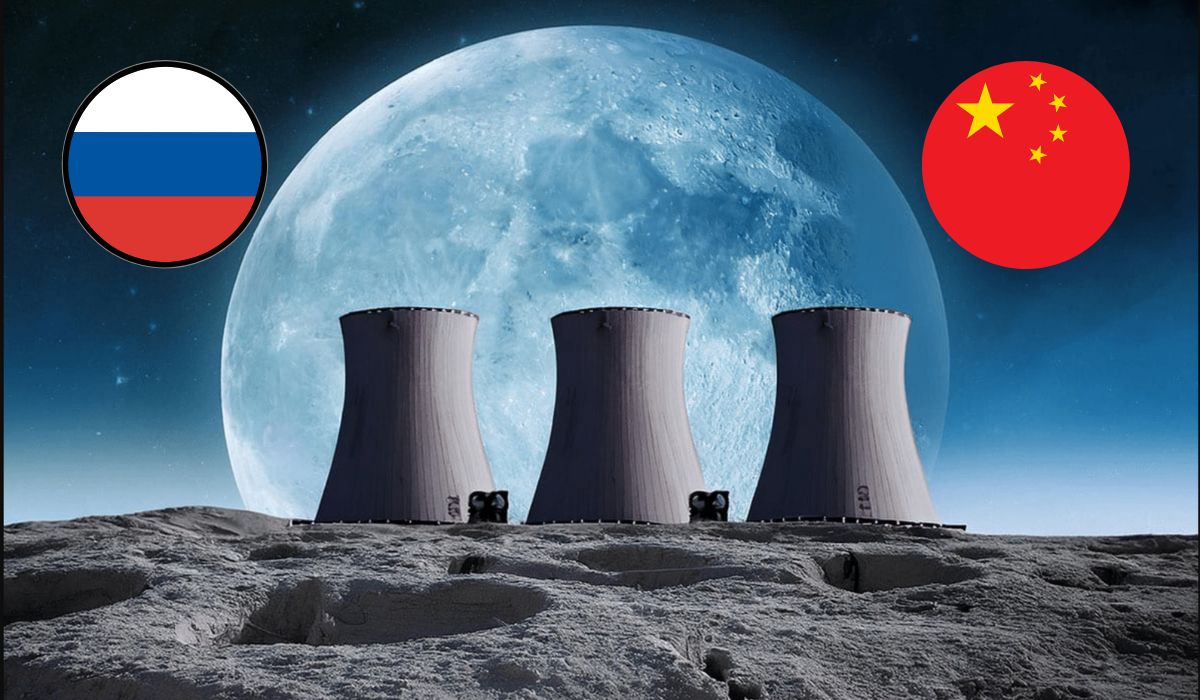


Russia And China Advance Distinct And Complementary Plans For The Moon, Involving Energy Generation, Scientific Bases And Crewed Missions, In A Context Of Bilateral Cooperation And Dispute For Space Prominence In The Coming Decades.
The Russian space agency Roscosmos has declared that it is working on a plan to install an automated energy generation unit on the Moon, referred to by officials as a nuclear power plant, aimed at sustaining future operations on Earth’s natural satellite.
The initiative is presented as part of the Lunar International Research Station project, conducted in partnership with China, while Beijing maintains public goals of conducting a crewed mission and establishing a permanent scientific base over the next decade.
According to official statements, the Russian proposal involves the creation of energy infrastructure capable of operating autonomously on the lunar surface.
-
Motorola launched the Signature with a gold seal from DxOMark, tying with the iPhone 17 Pro in camera performance, Snapdragon 8 Gen 5 that surpassed 3 million in benchmarks, and a zoom that impresses even at night.

-
Satellites reveal beneath the Sahara a giant river buried for thousands of kilometers: study shows that the largest hot desert on the planet was once traversed by a river system comparable to the largest on Earth.

-
Scientists have captured something never seen in space: newly born stars are creating gigantic rings of light a thousand times larger than the distance between the Earth and the Sun, and this changes everything we knew about stellar birth.

-
Geologists find traces of a continent that disappeared 155 million years ago after separating from Australia and reveal that it did not sink, but broke into fragments scattered across Southeast Asia.

The continuous supply of electricity is highlighted by Roscosmos as a technical requirement for long-duration missions, especially in environments where the alternation between light and dark periods makes the exclusive use of solar panels difficult.
What Moscow Says About The Lunar Power Plant
The plan was publicly mentioned by Roscosmos chief Yuri Borisov in March 2024.
At the time, he stated that Russia and China were evaluating the installation of a nuclear unit on the Moon between 2033 and 2035.
According to him, the structure would serve to power systems supporting scientific research and robotic equipment.
The director, however, did not detail the exact stage of development of the project.
Later, in December 2025, Roscosmos announced that it had signed a contract with NPO Lavochkin to advance the construction of a Russian lunar power plant.
The estimated completion deadline was indicated as by 2036.
In the statement, the agency did not provide complete technical specifications.
Still, it emphasized that energy generation is treated as a central element of the country’s lunar strategy.
Official statements indicate that the plant would be designed to operate automatically, at least in an initial phase.
This feature is described by the agency as necessary to reduce operational risks and logistical costs before the continuous presence of astronauts.
However, Roscosmos has not disclosed information about power, exact location, or reactor model.
Scientific Infrastructure And Long-Term Plans On The Moon
In addition to electricity generation, Russian officials have associated the project with the intention of establishing a permanent scientific base on the Moon.
In institutional statements, Roscosmos asserts that the availability of energy would allow continuous operation of communication equipment, sensors, and monitoring systems.
These elements are presented as prerequisites for regular scientific activities and for supporting future crewed missions.
The agency, however, has not released a detailed timeline for permanent human presence.
Official information is limited to indicating that the advancement of robotic infrastructure would precede this stage.
The discrepancies in the timelines released over the years suggest internal planning adjustments.
While 2024 statements mentioned the window between 2033 and 2035 for the installation of the plant, the announcement made at the end of 2025 indicated 2036 as a reference for the project’s completion.
There was no clarification on whether this date corresponds to the start of operations or merely the end of construction.

China’s Lunar Program And Crewed Mission
China, in turn, maintains public goals to expand its activities on the Moon.
Officials from the Chinese space program have already stated that the country aims to conduct its first crewed landing on the satellite before 2030.
This plan includes the development of new rockets, landing modules, and spacesuits.
Meanwhile, Beijing participates in the Lunar International Research Station project in partnership with Russia.
According to information released by Chinese official bodies, the goal is to complete a basic structure of the station by 2035.
This infrastructure is expected to include scientific modules distributed on the surface and in lunar orbit.
Technical presentations associated with the Chinese program indicate that the future base may use a combination of energy sources.
Among them, nuclear systems and solar panels are mentioned.
According to experts linked to the project, this diversification would be necessary to ensure a stable energy supply in different environmental conditions, especially in regions near the lunar south pole.

Cooperation Between Russia And China And The International Scenario
The cooperation between Russia and China in the field of lunar exploration is presented by both parties as strategic.
Communications from Roscosmos emphasize that the partnership aims to bring together complementary technical experiences and capabilities.
Among the cited points are energy systems, landing technologies, and remote operation.
This movement occurs in a context of multiple ongoing lunar programs.
The United States maintains the Artemis program as its main initiative for the return of astronauts to the Moon.
At the same time, they are monitoring advances from other countries.
Analysts consulted by international outlets point out that the overlap of timelines reflects the increasing global interest in the satellite, without necessarily indicating coordination among all projects.
Despite the term “international,” details about the participation of other countries in the station led by Russia and China have yet to be fully clarified.
So far, official announcements focus on bilateral cooperation.
Invitations to external partners remain generic, without disclosure of agreements with third parties.
With timelines that have already undergone public revisions and projects at different stages of definition, the progress of these initiatives tends to be accompanied by announcements of preparatory missions and equipment tests.






Qual seria o conceito técnico dessa Usina Nuclear? Resfriamento, ok, o vácuo da conta, mas e o aquecimento e geração de energia? Aqui, usinas nucleares funcionam por geração térmica, usando água…. E lá?