





 Portuguese
  English
  Spanish
  3 min of reading
  11 comments


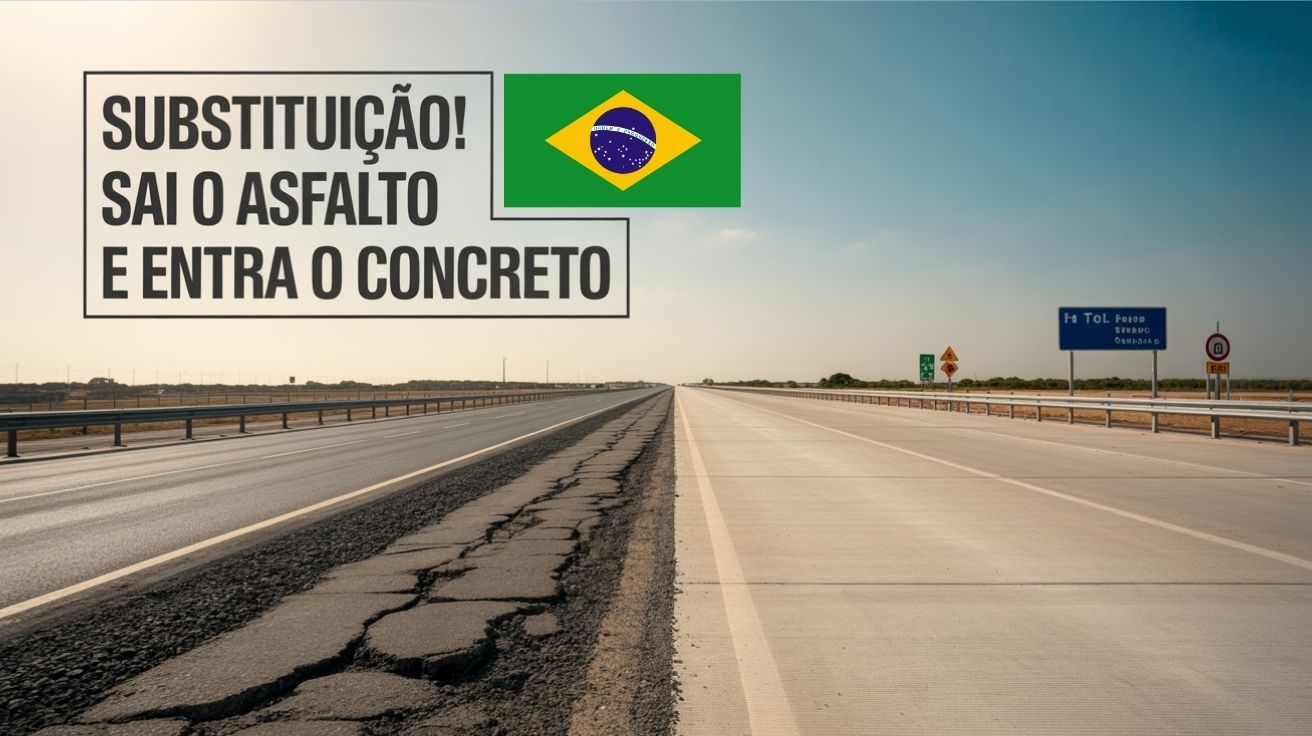


Concrete Starts to Occupy Space in Privately Managed Highways, Promises 30-Year Durability, and Challenges the Traditional Asphalt Paving Model in Strategic Sections of the Country.
The choice of concrete pavement is starting to gain traction in private highway concessions, challenging the dominance of asphalt in strategic areas of Brazil.
With greater durability and significant reductions in long-term maintenance costs, companies operating toll roads are starting to consider concrete as the ideal solution for high-traffic roads.
With an estimated lifespan of up to 30 years, rigid pavement presents itself as a lower-cost alternative in the lifecycle of the infrastructure, attracting the attention of concessionaires interested in reducing interventions and increasing the reliability of the network under their management.
-
Motorola launched the Signature with a gold seal from DxOMark, tying with the iPhone 17 Pro in camera performance, Snapdragon 8 Gen 5 that surpassed 3 million in benchmarks, and a zoom that impresses even at night.

-
Satellites reveal beneath the Sahara a giant river buried for thousands of kilometers: study shows that the largest hot desert on the planet was once traversed by a river system comparable to the largest on Earth.

-
The government requests the Federal Revenue Service for a new system to automate the income tax declaration, reducing errors, time, and bureaucracy for millions of Brazilians.

-
Scientists have captured something never seen in space: newly born stars are creating gigantic rings of light a thousand times larger than the distance between the Earth and the Sun, and this changes everything we knew about stellar birth.


This silent yet consistent change is occurring as new concession contracts bring about higher performance requirements and budget predictability.
Advantages of Concrete Pavement in Highway Concessions
The private sector operates under strict goals of road quality, traffic fluidity, and adherence to contractual deadlines.
On highways where truck traffic is constant and stops for asphalt resurfacing represent revenue losses and increased accident risks, concrete is starting to stand out as a long-term bet.
Concrete pavement, although requiring a higher initial investment, drastically reduces the need for periodic maintenance, a recurring problem on asphalt highways.
It also better resists deformations caused by heavy loads, a critical factor on logistics routes used for transporting grains, minerals, or industrial inputs.
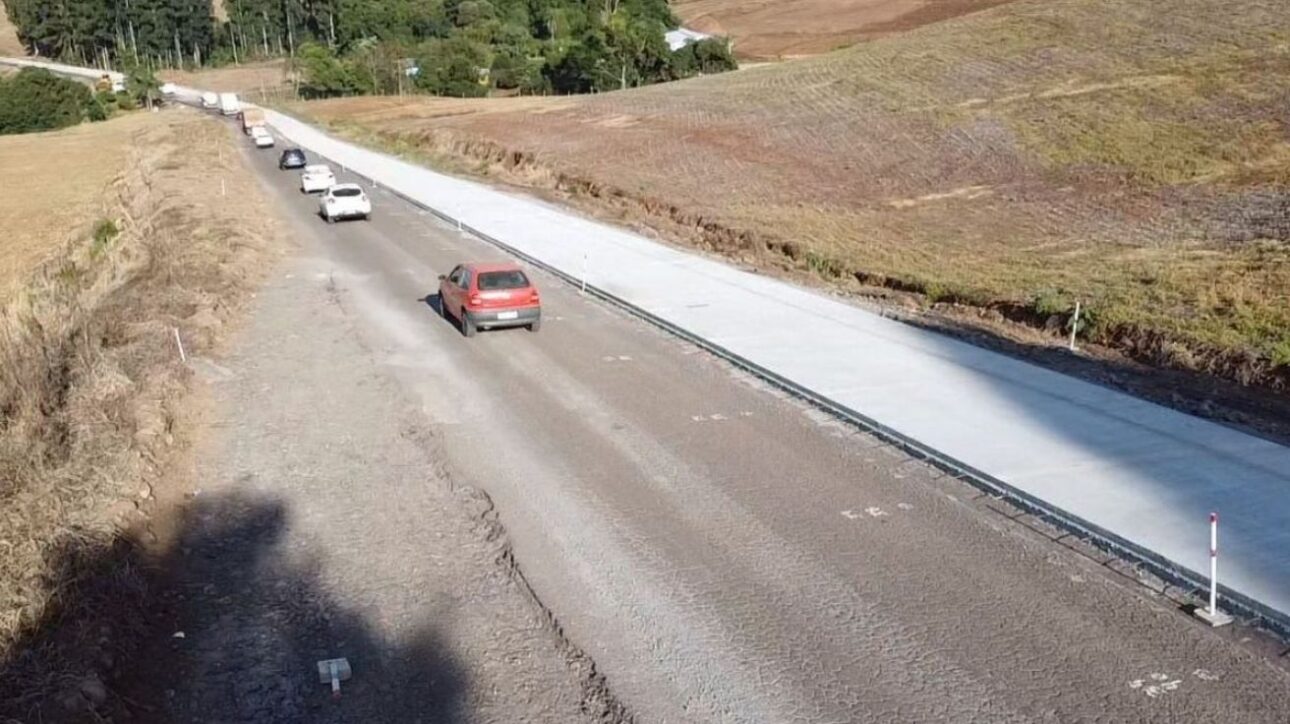
Where Concrete is Already Present in Privately Managed Highways
Privately managed highways in São Paulo and the South of the country are already using rigid pavement, whether in main sections or additional lanes.
On routes like SP-270 (Raposo Tavares Highway) and SP-330 (Anhanguera Highway), operated by groups such as CCR and Entrevias, there are records of concrete usage in logistic accesses, passing lanes, and marginal roads.
These experiences, although sporadic, serve as models for future paving works within the concessions.
Operators evaluate technical performance, impact on traffic fluidity, and maintenance costs to decide on the expansion of concrete pavement usage in new work fronts.
Concrete Offers Cost Stability for Concession Contracts
Asphalt cement (CAP) has a price tied to the international oil barrel quotation, which creates instability in project costs.
Therefore, concessionaires have started to consider concrete as a less fluctuating alternative.
This guarantees greater predictability in the financial management of contracts, which is crucial in long-term concessions.
Additionally, concrete reflects more sunlight than asphalt, contributing to reducing the urban heat island effect in urban areas.
This factor, combined with durability and low maintenance frequency, minimizes lane closures, a critical indicator for operators’ performance before regulatory agencies.
Sustainability and ESG Image Drive Concrete Adoption
Concessionaires that adopt concrete pavement also seek to reinforce environmental and governance (ESG) commitments.
The technology allows the use of recycled materials, such as steel slag, and contributes to the reduction of greenhouse gas emissions over the highway’s lifespan.
In Santa Catarina, for example, the use of rigid pavement is starting to be evaluated for sections of BR-470 under possible concession.
Although decisions depend on technical studies and contract modeling, companies in the sector have already shown interest in concrete as a competitive and environmentally advantageous differential.
Growth Trend of Concrete on Brazilian Roads
According to the National Department of Transport Infrastructure (DNIT), the use of concrete represents only 2% of the federal road network, but growth is projected to reach 10% in the next ten years.
This data does not include sections under private management, which may advance independently and more rapidly.
Despite the advantages, concrete pavement faces technical challenges.
The higher initial cost and the curing time before opening to traffic are still considered obstacles.
The qualification of the workforce for execution and oversight of the works is also a focal point to ensure service quality.
With pressure from the private sector and new concession models that prioritize quality, will concrete become the standard for Brazilian highways in the coming decades?




30 anos…
Paraná em vários trechos e etapas na qual foi realizado, apontam formação de canais, acumulando água já em seus primeiros anos…
Com todo o empenho em fabricar e liberar cada vez mais cam8nhkes, pesados, e com excesso se carga sem fiscalizações, onde todos os que deveriam nos representar e bem fazer uso do dinheiro público, se beneficiam, é fácil prever que apenas arcaremos mais uma vez, com os custos…
Aqui no município o prefeito até tentou, colocou. Faz um ano. O concreto todo trincando já.
Eu tenho minhas dúvidas nas normas de construção de nossas rodovias, tanto no concreto, como também no betuminoso (asfalto).
Tanto em como no noutro, a execução de todas as fases de terraplenagem devem ser executas ao rigor seguidas de perto pela fiscalização externa e não dá construtora que executa a obra. Pois é daí que vai ter a real durabilidade do piso aplicado.
Por exemplo: a BR 381 de Belo Horizonte João Monlevade ainda não está pronta para ser entregue à iniciativa privada, já tem inúmeros pontos de reparo do concreto que foi aplicado.
Dinheiro público jogado fora por trabalhos mal executados.
E na questão do betuminoso (asfalto), segue numa mesma lógica, pois as camadas que são aplicadas, são muito finas e com o peso dos caminhões deterioram muito rápido e com as chuvas, contaminam o solo compactado e causando assim, inúmeros buracos nas vias de rolagem das pistas.
Portanto ambos tem duração longa, desde que sigam normas mais rígidas de execução nas fases iniciais de construção da rodovia.