





 English
  Francês
  Alemão
  Italiano
  Japonês
  Norueguês
  Portuguese
  Spanish
  4 min of reading
  1 comment


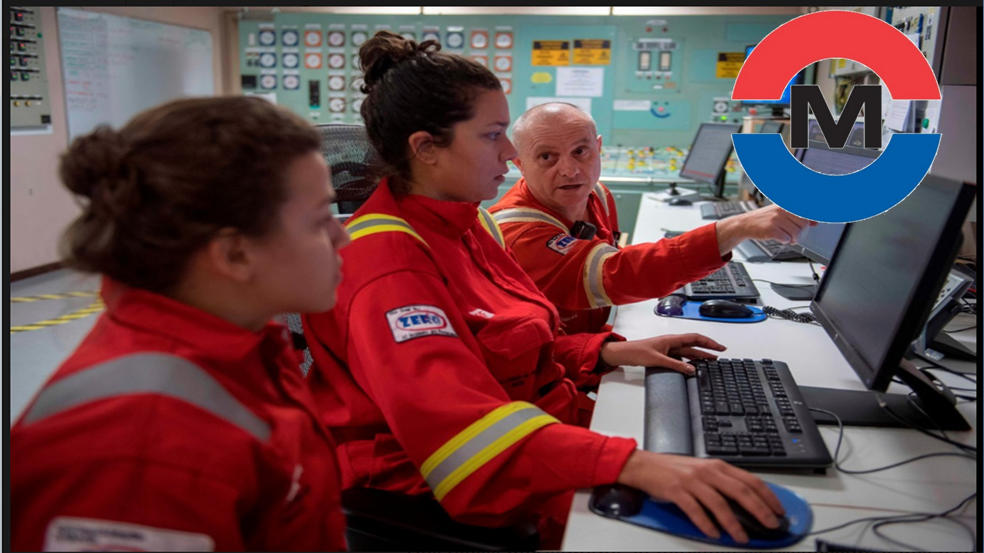
240 Km Off The Coast, Brazilians Working on the FPSO Cidade de Itaguaí Reveal Everything That Happens Onboard This Offshore Unit
 [supsystic-social-sharing id=’1′]On an offshore unit that extracts about 150 thousand barrels of oil and more than 8 million m³ daily at depths easily exceeding 7 km in the Brazilian pre-salt in the Santos Basin, these are statistics that are part of the life of more than 100 professionals onboard the FPSO Cidade de Itaguaí, which leads us to the following question: What is there to do when the shift ends in such a remote and confined place?
This unit was originally an oil transport ship that was adapted to become an FPSO (Floating Production Storage and Offloading Unit). It measures an incredible 300 meters in length, allowing for the installation of restaurants, living quarters, smoking lounges, TV rooms, a gym, game rooms, and other spaces that do not require PPE.
 To minimize the lack of contact with family and external environments, most of these platforms now offer free Wi-Fi and phone access, with a daily limit of 15 minutes. Luiz Grady, a Chemical Engineer at Petrobras, uses his tablet to stay connected with his family on land, then plays video games with his companions onboard and talks about other things, especially football.
-
Government unlocks R$ 554 million for a highway that has been requested for decades and accelerates the duplication of BR.
-
Without bricks, without cement, and without endless construction: the cardboard house that is assembled in modules and can be moved.
-
Billions of barrels on the equatorial margin could lead Amapá to double its oil production in Brazil — the state aims to enter the route of companies in the Campos Basin, attract investments, and boost jobs and businesses in the oil and gas sector.
-
Without bricks, without cement, and without endless construction: the cardboard house that is assembled in modules and can be moved.

“The atmosphere is quite homely, and it has to be, right? We build a lot of friendships onboard since we spend half our lives here”, he says, having worked onboard for eight years and also taking advantage of the internet to occasionally check the performance of his investments.
Barbecue and Parties
For Brazilians, it’s common to have barbecues, especially on Sundays to socialize, right? There are such activities on the platform too, but the beer must be non-alcoholic. In addition, there are pizza nights and evangelical services on this day, and the pastors are scaffolding builders. Every 15 days, there is a celebration for the monthly birthdays with all the rights.
 Bruna Pacheco is an employee of MODEC, and her role is a production operator, being one of the few women onboard. She says her job is tough, but she enjoys it: “I’m from Macaé and I always saw my father working offshore. During high school, I always had this reference; I always wanted to work in this area”, she says, believing that working at sea is not for everyone. “It’s a bit of an adventure and it’s hostile if you think about the risks. There’s also the distance from family and confinement.”
She reports that she really enjoys working out, watching movies, and engaging in religious activities. “The gym, for me, is a necessity because I’ve always liked to release my energy through exercise. Even though I am putting in physical effort, I relax at the gym.”
Lucas Azevedo, a Safety Technician at Modec, mentions that he has been onboard for three years and has gained a lot of weight due to the availability of food 24 hours a day. “Here we eat a lot. If you’re not going to the gym, you’re done for,” he jokes. For him, the biggest challenge is missing out on holidays, like Christmas and New Year’s. “The feast here is very good, with shrimp and lobster. I’ve never eaten so well. Even so, it’s the worst part. I miss my mother and my brothers a lot, especially on my birthday.”
Interacting with Foreigners on the FPSO
Lucas, who lives in the municipality of Nova Friburgo-RJ, says that his lack of English prevented him from getting an offshore job, but he overcame this difficulty by saying, “In 2014, I decided that I would dedicate myself to that, I took all my savings and went to Canada. I spent eight months studying English, and shortly after I returned, I got the job,” he recounts. His direct boss on the platform is South African, and Lucas only speaks with him in English, often translating instructions for other employees.
85% of the employees onboard are Brazilian, the rest are foreigners. It’s a true mix of people and cultures that base their communication on the English language. There are people from Poland, Ukraine, Singapore, Italy, India, and the Philippines. “The cultural exchange here is significant. To work here, you have to learn to respect things that aren’t part of our customs,” Lucas says.
 Osvaldo Kawakami, who is the Production Manager for Petrobras onboard the FPSO Cidade de Itaguaí, says that in the 80s he could not even dream of the comforts they have today, and the hours of rest were spent playing cards or fishing. “If I were to compare, it was like a one-star hotel back then, and now it’s a five-star,” he says. “There were no restrictions on fishing, and what we did was fish, play cards, checkers, and chess. Today, they play video games. The routine of the workers has changed a lot. We used to play a lot of cards, foosball, and pool. The only worry was knowing how the world was doing and how the family was doing,” he recalls, also remembering the feeling of a quiet night at sea. “The feeling of calm and tranquility is absurd. I always say that I have never seen a sunset or sunrise as beautiful as that from a platform.”







Seja o primeiro a reagir!