





 Portuguese
  English
  Spanish
  4 min of reading
  0 comments



MEC May Change the Salary Floor Adjustment for Teachers! The Proposal Changes the Base Date and May Affect States and Municipalities. The New Model Seeks Budget Planning, But Does It Benefit Educators? Salary, Valuation, and Controversy! Find Out What May Change in Teachers’ Careers!
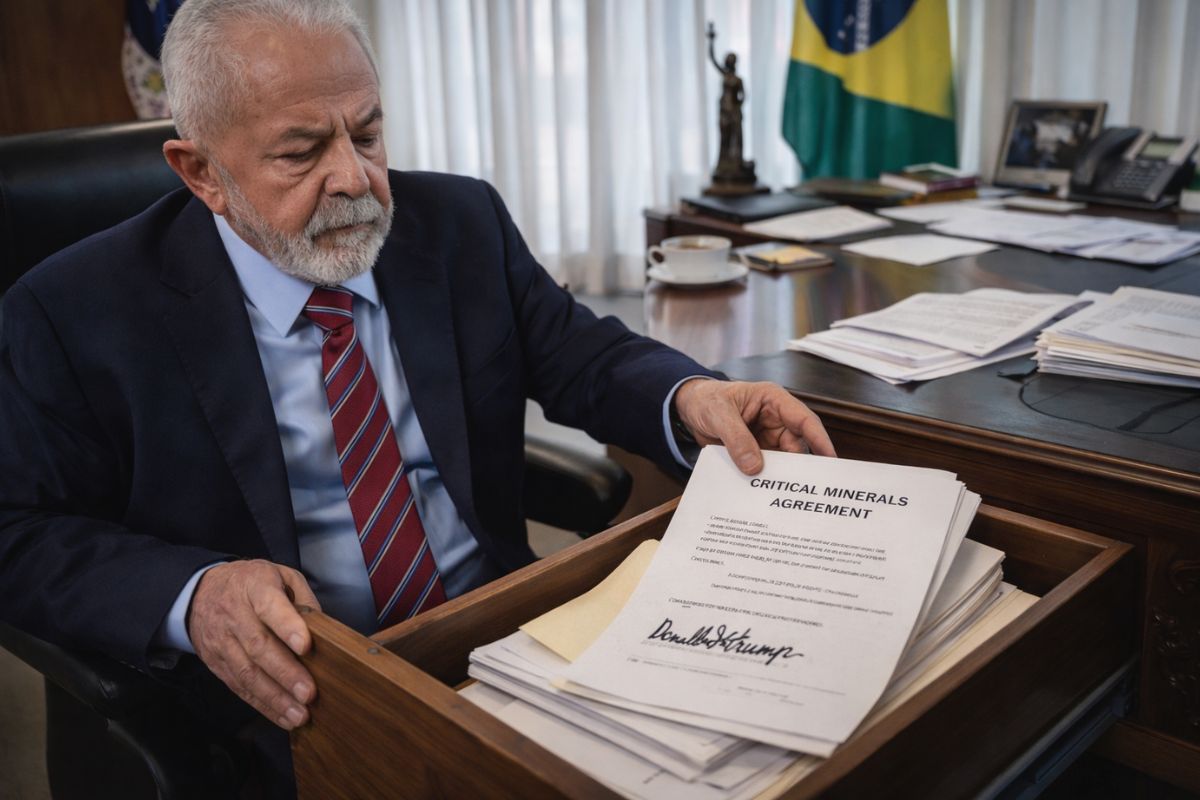
Ministry of Education (MEC) studies a significant change in the salary floor for basic education teachers in Brazil.
The proposal under review suggests changing the base date for adjustments, currently at the beginning of the year, to mid-year.
The aim is to allow states and municipalities to better plan their budgets, avoiding financial execution problems.
-
Petrobras buys back fields for billions — what no one is talking about regarding this decision and how it could impact jobs and oil in Brazil.

-
Grande SP gains unprecedented technology to control water flow with installation in just 8 hours and a promise to reduce leaks without the need for human intervention.

-
With the new law, shopping malls will no longer operate on Sundays, similar to supermarkets; the rule imposes closure by 9 PM, foresees a fine of R$ 15,000, suspension, and even revocation of the license in Salvador.

-
Only 7 ships have crossed the Strait of Hormuz in the last 24 hours when the normal is 135 per day, and the United Arab Emirates confirms that 230 oil tankers loaded with oil are ready to depart but are prevented from leaving while Iran turns the waterway into a sovereign control post.

Change in the Base Date of the Teachers’ Salary Floor
The change in the base date is a point that has been debated by the MEC and entities related to education.
According to experts, the adjustment of the teachers’ salary floor in January causes considerable financial impacts in states and municipalities, which need to quickly adapt their budgets.
During the Education Now event, promoted by Todos Pela Educação, the Minister of Education explained that the idea is to anticipate the definition of the adjustment before the approval of municipal and state budget laws.
This way, managers could start the year already aware of the updated floor value, facilitating financial predictability.
If this change is implemented, teachers could have a more predictable salary planning, and municipal and state managers would be able to better organize public accounts without unforeseen events that compromise the payment of professionals.
Teacher Salary Floor in Brazil: Values and Challenges
Currently, the national salary floor for teachers is set at R$ 4,867.77 for 40-hour workweeks, according to a 6.27% adjustment applied in 2024.
Created by a federal law in 2008, the floor aims to ensure a minimum remuneration for basic education professionals throughout the country.
However, in practice, many states and municipalities are unable to comply with this requirement, generating salary disparities between different regions.
While some locations manage to pay above the floor, others face difficulties in complying with the legislation, leading to conflicts between city halls, state governments, and unions in the category.
The Dilemma Between Budget and Professional Valuation
The debate about the teachers’ salary floor involves a dilemma between two interests:
For public managers, increasing the salary floor represents a significant financial impact, especially for smaller cities with low revenue.
Paying teachers is one of the largest expenses of municipal and state public servanthood.
For teachers, fair remuneration is essential to ensure career valuation, attract new talent to education, and prevent the departure of qualified professionals to other fields.
The Role of FUNDEB in Paying Salaries
A large part of the financing of teachers’ salaries comes from the Fund for Maintenance and Development of Basic Education and Valorization of Education Professionals (FUNDEB).
This permanent fund was regulated by a constitutional amendment in 2020 and had new rules established in 2022.
The changes in FUNDEB have been discussed by representatives of the government, states, municipalities, and unions, especially regarding the transfer of resources to ensure adequate payment to teachers.
Even with FUNDEB support, many federal entities report difficulties in covering salary floor adjustments.
The Future of the Teachers’ Salary Floor
The proposal to change the base date of the salary floor can be an important step towards improving budget predictability, but there are still structural challenges that need to be addressed:
Regional Inequality: States and municipalities with lower financial capacity face difficulties in meeting the salary floor.
Valuation Policies: Simply increasing the floor is not enough. It is necessary to invest in continuous training, career plans, and better working conditions.
Compliance and Enforcement of the Law: Many public managers do not properly follow salary floor legislation, leading to conflicts and demands from the category.
In light of this scenario, MEC continues to engage in dialogue with representative entities of teachers, state and municipal governments to find solutions that reconcile teacher valuation with financial sustainability.
Discussions about the salary floor continue, and education professionals are awaiting definitions that may directly impact their salaries and working conditions in the coming years.






-

Uma pessoa reagiu a isso.