





 Portuguese
  English
  Spanish
  8 min of reading
  0 comments


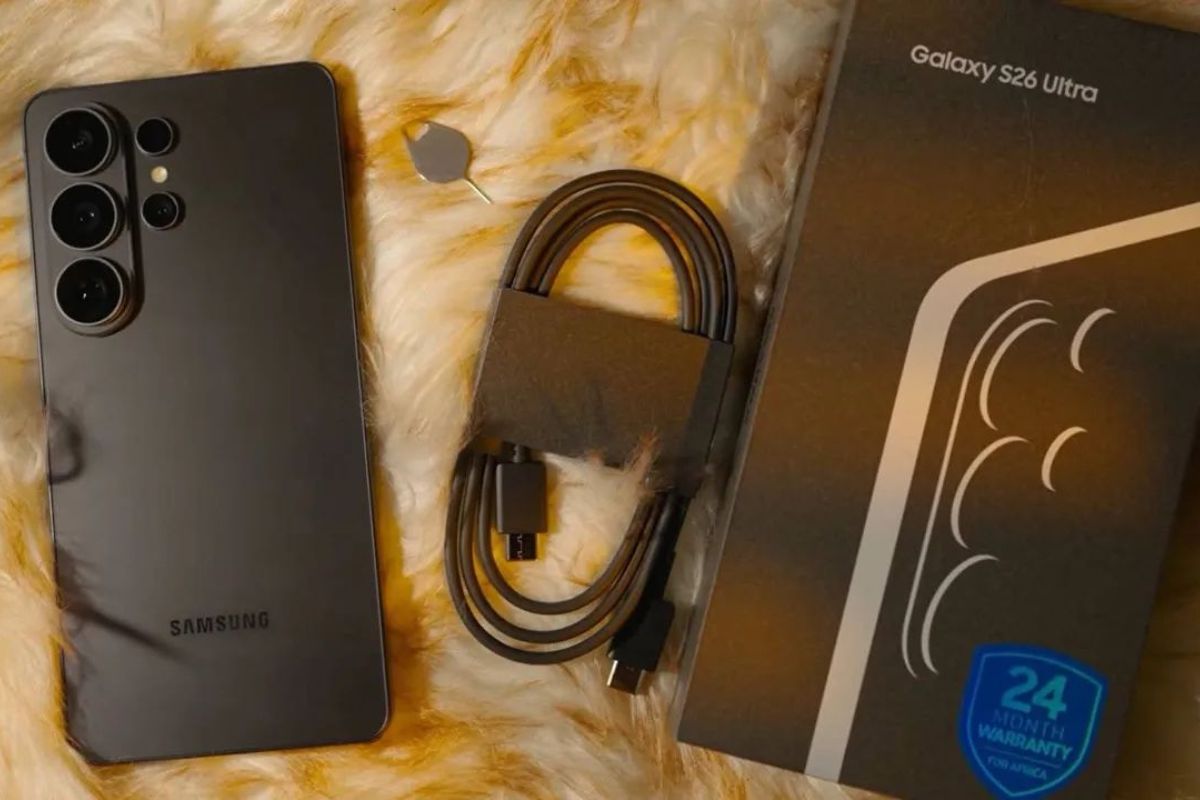
Presented at Samsung Connected House in São Paulo, the Samsung Galaxy S26 Ultra arrives with options of up to 1 TB, 60 W wired charging, 8K recording, expanded Galaxy AI, and a screen with an exclusive privacy mode that blocks curious onlookers from any viewing angle.
The Samsung Galaxy S26 Ultra arrives in Brazil surrounded by a discourse of selective evolution, not complete disruption. At first glance, it retains much of what already placed the Ultra line at the top of Samsung, but adds changes that impact comfort, privacy, video, and processing, attempting to respond to the most common criticism aimed at the new generation: that it hasn’t changed much.
Upon initial contact in São Paulo, the device showed that Samsung preferred to refine very specific points rather than reinvent the entire formula. The screen with lateral viewing blockage, the Snapdragon 8 Elite in the Brazilian Ultra model, 8K recording, and the new stabilization features weigh in favor, while the 5,000 mAh battery and the S Pen without Bluetooth make it clear that not all previous demands were met.
Thinner Design, Less Aggressive Shape, and a Screen That Changes the Conversation

The first noticeable change of the Samsung Galaxy S26 Ultra is in the body. The device is thinner, more comfortable in the hand, and less aggressive in design, bringing the camera module and overall shape closer to the rest of the S line.
-
Scientists have discovered a gigantic magnetic anomaly hidden beneath the soil of Australia that mirrors the shape of the entire continent and holds geological records of two and a half billion years that could change what we know about the Earth.

-
The heatwave that has been affecting Brazil in recent weeks is coming to an end: a cyclonic vortex is moving in during Holy Week with heavy rains, and a cold air mass is already threatening to lower temperatures in the South starting in April.

-
(VIDEO) Cameras from an astronomical observatory captured two meteors falling over Santa Maria in Rio Grande do Sul with only a one-minute difference and such close trajectories that scientists are now investigating whether the two objects have the same origin.

-
Fireballs shoot across the skies of the USA and meteor explosions draw attention: what is causing this mysterious wave of sightings?


The intention is clear: reduce the feeling of “bulky” that has always accompanied part of the Ultra family, inherited from the squarer past of the Note era. Samsung aimed to make the flagship less intimidating without sacrificing its premium identity.
Even with this pursuit of ergonomics, the company kept the integrated S Pen. It remains present in the body of the device but still lacks Bluetooth, repeating the decision already made in the previous generation.
This means that the accessory remains useful for writing, note-taking, and precise navigation, but continues to lack functions such as remote control for the camera or presentations, features that some users still regret losing.
The truly new aspect, however, lies in the screen. The Samsung Galaxy S26 Ultra preserves anti-reflective technology, which already significantly reduces the discomfort of direct light, but gains a privacy mode that does something more unusual: it significantly hinders the visibility of content for anyone beside the user.
In practice, the user continues to see the interface normally from the front, while the side reading drops sharply. It is a direct response for those who have always resorted to privacy films to protect banking apps, messages, or social media.
This feature still offers two levels of intensity and can be activated generally in the system or only in specific apps. A significant limitation is that it exists only in the Ultra.
According to the explanation presented, this is not a feature that could arrive later through software, because it depends on the physical construction of the screen itself. In other words, the Plus and standard models are left out of this novelty.
Maximum Power, Broad Versions, and a Battery That Did Not Advance

In Brazil, the Samsung Galaxy S26 Ultra comes with the fifth-generation Snapdragon 8 Elite, while the S26 and S26 Plus models use the Exynos 2600.
This choice clearly separates the Ultra from the rest of the line and reinforces the device’s position as the most complete version in the family. In terms of memory and storage, the presentation showed a configuration of up to 1 TB with 16 GB of RAM, in addition to 256 GB and 512 GB versions.
This technical specification helps sustain the longevity proposal. The device leaves the factory with Android 16 and promises seven years of system and One UI interface updates, which significantly extends the useful life for those who plan to stay longer with the same phone.
In a market where flagship devices have become a prolonged investment, this update cycle weighs as much as the camera or processor.
On the other hand, the battery did not keep pace with the same rhythm of novelty. The Samsung Galaxy S26 Ultra remains with a 5,000 mAh battery, exactly like the S25 Ultra. The justification presented revolves around technical caution and the decision not to adopt silicon-carbon batteries, a technology that has been appearing in Chinese competitors.
The result is conservative: Samsung improves processing, screen, and video, but keeps the energy capacity at the same level.
In charging, the situation became more ambiguous. The device now supports 60 W wired and 25 W wireless charging, which speeds up the battery replenishment, but the material shown in the presentation included a 25 W charger, not the maximum power one.
The gain exists, but it continues to accompany that recurring feeling that the company could have gone a bit further with the kit and the battery at the same time.
Galaxy AI More Integrated and a System That Tries to Act Before the Command
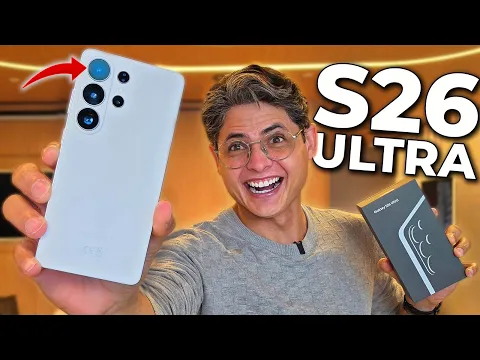

Samsung has pushed artificial intelligence back to the center of the experience, but now with a more diffuse approach and less dependent on direct commands alone. In addition to Bixby and Gemini, the brand has integrated Perplex into the system, while Galaxy AI continues to expand already known functions.
The promise is that the Samsung Galaxy S26 Ultra will better understand everyday use and deliver solutions more automatically, without waiting for the user’s explicit command at all times.
This integration is relevant because it attempts to change the perception of AI on mobile devices. Instead of just being a catalog of tools scattered across menus, it starts to act as a layer distributed across different parts of the system.
Samsung’s ambition is to make AI seem less like an isolated feature and more like the general behavior of the device. This includes everything from usage routines to multimedia and editing features.
In the gallery and video consumption, the brand has also expanded its capabilities. Noise cancellation, which was previously limited to locally stored content, now appears in apps like YouTube, Netflix, and Instagram as well.
This does not turn the device into a portable audio studio, but it significantly improves the experience for those consuming video in noisy environments and wanting to reduce external noise practically.
In everyday use, another important technical detail is chip flexibility. The Samsung Galaxy S26 Ultra accepts eSIM, physical chips, or combinations of both, which is relevant for those who work with two lines or alternate personal and professional use.
It may not be as flashy a feature as the camera or AI, but it remains a practical element that counts much in real use.
More Mature Cameras, Larger Aperture, and Video with Action Features
The photography foundation remains strong. The Samsung Galaxy S26 Ultra retains the main camera of 200 megapixels, but Samsung has adjusted something less visible and more important for the image: the aperture.
According to the presentation, the main camera now operates at f/1.4, allowing for greater light intake. This tends to improve performance in difficult scenes, reduce noise, and provide the processing with more material to work with, especially in low light.
The rear setup continues with a 0.6x ultra-wide, main camera at 1x, dedicated lenses for 3x and 5x, and zoom that can go up to 100x. The change was not an explosion of new megapixels but a refinement of capture and processing.
The processor itself is part of this equation, as the platform jump aids in post-processing and how the device interprets each scene.
In video, the device opens up more space for the argument of evolution. The Samsung Galaxy S26 Ultra records in 8K at 30 fps across different cameras and adds features that make the package more versatile.
Among them are an advanced stabilization mode for more abrupt movements, a 360-degree horizon lock, and an automatic framing feature that follows the selected object.
It is a package that brings the cell phone closer to more creative and dynamic uses, even for those recording while walking, biking, or making less predictable movements.
However, these modes do not always work at maximum resolution. Some features are limited to 4K at 30 fps, which shows that Samsung expanded possibilities but still makes concessions when mixing high resolution, tracking, and extreme stabilization.
In the front camera, there was no revolution in megapixels, but the explanation presented points to improvements in interpretation and cropping thanks to a dedicated co-processor for image processing.
Resistance, Colors, and the Effort to Seem Complete in Almost Everything
The device maintains IP68, which means resistance to fresh water and dust within the already expected standard for the category. This observation is important because the presentation itself reinforced the limit: saltwater continues to be a corrosive factor and does not fall within this resistance promise.
It is a known detail but necessary in a device that tries to present itself as robust in almost every aspect.
In terms of colors, the Samsung Galaxy S26 Ultra appears in Brazil in four shown options: white, violet, black, and a blue that, under certain lights, approaches green.
The visual proposal seems less extravagant than in previous generations, which aligns with the cleaner and less aggressive design strategy. It is a flagship that tries to look sophisticated without needing to shout that out all the time.
This effort for an image of completeness also appears in the general discourse of the device. The smartphone aims to be powerful, intelligent, comfortable, secure, and versatile in camera capabilities, but does not escape from choices that still generate scrutiny.
The retention of the 5,000 mAh battery and the absence of Bluetooth in the S Pen continue to be two of the easiest points to criticize in a product that, in other respects, tries to close almost all gaps.
Still, the initial balance is hard to call pure stagnation. There are concrete changes in the screen, video, processor, and in how Samsung pushes AI into the system.
The Samsung Galaxy S26 Ultra does not break with the past, but it also does not neatly fit into the caricature of “more of the same.”
The Samsung Galaxy S26 Ultra arrives in Brazil attempting to reinforce its position as the brand’s most complete Android without relying on a visual revolution or an absurdly different technical specification at all points.
The strategy was different: improve ergonomics, invest in a screen that solves a daily problem little explored by rivals, refine the camera setup, and expand the presence of AI in the system.
At the same time, the device conserves limits that prevent an automatic consensus. The battery has not evolved, the S Pen remains without Bluetooth, and part of the experience’s brilliance relies on features that are very specific to the Ultra, not the entire line.
If you had to choose what really matters in a flagship of this level, would you bet more on the privacy screen, the video and camera package, or would you pressure Samsung first for a bigger battery before any other novelty?








-

-

-

5 pessoas reagiram a isso.