





 English
  Francês
  Alemão
  Italiano
  Japonês
  Norueguês
  Portuguese
  Spanish
  5 min of reading
  0 comments


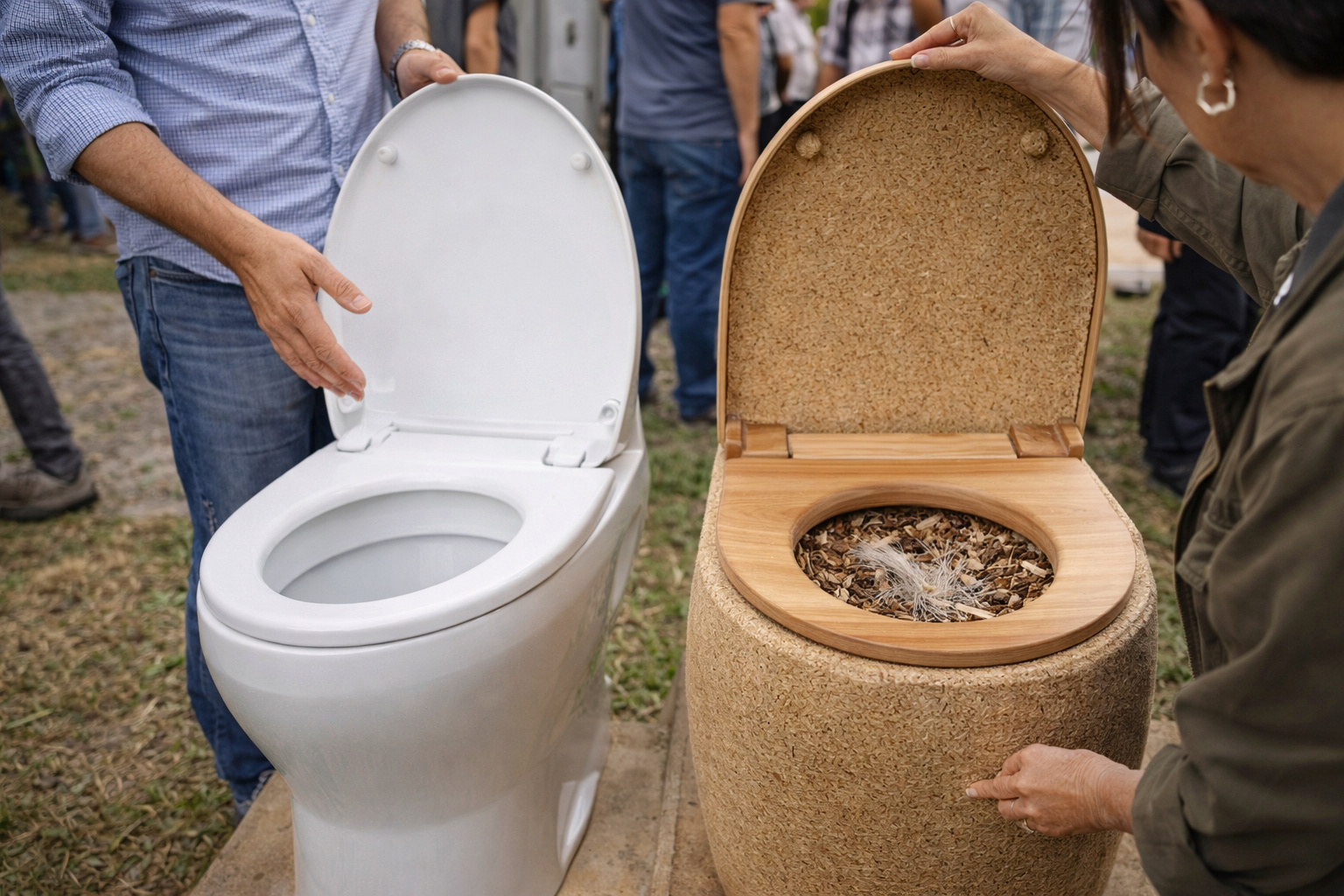
Autonomous Technology Treats Feces and Urine in the Equipment Itself, Eliminates Flushing, and Drastically Reduces Potable Water Consumption in Bathrooms
An innovation aimed at sustainable sanitation is starting to gain international attention and may change the way households deal with human waste.
The so-called waterless ecological toilet uses natural biological processes and eliminates the need for flushing, complex plumbing, and electricity.
Thus, instead of sending feces and urine to distant sewage networks, the system treats waste directly in the equipment itself, using fungi and microorganisms to decompose organic matter.
-
With earth, bamboo, straw, and lime mortar, a specialist builds a house for just over $460 and draws attention for its cost being much lower than traditional construction.
-
Rodrigo de Freitas Lagoon advances in environmental recovery with sanitation, elimination of irregular sewage, and the resumption of water sports in Rio de Janeiro.

-
Sustainable housing gains strength with a nationally awarded project in Campo Grande, highlighting innovative solutions that combine sustainability, urban integration, and efficiency in the use of natural resources.

-
City Where Residents Live Underground to Escape 52°C May Be a Picture of the Future on an Increasingly Hot Planet

Studies released between 2025 and 2026 by sustainable sanitation initiatives in Canada indicate that decentralized solutions expand access to sanitation in regions with limited infrastructure.
Furthermore, the equipment maintains proper hygiene, odor control, and accessibility, providing an experience similar to a conventional toilet and demonstrating how biological technologies can support new sanitation models.
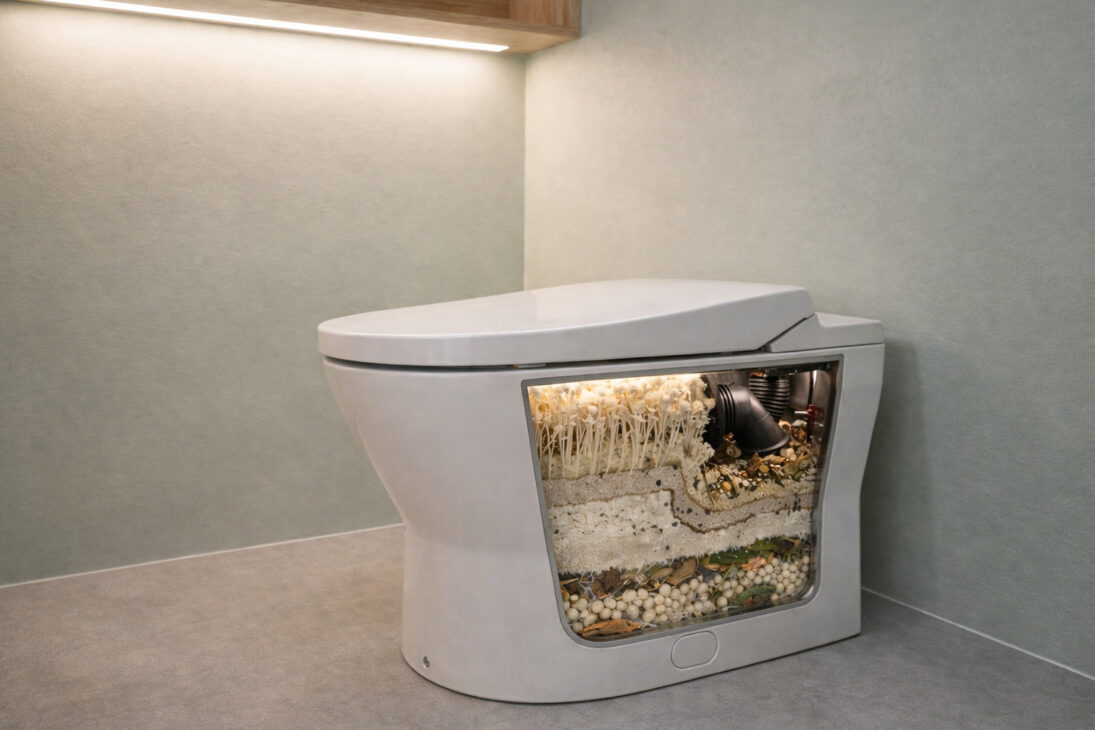
How the Waterless Ecological Toilet Works
First, the dry ecological toilet treats feces and urine directly within the structure of the equipment itself, without the need for flushing or connection to sewage networks.
Unlike traditional toilets, which use water to transport waste to treatment plants, this system uses natural biological processes to decompose waste and reduce odors.
Among the main elements of the system is the mycelium, a structure formed by fungi that accelerates the decomposition of organic matter.
Inside the toilet, there are layers of biological materials and natural filters that create the right environment for this process.
In this environment, the mycelium grows on internal supports and forms a kind of “living sponge” capable of processing biomass and gradually transforming waste into reusable compounds, which is particularly relevant in areas with water scarcity.
Environmental sanitation experts cited in studies by the World Health Organization and the United Nations Environment Programme emphasize that local and decentralized solutions expand access to basic sanitation, especially in places where traditional infrastructure still does not serve the entire population.
How Much Water Can Be Saved
The impact on water consumption is one of the main factors driving interest in this technology. A conventional toilet uses, on average, between 6 and 12 liters of water per flush in households, while more efficient models still consume between 3 and 6 liters per use.
When a person uses the bathroom about five times a day and each flush consumes six liters, daily usage can reach 30 liters of potable water just to transport waste. Over a year, this volume exceeds 10,000 liters of water. In a household with four residents, water consumption can exceed 40,000 liters annually dedicated solely to toilet operation.
In this scenario, the waterless ecological toilet practically eliminates this specific consumption, as it performs local waste treatment and does not use flushing.
Why the Waterless Toilet Is Considered Sustainable
The main environmental advantage of this system lies in the rational use of natural resources. By eliminating flushing, the toilet reduces potable water consumption and also decreases the volume of sewage that reaches urban treatment networks.
Moreover, waste ceases to be merely refuse. In this model, feces and urine go through biological processes that can transform them into agricultural inputs, strengthening a circular economy model where some nutrients return to the soil.
Among the main environmental benefits are the reduction of potable water consumption in bathrooms, the production of solid organic compost, the generation of liquid fertilizer, the reduction of pressure on sewage networks and treatment plants, and the lower need for cleaning and deodorizing chemicals.
Still, experts emphasize that the compost generated needs to go through temperature control and stabilization period before agricultural use, ensuring safety for people, animals, and the environment.
Where the Dry Ecological Toilet Can Be Used
The dry ecological toilet operates as an autonomous module that does not depend on a water supply or electricity, expanding installation possibilities in different contexts. Thus, this technology can serve isolated communities to urban projects focused on sustainability.
In remote areas, the equipment can serve rural communities without sewage networks or places with limited access to potable water. In parks and natural areas, the system can be installed on trails, campsites, and environmental refuges that require low impact on the ecosystem.
In sustainable urban areas, the ecological toilet can also support projects for public squares, bike paths, and cultural spaces that seek to reduce water consumption and effluent generation. Furthermore, in emergency situations, such as natural disasters or humanitarian crises, this type of toilet can function in temporary shelters and provisional structures when water and sewage infrastructure is compromised.
In several countries, dry toilets have already reduced diseases associated with a lack of sanitation, as well as decreasing river contamination.
Benefits for People and the Planet
In addition to environmental benefits, the ecological toilet can also incorporate solutions aimed at accessibility. Some models include support handrails, space for wheelchairs, and adapted height, allowing use by the elderly, people with reduced mobility, and different user profiles.
These features expand access to sanitation in vulnerable urban and rural communities, especially in areas where traditional infrastructure has yet to reach the entire population.
With research advancements through 2026, technologies based on microorganisms and mycelium reinforce an emerging trend in the sanitation sector. Experts indicate that compact, autonomous solutions based on natural biological processes may gain traction amid water crises, rapid urban growth, and the need for more sustainable systems.
In this context, the waterless ecological toilet emerges as an alternative capable of reducing the consumption of natural resources and expanding access to sanitation in different scenarios.
In light of these changes, do you believe that waterless ecological toilets could become common in future homes, or will they remain restricted to sustainable projects and regions without infrastructure?










-

2 pessoas reagiram a isso.