





 Portuguese
  English
  Spanish
  3 min of reading
  6 comments


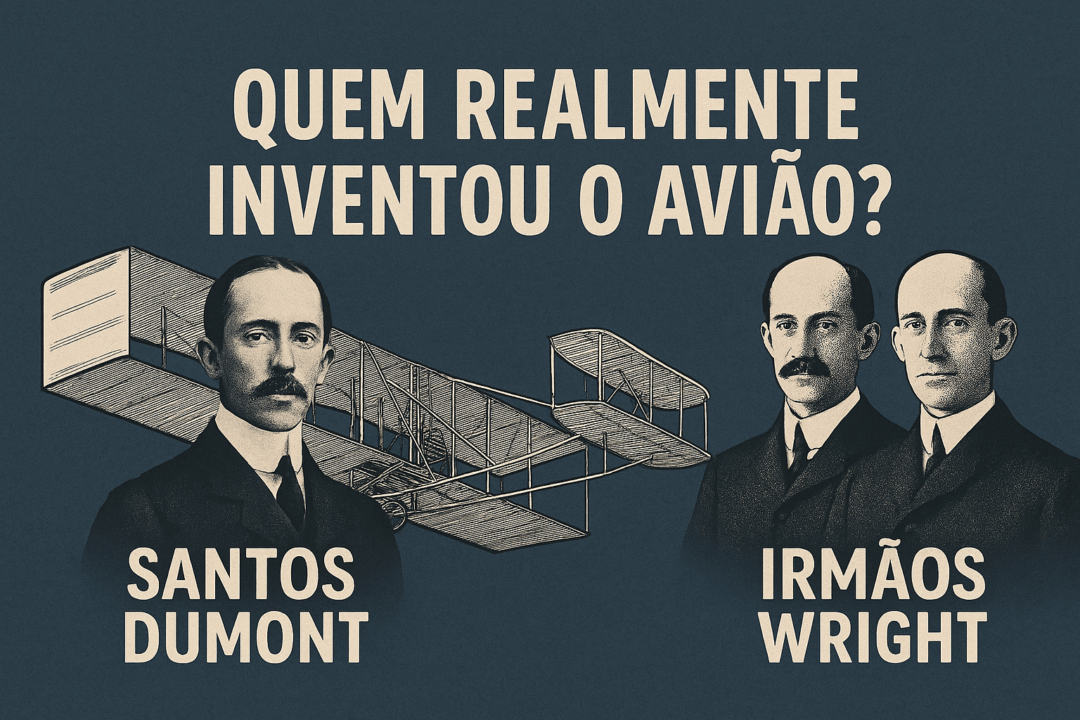


Pioneering Flyers: While Santos Dumont Flew Before The Public In France, The Wright Brothers Tested Their Invention In Secret In The United States. The Dispute Continues
The dispute over who invented the airplane still divides opinions. For many Brazilians, the name of Santos Dumont is synonymous with pioneering. In the United States, the Wright brothers are remembered as the creators of the first flying machine. This historical controversy involves dates, testimonies, and different definitions of what would constitute a controlled flight.
The First Flights Of Santos Dumont
Even before the famous flight with the 14-bis, Santos Dumont was already known. In 1901, he stood out with his powered airships. His experiments in Paris attracted attention. He was always seeking new ways to fly. His interest in flight was public and documented.
The 14-Bis And The Conquest Validated In Paris
In 1906, he achieved a remarkable feat. With the 14-bis, he flew 60 meters in Paris. The event had official validation and witness presence. It was the first time an aircraft took off by its own means before the public.
-
Italian researchers have detected what appears to be a second Sphinx buried under the sands of Egypt, and satellite scans reveal a gigantic underground megastructure hidden beneath the Giza Plateau for over 3,000 years.

-
There are 4,223 drums and 1,343 metal boxes concreted with 50-centimeter walls that store the radioactive waste from Cesium-137 in the worst radiological accident in Brazil, just 23 kilometers from Goiânia, with environmental monitoring every three months.

-
Giant Roman treasure found at the bottom of Lake Neuchâtel in Switzerland reveals an advanced trade system, circulation of goods, and armed escort in the Roman Empire about two thousand years ago.

-
He buried 1,200 old tires in the walls to build his own self-sufficient house in the mountains with glass bottles, rainwater, and an integrated greenhouse.


This achievement secured Dumont an important place in the history of aviation. Many consider him the first to perform a controlled and public flight.
The Demoiselle And The Vision For The Future
But he did not stop there. In 1907, he presented the Demoiselle. This model is considered one of the first ultralights in history.
With it, Dumont showed that his vision went beyond a single flight. He thought about how to make aviation accessible, practical, and lighter. He was a persistent inventor, always keeping an eye on the future of technology.
4. The Flight Of The Wright Brothers And Technical Innovation
Meanwhile, in the United States, the Wright brothers followed their own path. In 1903, they performed a flight with a machine that needed external assistance to take off.
The feat happened without official witnesses, which generated skepticism at the time. Despite this, many historians credit them as the inventors of the airplane.
The Wrights’ strength lay in technical innovation. They created a system that allowed control of the flight in three axes. This was fundamental for the development of modern aviation. Even with doubts about the first flight, they continued to innovate. Their projects evolved and helped define what would come next.
An Historical Dispute That Remains Open
The discussion about who was the true inventor depends on the criteria used. If public validation is the requirement, Santos Dumont has the advantage. If the focus is on technical innovation, the Wright brothers stand out. Each side presents solid arguments.
There are still other names in the debate. Clément Ader, for example, made an unstable flight in 1897. His contribution is remembered, but the performance of the machine was limited. This shows that the race to conquer the sky had several protagonists.
The debate remains alive. Santos Dumont and the Wright brothers are central figures in this story. Both made decisive contributions to the emergence of aviation. Their inventions and achievements continue to be celebrated to this day.
The last relevant information is that, even after more than a century, this historical dispute continues to fuel studies, tributes, and discussions around the world.
With information from Correio Braziliense.








O inventor do avião foi Santos Dumont, o avião dos irmãos Wright era voo de.galinha, jogava p cima e voava, mas o 14bis saiu do chão com o próprio esforço
Ora, e Santos Dumont não adicionou inovações técnicas também para dar ênfase a um vôo seguro?! Além do mais, Santos Dumont inventou outras coisas… voto nele.
Santos Dumont não precisava “catapultar” o avião para fazê-lo voar. O 14-Biz foi prova disso. Ademais, o mineiro fazia questão de registrar, filmar (na época surgiram as primeiras filmadoras), documentar, e fazer com que a imprensa soubesse de seus feitos. Dumont aperfeiçoou o relógio, criando a versão de pulso. Enquanto isso, os irmãos Wright sequer queriam mostrar ao público seus inventos. Tanto que a corrida da aviação ocorreu em uma competição em Paris. Os irmãos nem foram levar seu invento. Dumont fez várias demonstrações, incluindo uma próxima à Torre Eiffel. Contra fatos não há argumentos.