





 Portuguese
  English
  Spanish
 3 min of reading
  0 comments


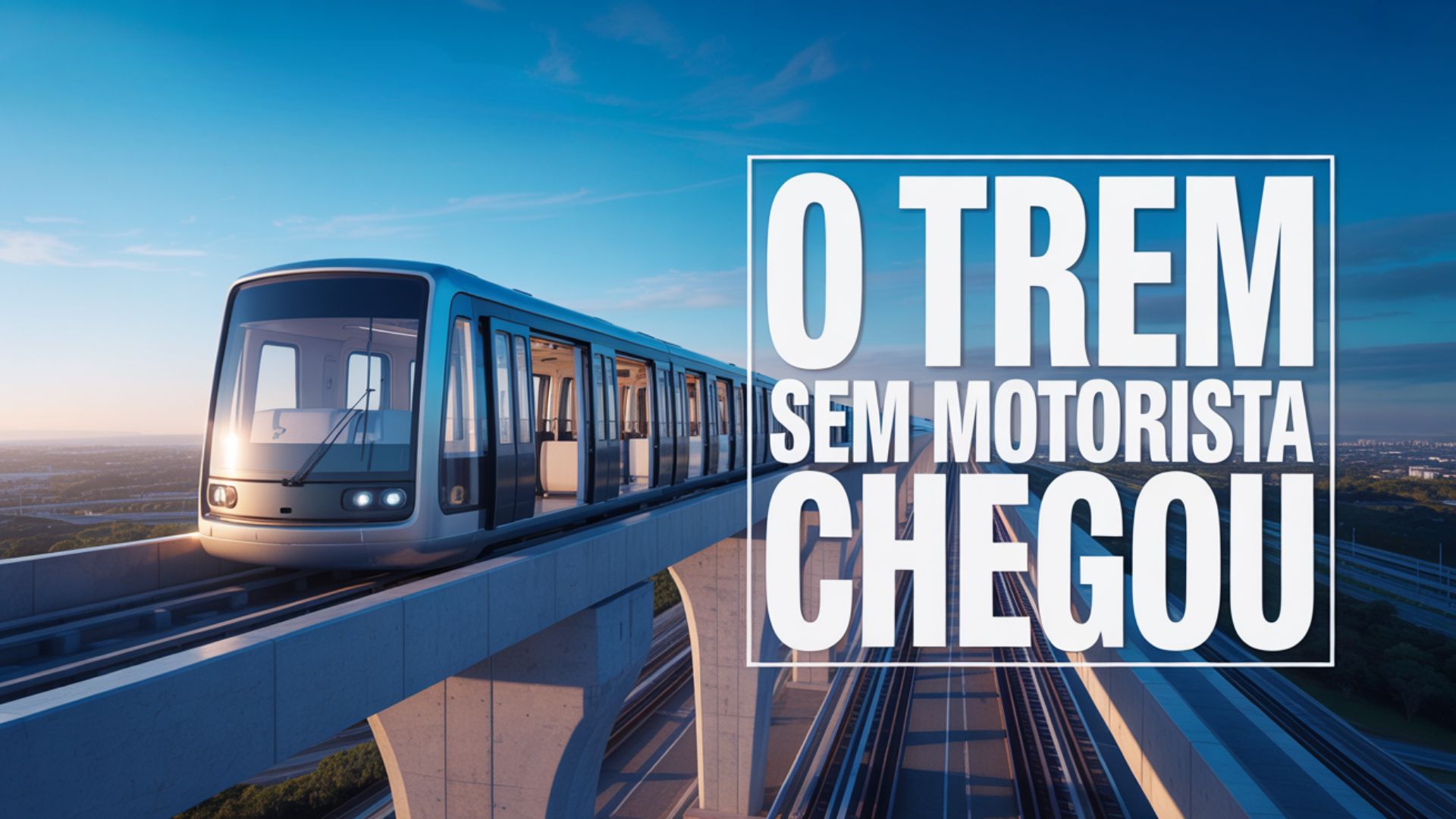
Automated System Will Link CPTM to the Three Terminals of Guarulhos Airport, Promising to Reduce Travel Time and Eliminate Pollutant Emissions. 2.7 Km Project Should Start Assisted Operation in August 2025.
A new automated transport system, powered by compressed air and zero pollutant emissions, is about to go into operation to connect the Aeroporto–Guarulhos station of the São Paulo Metropolitan Train Company (CPTM) to all terminals of the São Paulo International Airport in Guarulhos.
Known as People Mover, the mode has reached the final stages of operational testing and is expected to begin assisted operation on August 31, 2025, with the official inauguration planned for September.
For the first time, two trains ran simultaneously, fully autonomously and without a driver, on parallel tracks.
-
The government requests the Federal Revenue Service for a new system to automate the income tax declaration, reducing errors, time, and bureaucracy for millions of Brazilians.

-
Pix in installments, international Pix, and contactless payment without internet: the Central Bank revealed the new features coming to the tool that is already used by almost every adult in Brazil.

-
Mercado Livre has just started selling medications with delivery in up to three hours to your door, and this move could completely change the way Brazilians buy medicines on a daily basis.

-
In Dubai, rising tensions from the war in the Middle East are causing super-rich individuals to leave the Gulf and direct their fortunes to a new financial refuge in Asia.


The test included international safety protocols and was considered one of the final steps before being opened to the public.
Change in Movement Between Terminals

The People Mover will replace the buses that currently provide free transportation between the Line 13-Jade station and the three terminals of the airport.
With four stations — one on the rail link and one at each terminal — the journey will take about six minutes, reducing the current travel time by almost half.
The estimated capacity is up to 2,000 passengers per hour in each direction, with six-minute intervals between trips.
The system is designed to continuously accommodate the high flow of users at the country’s largest airport.
Technology and Operation
The project uses Aeromóvel technology, an automated transport model on elevated tracks.
In this system, the vehicle is powered by compressed air generated by fans or compressors installed at the stations.
The air is directed through ducts, creating a pressure differential that moves the trains.
As there are no motors on board, the vehicles are lighter, more efficient, and quieter, in addition to not emitting pollutants directly.
The absence of motors reduces maintenance costs and increases the equipment’s lifespan.
The technology also ensures high safety, as the compressibility of air prevents collisions.
History and Delays
The contract for construction was signed in September 2021, and construction began in June 2022.
Initially, the delivery was expected by the end of 2024.
However, the schedule was delayed to March 2025, and then to the second half of the year.
In July 2025, images showed the trains running without passengers, already in advanced testing.
Days later, tests were conducted with simultaneous running in opposite directions, which confirmed the date for the start of assisted operation.
Expected Impact
With approximately 2.7 kilometers in length, the Guarulhos Aeromóvel will be the largest system of its kind in Latin America.
It will have three trains — two operational and one reserve — equipped with air conditioning, wireless internet access, and real-time information panels.
The elevated construction allows for operation free from interference with ground traffic, avoiding delays caused by congestion and improving passenger flow, especially during peak hours.
The new mode also reinforces the airport’s image as a hub of sustainable mobility.
The replacement of buses with an automated system will reduce the environmental impact and should provide more predictability for arrival and departure times.
Furthermore, the direct link with CPTM may encourage more passengers to opt for rail transport rather than cars, helping to reduce traffic on access roads to the airport.








-

-

-

3 pessoas reagiram a isso.