





 English
  Francês
  Alemão
  Italiano
  Japonês
  Norueguês
  Portuguese
  Spanish
  6 min of reading
  0 comments


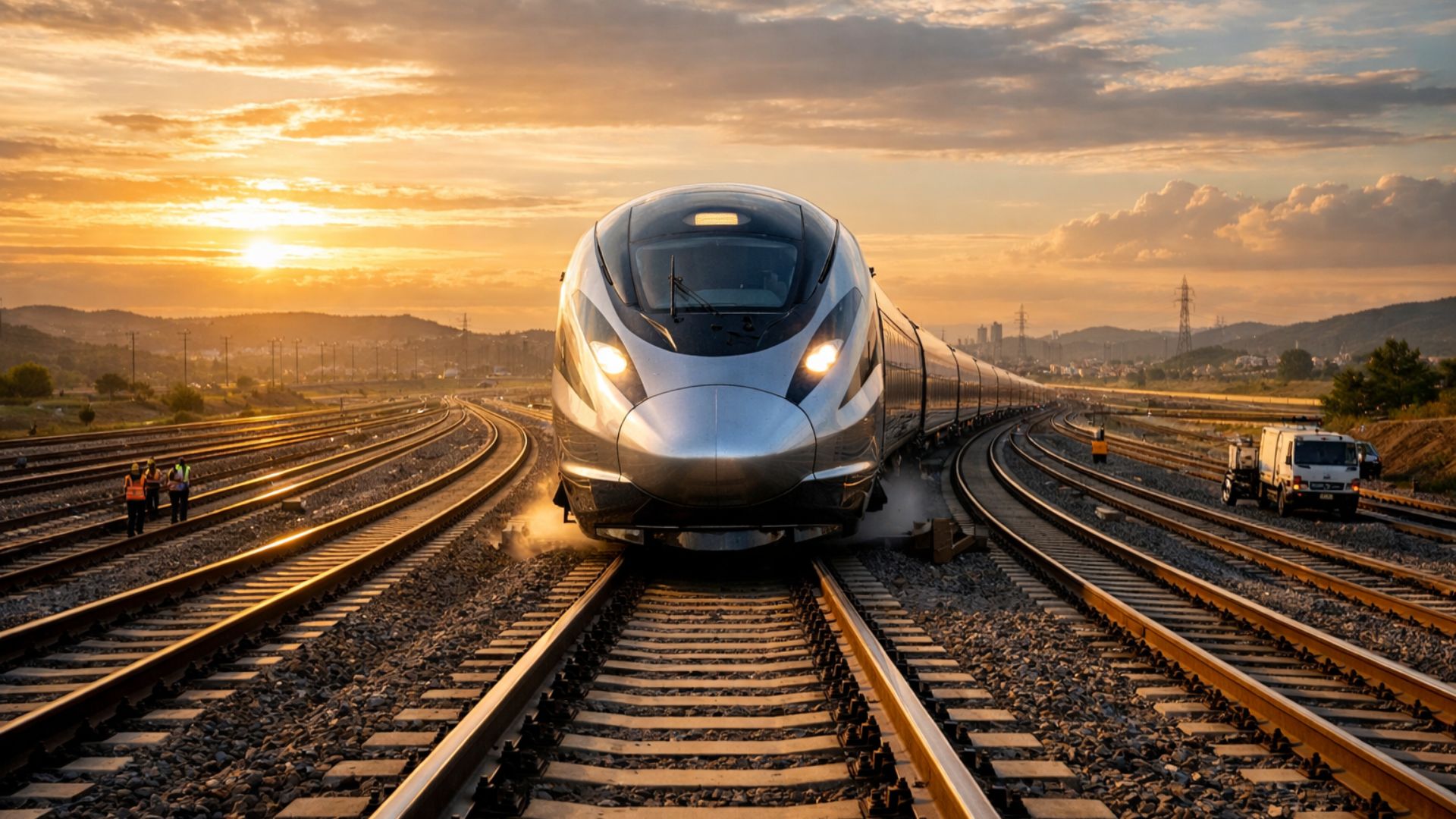
Unprecedented rail expansion in São Paulo brings together dozens of projects, billions in investments, and bets on the resumption of rails as a regional mobility axis, connecting capital, interior, and coast with new routes and restructuring of existing lines.
The government of São Paulo has consolidated in the SP nos Trilhos program a portfolio with over 40 rail projects aimed at passenger and cargo transport, with an expected R$ 194 billion in investments and an expansion of over 1,000 kilometers of tracks in the capital, the interior, and the coast.
The initiative was launched in May 2024 by the Secretary of Partnerships in Investments and has become a showcase for concessions, partnerships, and studies of new regional corridors.
SP nos Trilhos Program and the rail expansion in São Paulo
The proposal brings together projects of different natures, such as intercity trains, metropolitan lines, subways, and light rail vehicles, in a strategy that the Palácio dos Bandeirantes presents as an attempt to regain the prominence of railways in São Paulo’s mobility.
-
The world’s largest escalator, measuring 905 meters in China, reduces urban travel time from 1 hour to about 20 minutes and transforms mobility in mountainous regions with an engineering solution adapted to the terrain.
-
A R$ 300 million logistics giant is taking shape in Serra with over 100,000 m² and raises a question: how can this transform e-commerce and distribution in the state?
-
Could Uber Rides Lose Minimum Fare? Understand What’s Happening!

-
First Fully Electric Port in Latin America Established in Suape with R$2.1 Billion and Chinese Technology

According to the official program material, the projected network also has the potential to generate around 150,000 jobs, in addition to stimulating regional integration, tourism, and the reuse of currently underutilized railway sections.
In defending the plan, Governor Tarcísio de Freitas stated that the large cities in São Paulo grew around the tracks and argued that the recovery of rail transport has become necessary in light of the saturation of highways and the search for a more sustainable alternative.
The central theme of the government’s discourse is to combine private capital, existing infrastructure, and new sections to gradually rebuild a regional network of greater reach.
Intercity Train: projects already auctioned and underway
Among the four main axes of the Intercity Train, the most advanced is the TIC North Axis, which will connect São Paulo to Campinas and was auctioned in February 2024.
The project, operated by the TIC Trens concessionaire, foresees an investment of R$ 14.2 billion, an express service with a stop in Jundiaí, an estimated journey time of 64 minutes, a speed of up to 140 km/h, and a projected start of operations in May 2031.
In addition to the express train to Campinas, the North Axis concession includes the modernization of Line 7-Rubi and the Intermetropolitan Train between Jundiaí and Campinas, reinforcing the role of the corridor as the first concrete delivery within the state package.
The government has begun to treat this project as the main showcase of the program, both due to the size of the investment and for representing the reintroduction of a medium-speed regional service in the country.
Next is the TIC West Axis, between the capital and Sorocaba, which completed the consultation and public hearing phase in 2025 and has moved to the bidding phase.
The most recent modeling of the project works with an investment close to R$ 12 billion, a route of about 100 kilometers, an estimated time of 60 minutes, and a projected demand of 50,000 passengers per day, with operations starting from Água Branca and planned intermediate stops.
Connections with the coast and Paraíba Valley still under study
In the other priority corridors, the government is still structuring the TIC East Axis, which aims to connect São Paulo to São José dos Campos, and the TIC South Axis, aimed at connecting with the Baixada Santista.
In the East, the official estimate indicates an investment of R$ 10 billion, a route between 80 and 130 kilometers, a journey of 75 minutes, and potential service to 2.7 million people.
In the South, the estimate considers R$ 15 billion, a time of 90 minutes, up to nine municipalities benefiting, and a potential audience of 1.8 million residents.
The SP Agency itself reported, still in 2024, that studies for the South and East axes should be completed by 2026, with expectations of going to market in 2027.
Although these timelines depend on technical modeling, licensing, and private sector appetite, they help explain why the government treats Campinas and Sorocaba as more mature fronts, while Santos and São José dos Campos remain in a less advanced phase.
Paulista interior enters the map of the new rail network
The design of the future network is not limited to the four connections between the capital and major regional hubs.
Documents and maps linked to the program have also begun to indicate new corridors under analysis, many of them supported by the reuse of existing railway tracks, although no official implementation schedule has been disclosed for all cases.
Among the connections that appear on this horizon are sections like Sorocaba–Campinas, Campinas–Araraquara, Campinas–Ribeirão Preto, Ribeirão Preto–Franca, Marília–Sorocaba, Santos–Cajati, and São José dos Campos–Taubaté.
This map reinforces an important change in scale.
Instead of concentrating all movements in the São Paulo Metropolitan Region, the network designed by the State begins to suggest a logic of lateral connections in the interior, capable of linking medium-sized cities with each other and expanding the regional use of railways.
Still, there is no public confirmation that all these routes will be fully implemented or that they will utilize, in their entirety, the track currently available.
Use of existing tracks and infrastructure challenges
In the priority corridors, however, the reuse of existing infrastructure appears as one of the pillars of the modeling.
The official program states that the strategy is to use the already installed railway network, especially in idle or low-capacity sections, reducing implementation costs where it is technically and operationally viable.
This guideline applies especially to regional connection projects, although some of them also depend on heavy modernization, segregation with freight, station renovations, and the construction of new segments.
In the case of Sorocaba, for example, the modeling foresees the adaptation of sections currently used by freight trains and the renovation or reconstruction of stations along the way.
In Campinas, the already contracted project combines the implementation of the express service with structural interventions on Line 7-Rubi and the creation of a new railway terminal, showing that the use of existing tracks does not eliminate the need for large-scale works.
Billion-dollar investments and bets on sustainable transport
The SP nos Trilhos program was designed to attract private operators to projects with different levels of maturity, which helps explain the mix of already contracted concessions, tenders in preparation, and still preliminary studies under the same umbrella.
In 2025, the state government began to present the program as the largest rail expansion cycle in São Paulo’s history, associating the portfolio on rails with a broader agenda of mobility partnerships.
The logic behind the package also involves increasing pressure on the road system, especially on access to the capital, the coast, and industrial hubs in the interior.
By proposing faster and higher-capacity trips, the State aims to reposition railways as an alternative for intermunicipal movements currently concentrated in cars and buses, although the success of this plan still depends on timelines, financing, regulatory approval, and the execution of already announced concessions.
At the current stage, this is the most concrete picture.
The São Paulo–Campinas corridor already has a signed concession and a defined implementation schedule.
The São Paulo–Sorocaba axis has moved from modeling to the bidding phase.
The connections with São José dos Campos and Santos remain under study.
Around these four trunks, the government keeps on the radar a complementary network of regional connections that, if confirmed over the next few years, could reshape rail circulation in the state on an unprecedented scale in recent decades.








Seja o primeiro a reagir!