





 Portuguese
  English
  Spanish
  4 min of reading
  0 comments


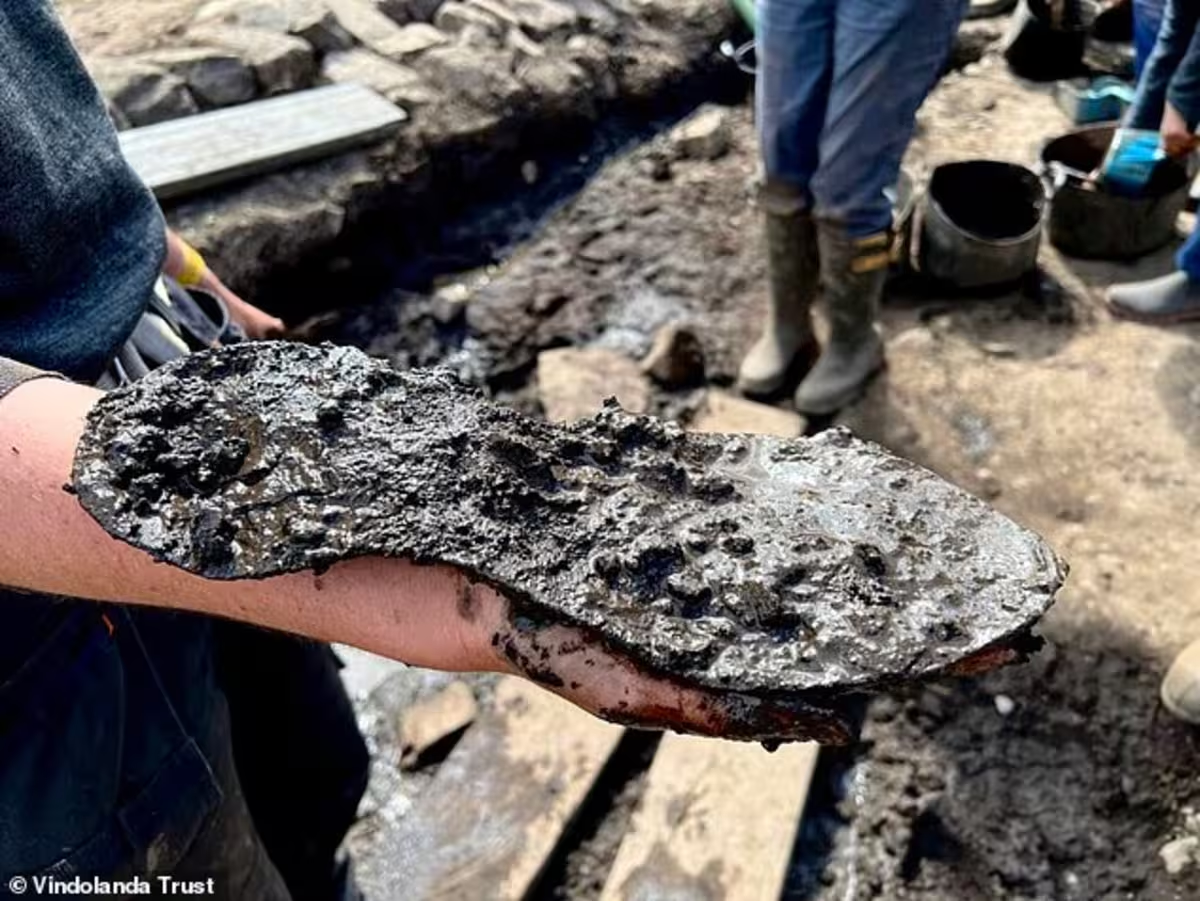
Archeologists Unearth 2,000-Year-Old Roman Shoe Measuring 32 Cm at Ancient British Fort, Surprising for Its Preservation and Unusual Size
Archeologists found an impressive Roman shoe at an ancient fort in Britain. The leather object is 2,000 years old and belonged to a soldier with feet larger than those of bodybuilder Arnold Schwarzenegger. The discovery surprised experts.
Unusual Size Impresses Researchers
The sole of the shoe measures 32 centimeters from heel to toe, which corresponds to a UK men’s size 13.
During the excavation, the archeologists reported that there were “gasps of amazement” as they removed the item from the ground. The piece was found at the site of the ancient Roman fort of Magna, along Hadrian’s Wall, built around AD 112.
-
French “ghost” submarine lost in World War II reappears after more than 80 years on the seabed near the coast of Spain.

-
A simple stitch in wood with nylon thread can reduce adhesives, speed up production, and make sheets up to 4 times stronger and 14 times more difficult to break.
-
The gigantic steel shell built to contain Chernobyl for a century has been pierced by a drone, exposing a critical system and creating a hole that could cost over 500 million euros to repair.

-
Brazilian Navy reaches a new level by taking over an airport with a 1,600-meter runway used by 1,800 military personnel and autonomous attack drone testing.

The shoe was inside a trench known as an “ankle-breaker,” a type of Roman trap. The ditch was deep, narrow, and hard to notice for approaching soldiers.
Two other shoes were discovered at the same location. However, the archeologists did not state whether the giant shoe was lost by someone who fell into this trap.
Rare Find in Little-Excavated Site
Compared to other Roman structures in the UK, the fort of Magna is still little excavated. But that is starting to change. At the end of March, the archaeology team began excavating external defensive ditches, walls, and structures to the north of the site.
It was during this stage that fragments of pottery, leather, and, primarily, the three preserved shoes emerged.
Two of the pieces were nearly intact. One of the shoes still had part of the heel and studs on the sole. But it was the unusually sized shoe that attracted the most attention.
Rachel Frame, senior archaeologist for the Magna Project, stated that the size of the piece dominated the team’s conversations. She said: “Could this be the largest in the Vindolanda Trust collection? We are excited to find out!”
The archaeologist compared the foot size of the ancient centurion to current celebrities. According to her, the feet were the same size as those of British actor Stephen Fry, who is 1.95 meters tall.
They were also slightly smaller than those of Stephen Merchant, an actor who is 2.01 meters tall. The comparison with Arnold Schwarzenegger was also mentioned, highlighting the above-average size of the soldier’s feet.
Roman Fort Was an Important Strategic Point
The fort of Magna, also known as Carvoran, is located 11 kilometers west of the large Roman fort Vindolanda. It was built to protect the crossing of two major Roman roads.
Hadrian’s Wall, nearby, was erected in AD 122 by order of Emperor Hadrian. Its aim was to separate the territories conquered by the Romans from the yet unconquered Scottish lands.
Besides Magna, the Romans built several smaller forts along the wall to protect the region. Vindolanda is known for housing various significant archaeological discoveries. Now, Magna is beginning to stand out with finds such as this giant shoe.
Discovery Helps Understand Roman Footwear
Researcher Rachel Frame explained how Roman shoes were produced. According to her, the soles had several layers of leather, secured with straps, stitches, and studs.
Shoes were also reinforced on the outside to withstand wear from walking. She stated: “They are found in many styles of footwear.”
Materials such as leather and wood tend to decompose in the soil due to microbes. This makes organic objects rarely survive for centuries. However, in humid, low-oxygen environments like Magna, these materials can last thousands of years.
Dry Climate Threatens Artifact Preservation
Despite the importance of the discoveries, archeologists are showing concern. This year’s spring has been exceptionally dry in the region.
In the first two weeks of May, the excavation site received less than half a millimeter of rain. This left the soil very dry.
Franki Gillis, geoarchaeologist for the Magna Project, warned of the risk. According to her, the drought caused the water table level to drop significantly. She declared: “Though pleasant, this warm and unusually lovely spring may be detrimental to the continued preservation of our organic finds in Magna and Vindolanda.”
The current concern is to prevent other leather or wooden items from deteriorating before they are found.
With information from Daily Mail.







-

-

-

5 pessoas reagiram a isso.