





 Portuguese
  English
  Spanish
  4 min of reading
  0 comments


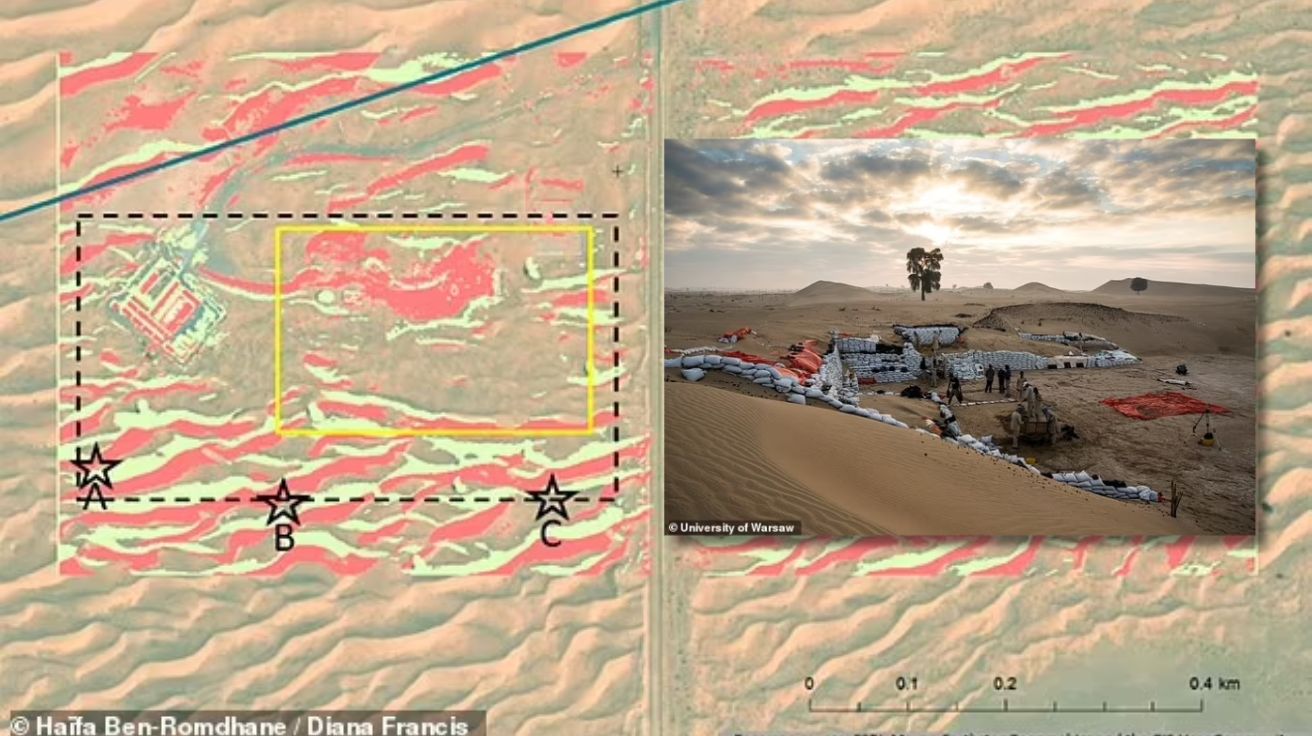
Oasis of Metal and Myth in the Heart of the Largest Continuous Sand Desert on the Planet, Saruq Al-Hadid Remained Invisible Until 2002, When Sheikh Mohammed bin Rashid Al Maktoum Spotted Dark Patches and Unusual Dunes During a Flight Over the Rub’ al-Khali.
Under About Three Meters of Sand, Archaeologists Discovered a Scoria Field Preserving Remnants of a Thriving Community 5,000 Years Ago: Copper and Iron Smelting Furnaces, Elaborate Gold Jewelry, Seals from Mesopotamia and Egypt, as Well as Deposits of Bones Revealing Intense Hunting, Animal Husbandry, and Even the Salting of Fish Brought from the Coast.
Archaeologists Make Extraordinary Discovery of City Swallowed by the Ocean Built 140,000 Years Ago
ARTICLE CONTINUES BELOWSee also
Motorola launched the Signature with a gold seal from DxOMark, tying with the iPhone 17 Pro in camera performance, Snapdragon 8 Gen 5 that surpassed 3 million in benchmarks, and a zoom that impresses even at night.

Satellites reveal beneath the Sahara a giant river buried for thousands of kilometers: study shows that the largest hot desert on the planet was once traversed by a river system comparable to the largest on Earth.

Scientists have captured something never seen in space: newly born stars are creating gigantic rings of light a thousand times larger than the distance between the Earth and the Sun, and this changes everything we knew about stellar birth.

Geologists find traces of a continent that disappeared 155 million years ago after separating from Australia and reveal that it did not sink, but broke into fragments scattered across Southeast Asia.
The Artifacts, More Than 12,000 Unique Items, Including Weapons, Tools, and Mysterious Snake Figurines, Turned an “Empty Sea” into the Key to Understanding How Populations of the Bronze and Iron Ages Domesticated a Now-Hyper-Arid Environment, Established Trade Routes from the Indus Valley to the Levant, and Perhaps Even Inspired the Legend of the Atlantis of the Sands, the City of Ubar Consumed by Divine Punishment.

Two Decades Later, Cutting-Edge Technologies Are Expanding This Map of the Past Without Moving a Grain of Sand. Researchers from Khalifa University Utilize Synthetic Aperture Radar (SAR) and Machine Learning Algorithms to Electronically Traverse the Dunes and Identify Buried Walls, Roads, and Metallurgical Dumps Up to Ten Meters Deep.
The Accuracy of These Geological “X-Rays” Has Already Convinced Dubai Authorities to Allow New Excavations, While Remote Sensing Satellites Track Irregularities That May Hide Temples, Tombs, or Entire Urban Cores.
Each Radar Pulse and Each Analyzed Layer Reinforces a Portrait: Between 2600 BC and 600 BC, at the Point Where the Desert Seems Inhospitable Today, There Existed a Metallurgical, Ritualistic, and Commercial Complex That Echoes in Globalized Dubai of the 21st Century, Evidence That the Empty Quarter Was Never Truly Empty.
The Flight That Revealed Saruq Al-Hadid to the World
For Centuries, the Rub’ al-Khali, the Largest Continuous Sand Desert on the Planet, Was Seen as an “Empty Sea” Until Unprecedented Signs Began to Emerge from Beneath the Sand.
In 2002, While Flying Over the Region, Sheikh Mohammed bin Rashid Al Maktoum Noticed Unusual Ripples and a Dark Spot; Upon Investigation, Archaeologists Identified a Field of Metal Scoria Preserving an Ancestral Site.
The Area, Now Within the Al Marmoom Desert Conservation Reserve, Revealed Pottery, Beads, and Metal Pieces in Initial Tests, Indicating Very Ancient Human Occupation.
The Discovery Rekindled the Legend of Ubar, the “Atlantis of the Sands” That, According to Accounts Passed Down Since T. E. Lawrence, Was Said to Have Been Swallowed by the Desert as Punishment from a Divine Being.
Excavations Show That Remnants of the Community Rested About Three Meters Below the Surface, Hidden by Millennia of Sandstorms.
Climate Studies Cited by Researchers Recall That About 6,000 Years Ago, the Desert Experienced Phases of Moisture and Shallow Lakes, a Setting Favorable for Human Settlements and Megafauna.
Radar, AI, and Satellites: Technology That Deciphers the “Atlantis of the Sands”
To Map the Site Without Excavating Each Dune, Scientists from Khalifa University Turned to Synthetic Aperture Radar (SAR), Capable of “Seeing” Up to Ten Meters Beneath the Sand.
SAR Emits Electromagnetic Pulses and Measures Reflected Echoes; By Combining These Data with High-Resolution Optical Images, an Accurate Subsurface Model of the Terrain Was Created.
Machine Learning Algorithms Processed Patterns Captured by the Radar, Distinguishing Natural Formations from Straight Lines, Walls, and Ditches Created by Human Hands.
The Head of ENGEOS Lab, Dr. Diana Francis, Explained That the Method Overcomes the Logistical Barriers of a Hyper-Arid Environment That Makes Ground Surveys Difficult.
In September 2024, the Team Itself Confirmed That Remote Sensing Satellites Will Continue to Guide Future Excavations, Targeting Structures, Tombs, and New Artifacts.
The Accuracy of the Maps Has Already Led Dubai Culture to Authorize Investigations in Previously Ignored Areas, Demonstrating How SAR and AI Have Become Key Tools for Protecting Heritage.
Metallurgy, Snake Cult, and Trade Routes in the Sands
Saruq Al-Hadid Had Continuous Occupation from the Umm Al Nar Period (2600–2000 BC) to the Iron Age, Standing Out Between 1100 and 600 BC as a Center for Smelting Bronze, Copper, and Iron.
More Than 12,000 Unique Objects, Ranging from Arrowheads to a Gold Ring That Inspired the Logo of Expo 2020, Reinforce the Idea of a Vibrant and Symbolically Rich Artisan Center.
Figurines and Jars Depicting Snakes Suggest Ritual Practices; the Theme is So Recurring That Many Scholars Associate the Site with a Regional Serpentine Cult.
Piles of Scoria, Ingots, and Weapons Indicate Large-Scale Production; Analyses Reveal Alloys of Pure Copper, Zinc-Rich “Bronze,” and Objects with Imported Tin, Evidence of Intercontinental Trade.
The Site Yielded 223,889 Fragments of Bones from Camels, Oryx, Marine Fish, and Birds, Showing Hunting, Livestock Raising, Coastal Fish Salting, and a Once Greener Ecosystem.
Fifty-Three Seals, the Largest Collection from the Iron Age on the Peninsula, Connect Saruq Al-Hadid to Mesopotamia, the Indus Valley, Egypt, and the Levant, Revealing an Economic Network That Spanned Deserts and Seas.








Seja o primeiro a reagir!