





 Portuguese
  English
  Spanish
  5 min of reading
  0 comments


Discovery in deep waters of the Pacific reveals a rare natural nursery of rays in an active volcanic area, with thousands of egg capsules scattered on the seafloor and potential impact for research and marine conservation.
An active seamount in the Pacific, off the coast of Vancouver Island, Canada, has revealed an extensive area covered by egg capsules of the Pacific white ray.
The record was made by researchers exploring the region and indicates that the species uses the heat released by the volcanic system as a natural incubator, in an environment located more than 1,500 meters deep.
The discovery has caught the attention of the scientific community for bringing together two elements rarely documented together in the deep ocean: geothermal activity and large-scale reproduction of cartilaginous fish.
-
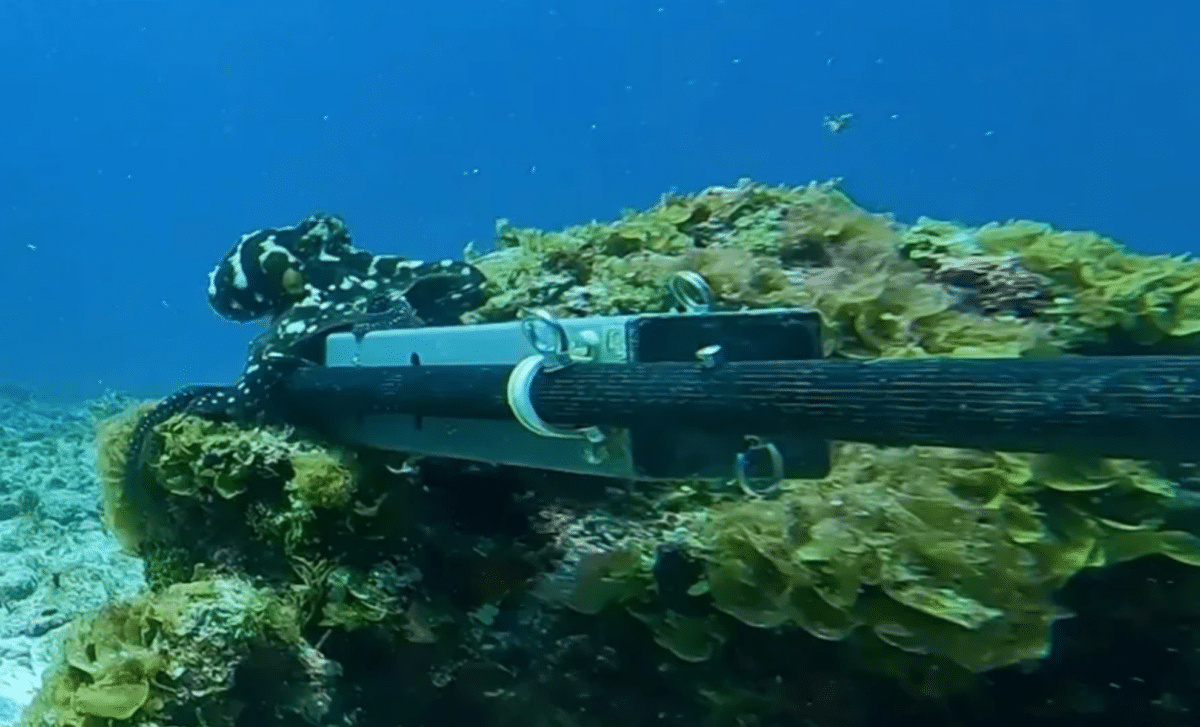
Scientists launched a bait camera to the bottom of the Pacific Ocean and saw something that no one expected.
-
Is a smart plug worth it in a regular home? What does it offer: turns on and off via smartphone, creates routines by schedule, prevents forgotten devices, sometimes monitors consumption, and improves habits without renovation or miracles.

-
Airbus and Mercedes take the G-Class to the skies: the ACH145 helicopter priced at R$ 78 million debuts in São Paulo, unit goes to Brazilian, AMG cabin, 5-blade rotor, and a 2-year wait.

-
New material could change everything: it is the thickness of an atom, 200 times stronger than steel, and 100,000 times thinner than a human hair.


At the top of this seamount, the team observed eggs distributed over an area heated by mineral-rich hot fluids.
According to scientists, the estimate ranges from hundreds of thousands to about 1 million eggs.
Submarine nursery in the Pacific
The structure where the eggs were located rises about 1.1 kilometers above the seafloor.
Even in deep, cold waters, the summit releases heat through fissures, creating a microenvironment different from the immediate surroundings.
It was in this heated area that researchers recorded most of the egg capsules.
The capsules of the Pacific white ray stand out for their size.
They can measure close to 50 centimeters, larger than observed in several other species of oviparous rays and sharks.
As embryonic development in the deep sea tends to be slow, the presence of geothermal heat is pointed out by researchers as a possible explanation for the use of this site as an incubation area.
In addition to the concentration of eggs, the team also recorded a female of the species depositing an egg at the site.
The record reinforces the assessment that the area functions as a spawning site, and not just as a space where capsules may have been displaced by ocean currents.
Geothermal heat and egg incubation
In deep species, the incubation period tends to be long.
In the case of the Pacific white ray, researchers are working with the possibility that the development of the embryos takes more than four years in cold waters.
In this scenario, stable thermal variations may influence reproductive success.
For scientists, the warmer water at the summit may accelerate the development of the embryos without moving the eggs away from the deep environment to which the species is adapted.
The association between natural heat and incubation had already been reported in another record involving the same species, near hydrothermal vents in the Galapagos region, but on a smaller scale.
This time, the observation made off the coast of Canada points to a larger area.
Instead of dozens or just over a hundred capsules, as in previous records, researchers found a wide area covered by eggs.
For the team, this increases the relevance of the site for the study of reproductive habitats in the deep ocean.
What is known about the Pacific white ray
The Bathyraja spinosissima, known as the Pacific white ray, is among the rays that live at greater depths.
Scientific records indicate occurrences between approximately 800 and 2,900 meters.
This range helps explain why direct observations of the animal are uncommon and why there are still gaps in its life cycle.
Adult individuals can reach about 2 meters in length.
In this case, the focus of researchers is on the reproductive strategy of the species.
Large eggs, slow development, and use of areas heated by volcanic activity form an unusual combination among deep-sea cartilaginous fish.
The available data so far indicate that the species selects specific points where the temperature may favor incubation.
Still, researchers do not claim that every submarine volcano is used as a nursery.
What the study documents is the presence of suitable conditions in this active system, with temperature, substrate, and environmental stability compatible with spawning.
Discovery expands marine biology study
The record adds new information to the study of the deep sea.
Although these regions are associated with dark, cold, and low-productivity environments, the discovery shows that local gradients of heat may play a significant role in stages of the life cycle of some species.
According to researchers, the use of geothermal heat to support the embryonic development of a deep-sea fish is no longer just an isolated indication and now counts as a documented case on a large scale.
At the same time, the team avoids extrapolating about other similar environments.
So far, what is demonstrated is that this seamount functions as a spawning and incubation area for the Pacific white ray.
The observation also reinforces a recurring assessment among scientists in the field: the seafloor is still poorly studied.
For this reason, hard-to-access environments may harbor reproductive strategies and ecological interactions that have not yet been broadly described in the scientific literature.
Marine conservation and protection of deep habitats
The discovery also broadens the discussion on the protection of deep habitats.
Seamounts and areas with geological activity concentrate biodiversity and may be affected by pressures such as bottom trawling and mineral exploration projects on the seafloor.
In slowly recovering environments, the loss of a reproductive area can have a significant impact on the maintenance of local populations.
This scenario is especially important for species with slow growth and less frequent reproduction, a common pattern among deep-sea cartilaginous fish.
Therefore, the identification of a nursery of this size reinforces the need for monitoring and preventive conservation measures, according to experts.
Questions remain open about the frequency of use of the site, the actual hatching rate of the eggs, and the possible presence of other species in the same heated area.
It will also be necessary to monitor whether the volcanic activity of the seamount remains stable and how changes in the system may affect embryonic development.
At the current stage of research, the data allow us to affirm that an extreme environment, known for its geological interest, also plays a role in the reproductive cycle of the Pacific white ray.
From this record, researchers should deepen the investigation into the role of submarine geothermal systems in the reproduction of deep-sea species.





Seja o primeiro a reagir!