





 Portuguese
  English
  Spanish
  5 min of reading
  0 comments



A study published in Nature challenges a 327-year-old law of physics by demonstrating that friction can arise without direct contact between surfaces, generated exclusively by internal magnetic dynamics of materials, with implications ranging from nanometric devices to large machines.
One of the oldest foundations of classical physics has just been called into question by an experiment that no one expected. Researchers demonstrated that friction can exist without any mechanical contact between surfaces, overturning principles established over three centuries ago. The study, published in the journal Nature, proposes a completely new way of understanding this phenomenon that is essential for explaining everything from vehicle movement to the operation of industrial machines. The findings directly challenge the law of physics formulated by Guillaume Amontons in 1699.
The importance of this discovery goes far beyond an academic debate. If friction can arise without contact and be controlled remotely by magnetic fields, the practical applications are enormous. Micro and nanoelectromechanical devices, magnetic bearings, smart damping systems, and ultrathin materials could benefit from a technology capable of regulating friction without physical wear. The law of physics that organized our understanding of how surfaces interact is being rewritten.
What the 327-year-old law of physics that was overturned said

Since 1699, Guillaume Amontons’ classical model established two fundamental rules about friction. The first stated that the force of friction is proportional to the normal force, meaning that the greater the weight pressing on a surface, the greater the friction generated.
-
The South Atlantic is not as peaceful as Brazil imagines: there are nuclear weapons on foreign islands in the region, open territorial disputes, and great powers eyeing Brazil’s maritime wealth.

-
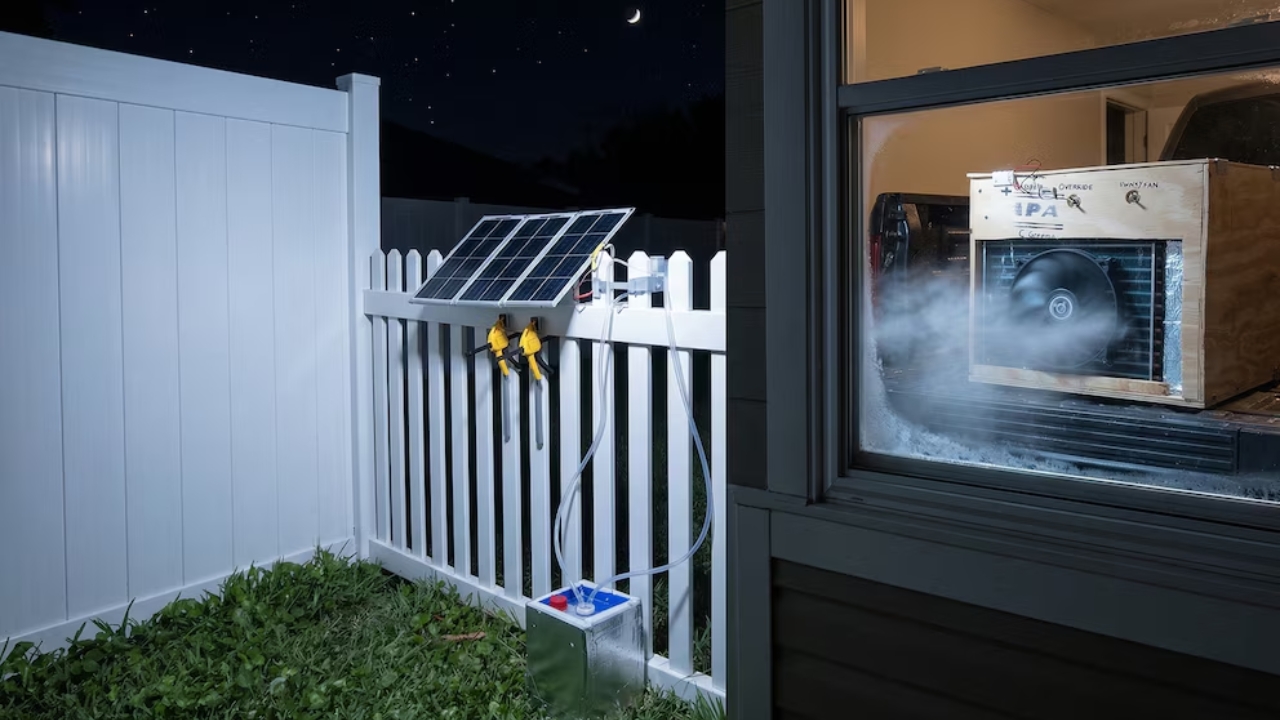
Solar panels freeze water during the day, a fan and radiator release the cold at night, and a man demonstrates that small spaces can be cooled without an electrical grid.
-
For less than R$ 200, container hotels become the solution for those traveling by car, with affordable prices, 24-hour accessible beverage machines, air conditioning, television, a full bathroom, and high-quality beds.

-
It looks like a movie scene: “Forgotten” Brazilian city surprises with a waterfront of nearly 11 km, tranquil beaches, and a GDP that exceeds R$ 6 billion; meet Navegantes, in Santa Catarina.

The second stated that this force is independent of the contact area between objects. It did not matter whether the contact surface was large or small: friction depended only on the applied pressure.
This law of physics has been consolidated over centuries and validated experimentally in countless situations. It became one of the pillars of mechanical engineering, tribology, and any discipline that deals with movement, wear, and resistance between materials.
For 327 years, practically everything humanity built in terms of machines, engines, and mechanical devices operated within the limits of this law. Until an experiment demonstrated something it simply could not predict.
The discovery that showed friction without contact and overturned the classical law of physics
The study published in Nature revealed a scenario that Amontons’ law of physics did not foresee: friction arising without the surfaces touching.
In the experiment, researchers identified that the phenomenon can be generated exclusively by internal changes in the magnetic structure of a material, without any need for mechanical contact between the parts.
Instead of depending on the force applied between surfaces, the friction observed in the experiment is influenced by interactions at the nanoscale and the collective dynamics of magnetic fields. This is a fundamentally different mechanism from everything that classical physics described.
The resistance to movement, in this case, comes from within the material itself, from the way its atoms are organized and reorganized magnetically, and not from physical contact with another surface.
How magnetic friction works that challenges the traditional law of physics
The mechanism behind the discovery involves a concept called magnetic hysteresis. When a magnetic material is subjected to changes in the external magnetic field, its internal domains reorganize, and this reorganization generates resistance, or friction, without any contact between surfaces.
It is as if the material itself brakes the movement from within, using its atomic structure as a source of resistance.
This behavior is independent of scale, meaning it works both at atomic dimensions and in larger systems. For classical physics, this was impossible: friction only existed between surfaces in contact and was determined by the pressure between them.
The discovery published in Nature shows that reality is more complex than the 327-year-old model could capture. Friction, after all, has more than one origin, and the magnetic can be as relevant as the mechanical.
The practical applications that may arise from the fall of this law of physics
The discovery is not limited to the laboratory. One of the most promising possibilities is the creation of interfaces with controllable and non-wearing friction, using magnetic effects to adjust resistance to movement remotely and reversibly.
Imagine machine components that never wear out because friction is generated by magnetic fields, not by contact between parts.
Micro and nanoelectromechanical devices, known as MEMS and NEMS, are the first candidates to benefit. Today, the durability of these devices is severely limited by mechanical wear. With controllable magnetic friction, their lifespan could increase dramatically.
Magnetic bearings, smart damping systems, and ultrathin magnetic materials are also on the horizon of applications. The law of physics that was overturned organized a world of touching surfaces. The future may be of machines where friction exists, but contact does not.
What this discovery changes in the way science understands motion
More broadly, the study published in Nature brings together two areas that have traditionally been studied separately: tribology, which studies friction and wear, and magnetism, which deals with the magnetic properties of matter.
The discovery shows that measuring friction can be a way to study the collective behavior of spins, which are fundamental magnetic properties of atoms, opening a field of investigation that did not exist before.
The law of physics by Amontons has not been completely invalidated for all situations. It continues to accurately describe friction between surfaces in direct mechanical contact under macroscopic conditions. What has changed is that it is no longer the only explanation.
The discovery that friction can exist without contact expands the understanding of physics about this phenomenon and shows that, after 327 years, there was still something fundamental to be discovered about how matter interacts with itself.
What do you think about a law of physics that lasted 327 years being overturned by a discovery published in Nature? Do you believe that machines without wear can become a reality, or is it too early for such predictions? Leave your opinion in the comments. When science rewrites the rules, the conversation becomes interesting for everyone.










Seja o primeiro a reagir!