





 Portuguese
  English
  Spanish
  4 min of reading
  0 comments


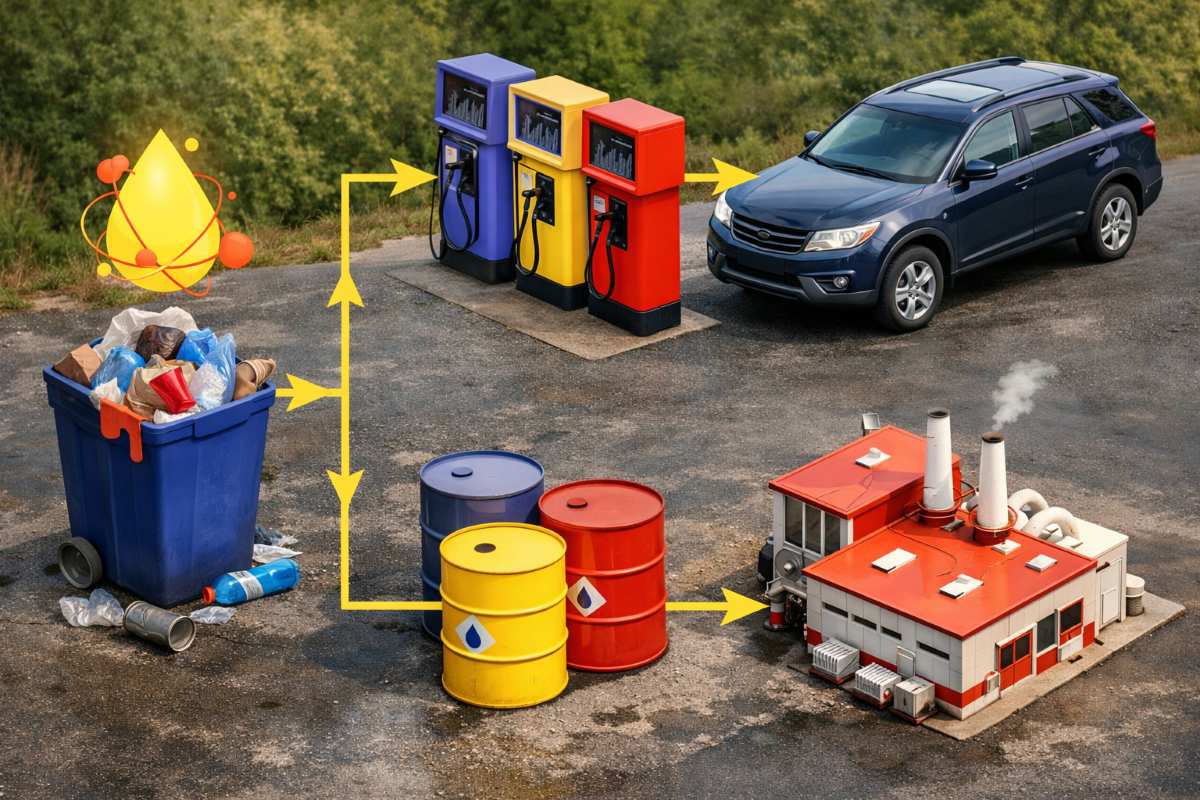
A team from the United States developed a process that converts polyethylene plastic waste into fractions similar to gasoline and diesel with an efficiency near 60%, using molten salts, operating below 200 °C, and a route that reduces dependence on hydrogen, organic solvents, and precious metals
The conversion of plastic waste into liquid fuels has returned to the spotlight after scientists from the United States developed a process capable of transforming polyethylene into fractions similar to gasoline and diesel with an efficiency near 60%, operating at less than 200 °C. The technique was created by researchers at ORNL and uses molten salts with aluminum chloride, eliminating the need for external hydrogen, noble metals, and organic solvents.
The advancement focuses on one of the most common plastics in the world, found in bags, packaging, and containers, and proposes a simpler chemical route to utilize plastic waste that currently represents a persistent problem.
The proposal also aims to reduce costs and complexity compared to more energy-intensive industrial processes.
-
With the war silencing the wells of Iran, Brazil set a record of 5.3 million barrels per day and rose in the global oil ranking without anyone noticing — the pre-salt now accounts for 80% of everything that comes from the seabed.

-
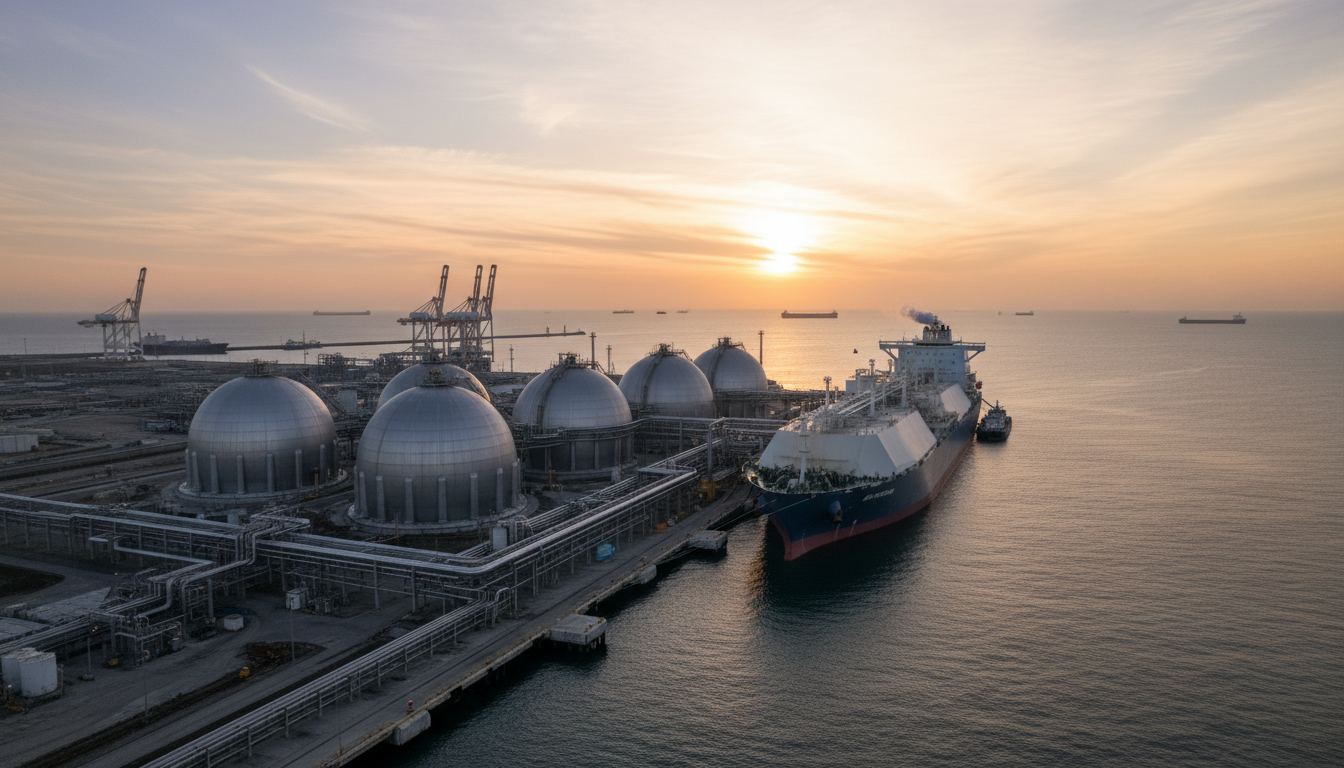
After years of delays and billions invested, the Golden Pass megaterminal in Texas is about to start exporting liquefied gas and will reshape the global energy map amid the Middle East crisis.
-
The artificial intelligence market within the oil industry is worth billions today and will more than double by 2033, and those who do not get on board now with the race for digital twins and autonomous drilling will be left behind.

-
Petrobras quietly installed an artificial intelligence system called Smart Tocha in six of its largest refineries, and the technology independently controls the burning of gases to reduce emissions without any operator needing to intervene.
Process uses molten salts to break polyethylene chains
The basis of the technology lies in the use of molten salts containing aluminum chloride, which serve two functions at once: they act as a reaction medium and also as a catalyst. This combination allows the long polymer chains of polyethylene to be fragmented into smaller molecules with potential use as fuel.
The reaction occurs through highly acidic catalytic sites generated by the aluminum present in the salts. In this environment, positively charged carbon ions emerge, initiating a sequence of chemical transformations responsible for converting the material into lighter and heavier compounds.
The smaller molecules obtained in the process approach gasoline-type fractions, while others give rise to diesel-like compounds. The result is not described as a chaotic decomposition, but as a directed transformation towards useful products.
Plastic waste becomes fuel with less energy
One of the most highlighted points of the method is the operating temperature, maintained below 200 °C. In traditional processes, such as pyrolysis, temperatures can reach 500 °C, which increases energy consumption and reduces control over the final product.
In this new system, plastic waste is converted into liquid fuels under milder conditions and with relevant selectivity for gasoline-type fractions.
The performance near 60% stands out for combining significant yield with a chemical structure less dependent on expensive inputs.
The absence of precious metals and external hydrogen also differentiates the proposal. These elements usually increase the cost and complexity of other chemical recycling routes, while the new approach aims to simplify the operation from the ground up.
Advanced techniques help understand and control the reaction
The researchers resorted to techniques such as spectroscopy and neutron scattering to monitor the behavior of the process with greater precision. This level of understanding is pointed out as an important factor to guide future attempts at scaling up.
The chemical control obtained is also treated as an important advantage. Instead of generating a chaotic mixture of byproducts, the system allows for better direction of the conversion towards energy-relevant fractions, increasing the potential value of plastic waste.
This detailed reading of the mechanism also helps reduce technical uncertainties surrounding the operation. In projects with industrial ambition, understanding how the reaction progresses is often decisive for adapting equipment, flows, and operating conditions.
Industrial viability still depends on overcoming challenges
The possibility of scaling the technology appears as one of the main points of interest in the study. The process eliminates the need for reaction initiators, uses materials considered relatively cheap, and works with moderate temperatures, factors that help make it more realistic for future applications.
Even so, challenges have not disappeared. The salts used are hygroscopic, meaning they absorb moisture and can lose stability, requiring advancements in storage, recovery, and reuse in industrial cycles.
The next step, therefore, is not only to replicate the results in the laboratory but to ensure that the system operates continuously and economically viable. This adjustment is seen as essential for the technology to move from the experimental field to practical use.
New route expands debate on circular economy
The proposal also changes the way plastic waste can be treated within the circular economy. Instead of limiting the discussion to volume reduction or sending waste to landfills, the process directly recovers energy value from the carbon present in the discarded material.
This change opens up space for a logic where not all plastic needs to become plastic again. In cases where mechanical recycling is not viable, conversion into usable energy emerges as an alternative with potential for utilization.
In the short term, the application could reach urban or industrial waste treatment stations, especially aimed at fractions that do not fit well into conventional recycling routes. In the medium term, the combination with renewable sources could help produce fuels with a lower carbon footprint for sectors that are difficult to electrify, such as heavy transport and industry.
The study also points to the possibility of decentralized models, with small facilities close to centers of plastic waste generation. This configuration would reduce logistical and transportation costs while increasing efficiency in the treatment of discarded material.





Seja o primeiro a reagir!