





 Portuguese
  English
  Spanish
  4 min of reading
  0 comments


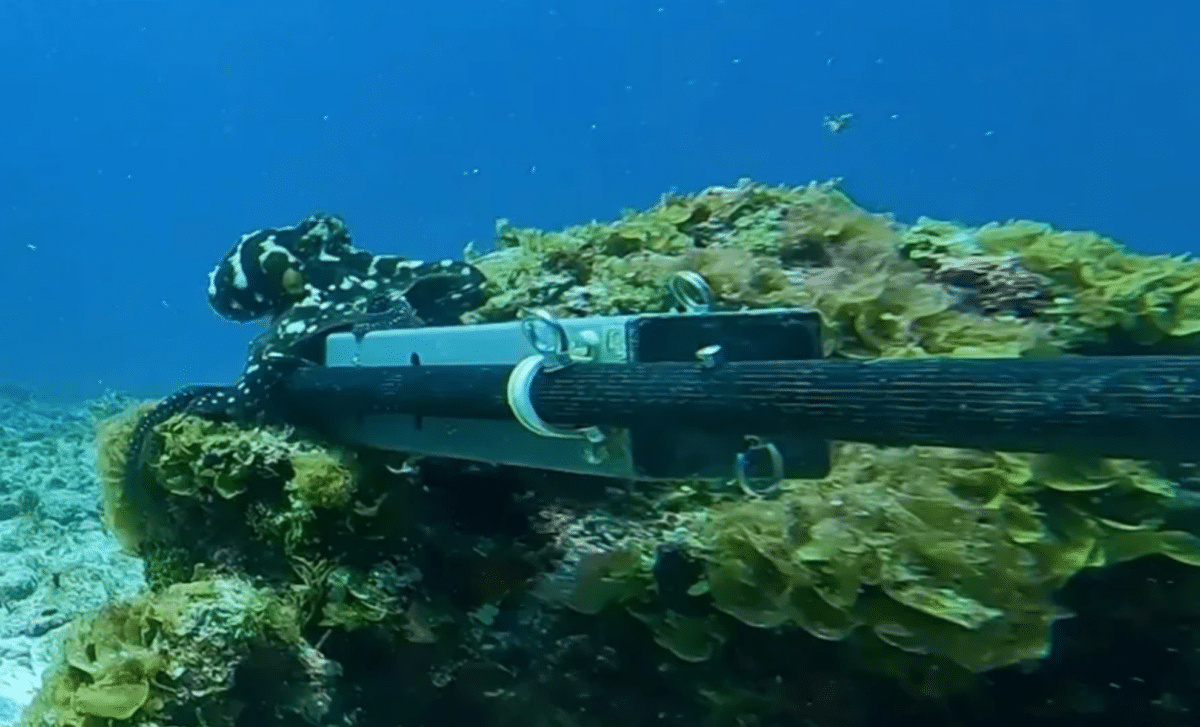
A daytime octopus of the species Octopus cyanea surprised researchers by dragging an underwater camera with bait and a weight between 10 and 15 kilograms during a scientific expedition in the Pacific, in Tuvalu, revealing strength, intelligence, and a rare behavior recorded on video
A scientific team recorded an unusual interaction on the bottom of the Pacific Ocean during an expedition near Niulakita, in Tuvalu, when a daytime octopus pulled and displaced an underwater camera with bait set up to monitor local marine life. The episode, captured by a remote video system, surprised researchers and expanded understanding of the behavior and intelligence of these animals.
The recording was made during an operation by National Geographic Pristine Seas, a group dedicated to studying and preserving marine ecosystems considered among the most pristine on the planet.
The scientists had positioned a remote underwater video system with bait, known as BRUVS, on a reef near the island, expecting to mainly observe the movements of fish in their natural environment.
-
Is a smart plug worth it in a regular home? What does it offer: turns on and off via smartphone, creates routines by schedule, prevents forgotten devices, sometimes monitors consumption, and improves habits without renovation or miracles.

-
Airbus and Mercedes take the G-Class to the skies: the ACH145 helicopter priced at R$ 78 million debuts in São Paulo, unit goes to Brazilian, AMG cabin, 5-blade rotor, and a 2-year wait.

-
New material could change everything: it is the thickness of an atom, 200 times stronger than steel, and 100,000 times thinner than a human hair.

-
A new study published in Nature reveals that the SLIT3 protein can increase calorie burning by activating brown fat in the body, functioning as a kind of “biological switch.”

However, upon analyzing the footage, the team found an unexpected scene. An octopus approached the equipment, grabbed the bait container, and moved the structure across the seabed, altering the course of an observation that had, until then, followed the routine mission pattern.
Recording in the Pacific Ocean surprises researchers
According to Chris Thompson, a marine ecologist from National Geographic Pristine Seas, the images revealed behavior that was both surprising and enlightening.
He stated that the video shows a daytime octopus, identified as Octopus cyanea, pulling the bait container from the BRUVS towards its perch on a nearby rock and beginning an investigation with its tentacles.
The reaction drew attention because the equipment had been installed specifically to remain stable on the seabed.
The BRUVS system is weighted to avoid easy displacement, allowing for more accurate recording of the movement of marine fauna around the bait.
Even with this setup, the octopus was able to directly interfere with the positioning of the camera. The scene reinforced researchers’ perceptions of the capacity of these animals to interact with environmental elements in unusual and unpredictable ways.
Intelligence, strength, and sensory exploration
The scientists emphasized that the animal’s behavior was not treated as a random gesture of curiosity. Octopuses are recognized for having highly developed nervous systems and for exhibiting complex problem-solving skills, which helps explain the interest in the bait container.
Thompson explained that octopuses hunt by “tasting” the environment with special receptors located in the suckers of their arms. When they grab an object, these sensors allow them to perceive what is around and identify potential prey with great precision, which would have led the animal to detect the sardines placed inside the can.
According to the researcher, upon touching the container, the octopus began to feel around, taste the contents, and attempt to access the bait. This sensory mechanism, described as unique among these animals, is a central part of their hunting and exploration behavior in the marine environment.
Another point that drew attention was the strength demonstrated by the animal. The BRUVS system, equipped with additional lead weights to prevent displacement, typically weighs between 10 and 15 kilograms, yet was still moved by the octopus during the interaction recorded by the team.
What the discovery reveals about marine life
For researchers, the episode offers a rare opportunity to directly observe the natural behavior of octopuses in their habitat. The images enhance understanding of how these animals explore their environment and reinforce the idea that there are still little-known aspects of underwater life, even in planned operations with well-defined objectives.
The recording was also treated as an example of how much the oceans still hold unexpected behaviors. By documenting such an unusual scene, the team highlighted the importance of continuing to investigate marine ecosystems and recording interactions that help revise old assumptions about ocean fauna.
In addition to the immediate scientific value, the observation reinforced the need to protect marine environments.
Researchers pointed out that, despite the intelligence and adaptability of species like the daytime octopus, these animals remain exposed to threats such as habitat destruction and climate change.
By monitoring this type of behavior and its interactions with the environment, science gains elements to better understand how to protect species considered vital for the balance of the oceans.
The recording made in Tuvalu, during a mission that seemed routine, ended up as evidence that the seabed can still challenge expectations and reveal answers at completely unforeseen moments.






Seja o primeiro a reagir!