





 Portuguese
  English
  Spanish
  5 min of reading
  0 comments


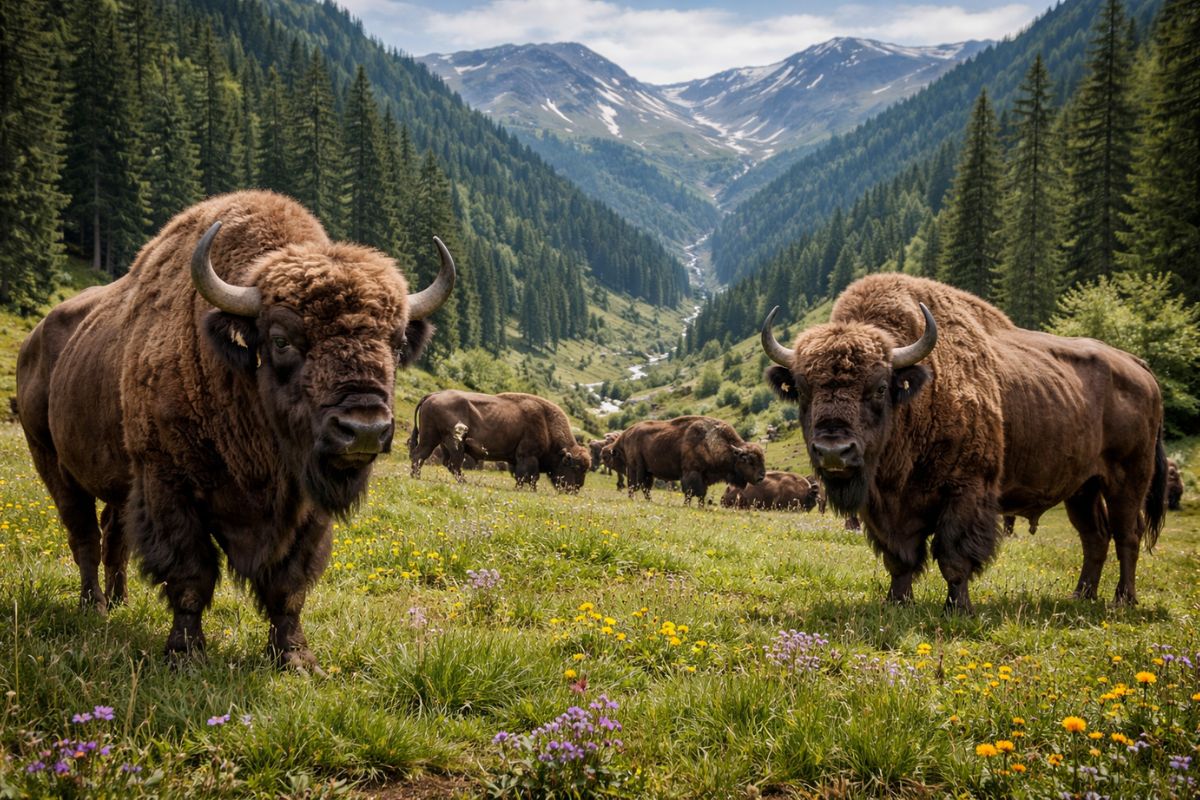
After a decade of reintroducing giant bison in the Tarcu Mountains in Romania, vegetation in the region has increased by about 30% in volume and variety, and a study from the Yale School of the Environment showed that soil in areas with bison captures ten times more carbon than equivalent areas without these animals
In the western mountains of Romania, giant bison weighing a ton are silently transforming the landscape in ways that have surprised even the zoologists who planned their reintroduction. After a decade of work led by Rewilding Europe and WWF Romania in the Tarcu Mountains, vegetation in areas where the herd is established has increased by about 30% in volume and diversity. More grass, more shrubs, more flowers, and a mix of habitats that did not exist when the giant bison were not there.
According to Global Rewilding Alliance, the most impressive result came from a modeling study conducted by researchers at the Yale School of the Environment. The analysis of a herd of about 170 giant bison grazing over approximately 48 square kilometers suggests that the animals help the soil capture about 54,000 tons of carbon per year, nearly ten times more than a similar area without bison. The largest land mammal in Europe is becoming a practical demonstration of how the reintroduction of animals can restore ecosystems and combat climate change at the same time.
How giant bison almost disappeared and returned to nature

The European bison once roamed much of the continent, but it was hunted so intensely that the last wild individuals disappeared in the early 20th century.
-
In 2016, a plane equipped with billions of laser pulses scanned 2,100 km² of jungle in Guatemala and revealed, beneath the tree canopies, a Maya megacity with 61,480 unknown structures, elevated roads spanning dozens of kilometers, industrial-scale irrigation systems, and a population of up to 15 million, three times more than any previous estimate.

-
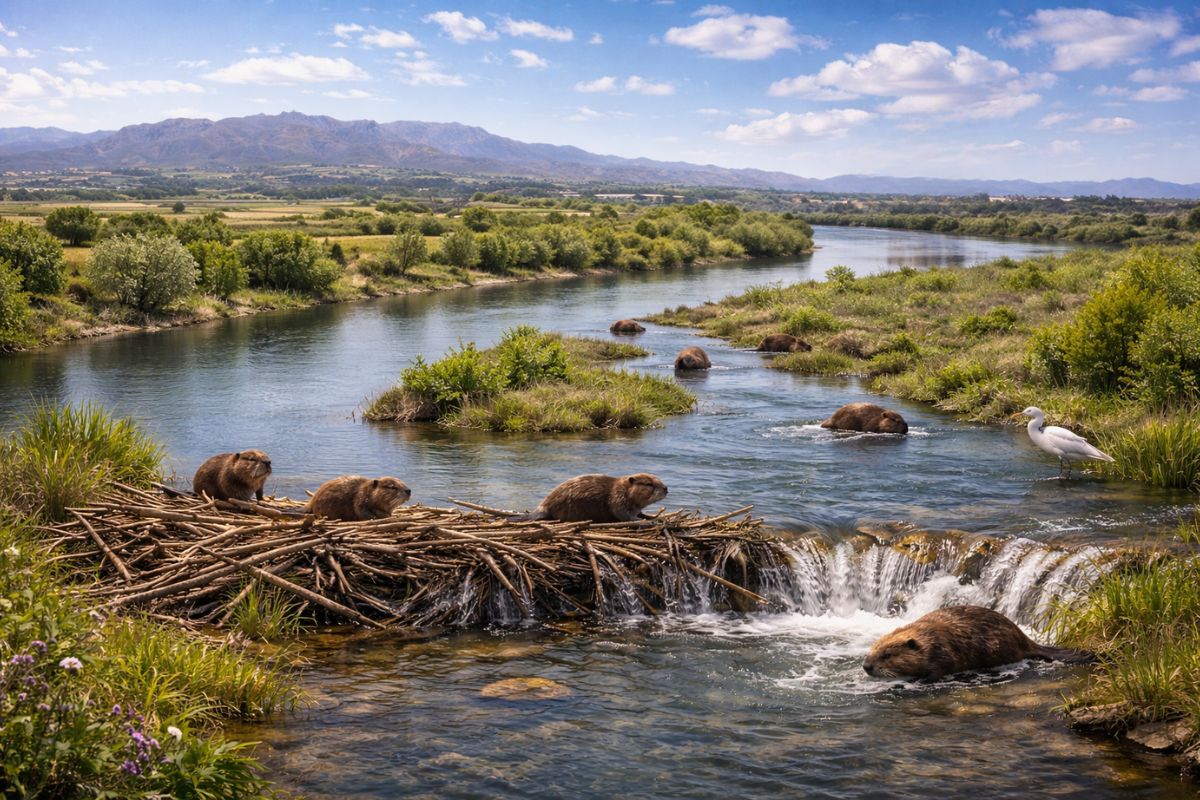
Someone released 18 beavers in the upper Ebro River; it seemed like an isolated case, but no one knows who did it or how to stop their expansion, and now they have already reached Catalonia. And there’s a detail that changes the game: they can help restore rivers and even capture carbon.
-
ZCC 11000 crane lands at the port of Vitória and heads to Ceará in a convoy with 64 trailers: Zoomlion, founded in 1992, builds a monster that lifts over 600 compact cars to 93 m.

-
The biggest drama of being born on Mars is not breathing: Rice biologist says that colonists’ children may cease to be Homo sapiens, shaped by low gravity, radiation, and isolation that divides humanity.


By 1927, fewer than 60 giant bison remained in the world, all in zoos and private parks. Only intensive captive breeding programs prevented the complete extinction of the species.
Starting in 2014, Rewilding Europe and WWF Romania began releasing giant bison in the Tarcu region, creating what is considered the largest reintroduction project of the species in Europe. Today, over 200 bison live freely in the Tarcu mountain range and more than 350 across the country.
Romania has become one of the main bastions of this recovery because the animals live in a mosaic of mountains and valleys, without fences, allowing natural behaviors such as seasonal migrations and long-distance movements to reappear.
Why giant bison increase vegetation instead of decreasing it
It seems contradictory: one-ton animals that eat plants all day are making vegetation grow. But the explanation lies in how giant bison interact with the environment.
They graze in open areas, trample dense shrubs, roll in the dirt creating clearings, and spread seeds in their fur and feces. This behavior breaks up uniform vegetation and exposes areas of bare soil where new species can sprout.
The result is not simply more vegetation, but more diverse vegetation.
Instead of a uniform wall of plants, what emerges is a mosaic with pastures, shrubs, and young forests side by side. This mixed landscape supports a greater variety of insects, birds, and small mammals, exactly the type of environment in which many European species originally evolved.
Monitoring in the Tarcu Mountains indicates an increase of about 30% in biomass and plant diversity in areas where giant bison have been established for several years.
The Yale study that showed giant bison as climate allies
Researchers from the Yale School of the Environment analyzed data from the Tarcu herd and concluded that giant bison help the soil capture much more carbon than it would naturally store without these animals.
The estimate is that the area with bison retains about 54,000 tons of carbon per year, almost ten times more than an equivalent area without the animals.
The mechanism is straightforward: by trampling, grazing, and fertilizing the soil with waste, giant bison stimulate biological cycles that favor carbon absorption.
The roots of new plants that sprout in areas disturbed by the animals capture CO2 from the atmosphere and store it in the soil.
One of the scientists involved in the project summarized by saying that these animals act as climate allies, keeping carbon retained in the soil instead of letting it escape into the atmosphere.
Conflicts with rural communities and the solutions being tested
In practice, coexisting with one-ton giant bison is not without problems. Families that depend on livestock, hay fields, and small farms are concerned about broken fences, hay bales raided, and unexpected encounters with the animals on mountain trails.
The project partners are testing solutions such as patrols, early warning systems, reinforced fences, and compensation plans for farmers who suffer damage caused by bison.
At the same time, giant bison attract tourists willing to pay for guided tracking tours, local food, and rural accommodation.
Nature tourism is becoming an alternative source of income for villages that previously relied solely on logging or intensive grazing.
For young people in the region, working as a guide or in small tourism businesses already offers an alternative to emigrating to the big cities. The challenge is to balance conservation with the real needs of the communities living with these animals.
An experiment that could redesign conservation in Europe
The giant bison of the Tarcu Mountains are proof that nature, when it gets its engineers back, responds in ways that science does not always predict.
30% more vegetation, ten times more carbon stored in the soil, and a landscape that has started to function again as it did before humans eliminated the largest land mammal in Europe.
If the lessons from Romania are applied in other corners of the continent, the reintroduction of large herbivores could become one of the most powerful tools against biodiversity loss and climate change.
Did you know that giant bison still exist in Europe? Do you think the reintroduction of large animals could work on other continents, or are the conflicts with rural communities too great? Leave your comments and share this article with those interested in conservation and environmental science.








Seja o primeiro a reagir!