





 Portuguese
  English
  Spanish
  5 min of reading
  0 comments


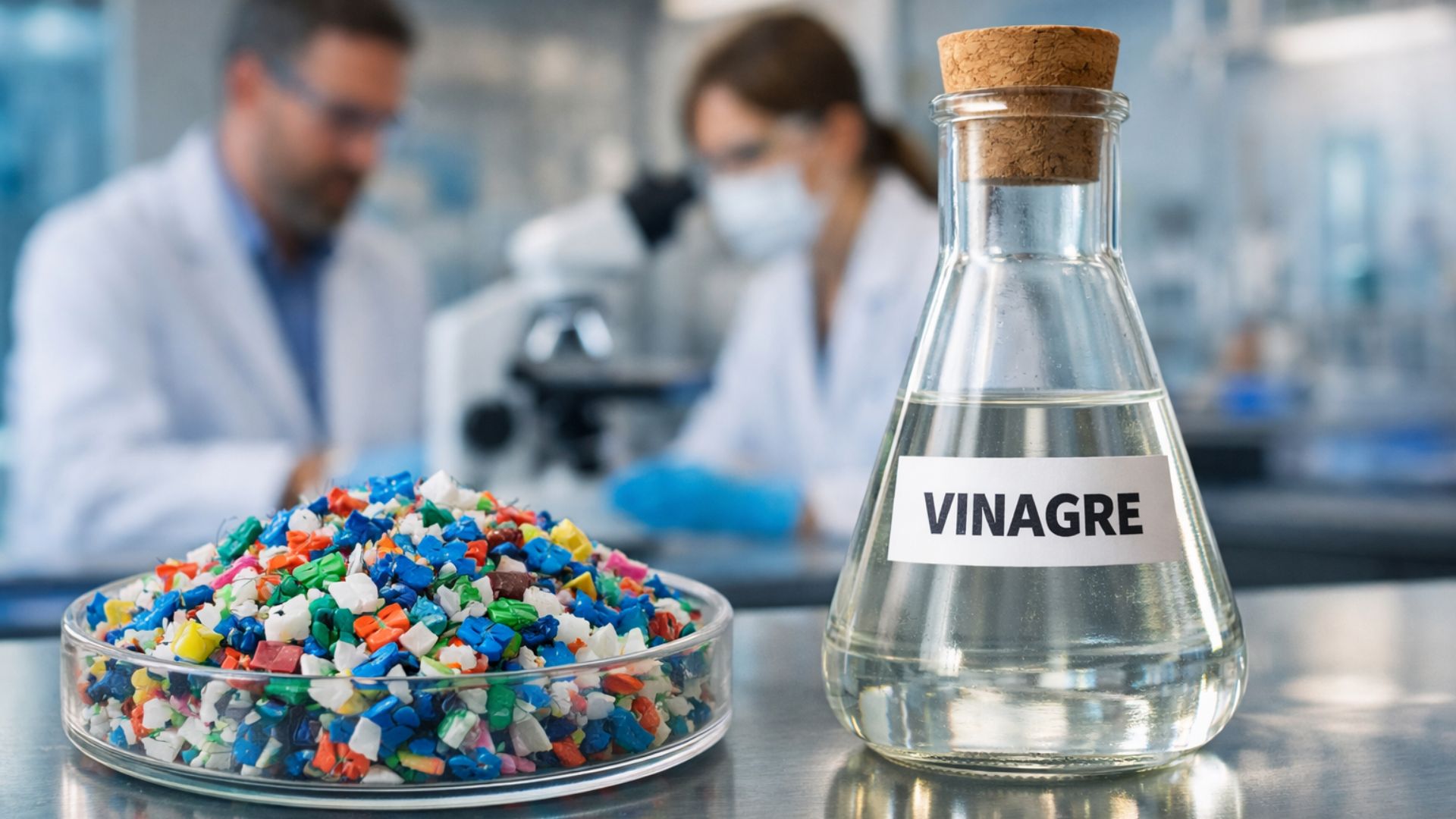
Canadian researchers use solar light to convert plastic into vinegar through bioinspired photocatalysis. New emission-free method promises sustainable solution to the global plastic waste crisis.
A team of Canadian researchers has developed a new method capable of converting plastic waste into acetic acid — the main component of vinegar — using only solar light as an energy source. The discovery was detailed in a paper published in the journal Advanced Energy Materials and represents a concrete advance in the search for a sustainable solution to the global plastic crisis.
The research was led by Wei Wei, a PhD student at the University of Waterloo, under the supervision of Dr. Yimin Wu, with support from the Waterloo Institute for Nanotechnology and the Water Institute. The work proposes a radically different approach from traditional disposal solutions — such as incineration and landfills — that still dominate waste management around the world.
Why this new method for “making vinegar” matters now
The plastic crisis is one of the most urgent environmental emergencies today. To understand the scale of the problem, just look at the numbers: about 430 million tons of plastic are produced annually worldwide, according to the United Nations Environment Programme (UNEP). Of this total, less than 10% is effectively recycled. The rest goes to landfills, is incinerated, or ends up in the environment.
-
3,500-year-old tear discovered reveals a textile technique much more advanced than previously thought in the Bronze Age.

-
One of the largest manufacturers of military ammunition in the world is Brazilian and has just signed an agreement with the Navy to develop national ammunition for the frigates built in Santa Catarina that will protect the Blue Amazon.

-
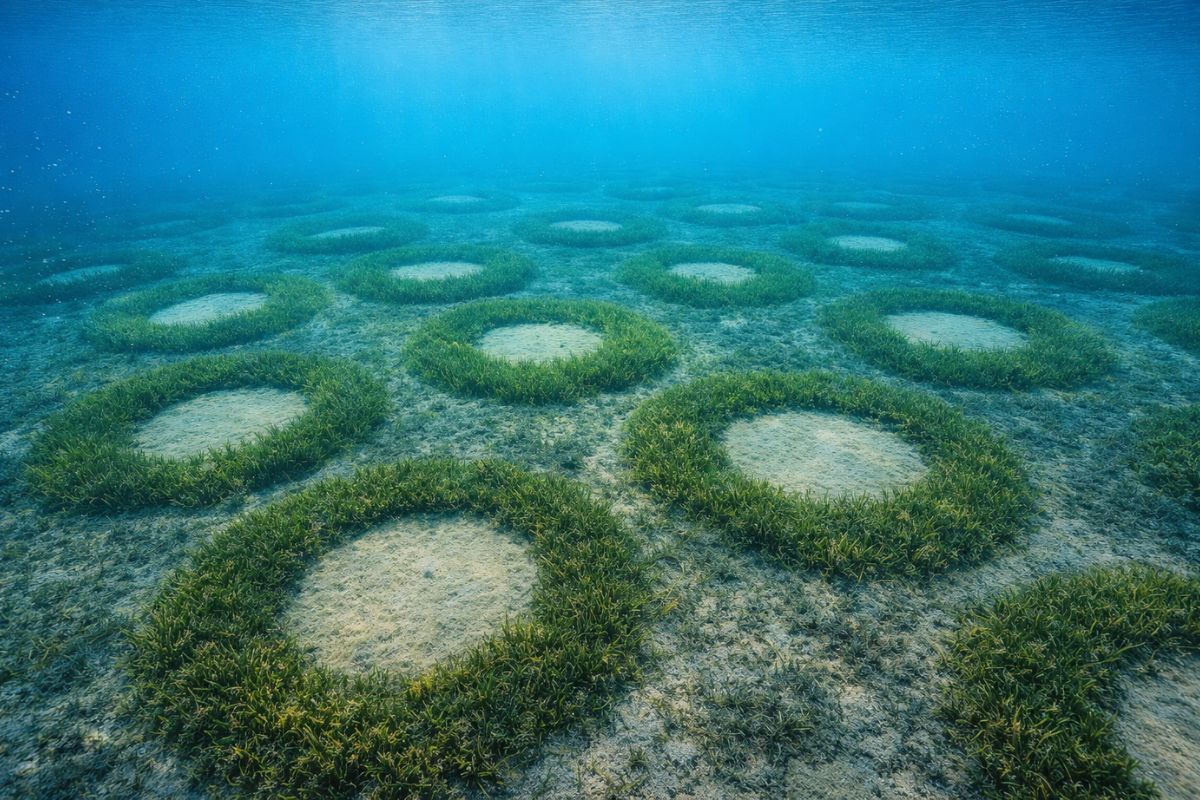
Scientists are baffled by hundreds of perfect circles that have emerged on the seabed in Scotland, formed by living seagrass meadows, and no one can explain whether it is nature self-organizing or something completely unknown to science.
-
The energy consumption that goes unnoticed in millions of Brazilian homes does not come from the refrigerator or the air conditioner; it occurs even when everything seems to be turned off and can represent up to 12% of the electricity bill according to the International Energy Agency.


The situation in the oceans is equally alarming. About 8 million tons of plastic enter the seas every year, and projections from the Ellen MacArthur Foundation indicate that by 2050, there could be more plastic than fish in the oceans by weight. Microplastics have already been detected in nearly all studied ecosystems — from the ocean depths to human blood.
In this scenario, the proposal from the Waterloo scientists carries special weight: instead of merely “disappearing” the problem, the new method transforms waste into a resource.
Bioinspired photocatalysis: how science imitates nature
The process developed by the scientists uses a technique called cascade photocatalysis. The catalyst is made up of isolated iron atoms incorporated into carbon nitride — a material derived from abundant elements in nature. When exposed to sunlight, this material triggers chemical reactions that fragment the polymer chains of plastic and convert them into acetic acid with high selectivity.
The inspiration came from biology. The technique was developed from natural decomposition mechanisms performed by fungi, which have enzymes capable of degrading organic polymers with molecular precision. The team adapted this principle to create a synthetic catalyst that mimics this behavior on a controlled and accelerated scale.
Another relevant point: the reaction occurs in an aqueous medium, that is, in water. This eliminates the need for organic solvents or extreme temperatures, reducing energy costs and environmental risks — and opening interesting possibilities for direct application in contaminated environments.


Plastics converted into “vinegar” by solar light: from mixture to product
Laboratory tests confirmed that the new method works with four of the most common types of plastic in the world:
- PVC (polyvinyl chloride)
- PP (polypropylene)
- PE (polyethylene)
- PET (polyethylene terephthalate)
An important operational differential is that the process showed effectiveness even when these plastics were present in mixtures, without the need for prior sorting. In practice, this is crucial, as a large part of the plastic waste found in rivers, lakes, and oceans is heterogeneous, mixed with other materials.
The final product — acetic acid — is not just a byproduct: it is a chemical compound with high commercial value, widely used as a raw material in plastics, solvents, food preservatives, and pharmaceutical processes. This means that the sustainable solution can, in practice, self-finance through the sale of what is produced during decontamination.

Environmental advantages that separate this process from traditional methods
When comparing the new method with conventional disposal alternatives, the differences are significant. Among the main environmental differentials are:
- Uses solar light as the only energy source, without fossil fuel consumption
- Does not generate additional carbon dioxide emissions, unlike incineration
- Operates in an aqueous medium, without aggressive chemical solvents
- Can reduce the accumulation of microplastics in water systems
- Transforms waste into a product with real commercial value
The combination of these factors distinguishes bioinspired photocatalysis from any previous approach. Incineration, for example, eliminates visible plastic but releases toxic gases and contributes to global warming. Traditional mechanical recycling, on the other hand, requires rigorous sorting, loses quality with each cycle, and does not cover all types of polymer. This new process, in turn, works with clean energy, operates in an aqueous environment, and generates a useful product — three attributes that rarely coexist.
Real challenges of the new method before industrial scale
Despite the promising results obtained in the laboratory, the scientists themselves are cautious about the implementation horizon. The technique has not yet been tested at an industrial scale or in external pilot projects.
The researchers believe that the system can be adapted for large-scale recycling and for solar-powered environmental cleanup projects, with improvements through materials engineering and process optimization. Among the main technical challenges are the durability of the catalyst in continuous use, the production cost of carbon nitride, and the efficiency of the process under variable weather conditions — such as cloudy days or regions with low solar incidence.
Two application paths are being considered by the team: stationary solar reactors for processing collected waste and floating systems for direct remediation of contaminated bodies of water.

When transforming plastic into vinegar can save the oceans
The field of photocatalysis applied to pollutant degradation has been growing consistently. Related research explores the use of titanium dioxide in the brookite form as a catalyst, capable of generating acetic acid and hydrogen from PET waste through distinct technological routes. These parallel advances indicate that multiple groups around the world are converging on similar solutions, accelerating the overall pace of the field.
The work of the Waterloo scientists stands out precisely for operating with visible sunlight — not just ultraviolet — and for producing a specific compound of commercial value, rather than simply mineralizing plastic into CO₂ and water. This changes the economic equation of recycling and repositions the sustainable solution as a business opportunity, not just as an environmental cost.
As regulatory pressure on the use and disposal of plastics increases worldwide, technologies like this are likely to gain momentum on the path from the laboratory to real scale. What the scientists built in Waterloo is not just a promising experiment — it is a new way of looking at the problem.





Seja o primeiro a reagir!