





 Portuguese
  English
  Spanish
  3 min of reading
  1 comment


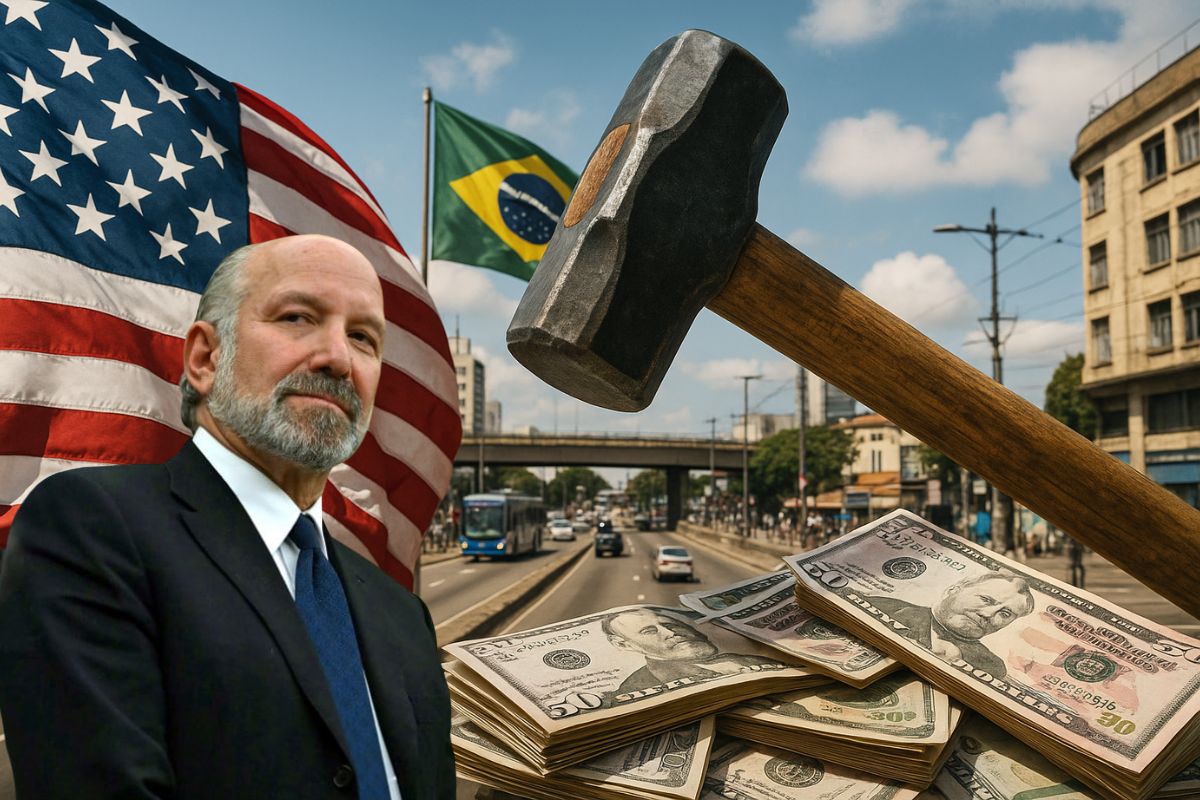


Howard Lutnick Accuses The Country Of Harming The United States And Signals That The Surcharge Should Continue.
The United States Secretary of Commerce, Howard Lutnick, stated in an interview that it is necessary to “fix Brazil”, accusing the country of adopting practices that harm the American economy. The statement comes amid a trade crisis that has already imposed tariffs of 50% on various Brazilian products.
The criticisms increase the tension between Brasília and Washington at a time when Presidents Luiz Inácio Lula da Silva and Donald Trump promise to meet to discuss measures.
According to Lutnick, the maintenance of the high tariffs will depend on how Brazil and other countries will react to American demands. The information was published by g1.
-
Brazilian city bets on the business environment to generate jobs and attract investments in the energy sector — secretary reveals strategy at Macaé Energy 2026.

-
50 viaducts, 4 tunnels, 28 bridges, and 40 kilometers of bike paths: BR-262 in Espírito Santo will receive 8.6 billion reais for the largest engineering project in the state’s history, inspired by the Immigrant Highway in São Paulo.

-
Brazil produces too much clean energy and doesn’t know what to do with it: over 20% of solar and wind capacity was wasted in 2025 while investors flee and 509 renewable generation projects were abandoned in the last year.

-
Piauí will produce a new fuel that replaces diesel without needing to change anything in the truck’s engine and reduces pollutant gas emissions by half: truck drivers from all over the Northeast are already celebrating the news that will arrive later this decade.


The Direct Criticisms To Partner Countries
In the interview with NewsNation, Lutnick stated that “there are a lot of countries to fix,” including Switzerland, India, and Brazil.
For him, these nations need to “open their markets and stop taking actions that harm the United States.” The secretary also highlighted the trade deficit as justification for the measures taken by the White House.
According to g1, while other countries will only start facing the new tariffs in October, Brazil has already been suffering from the 50% tariffs since August.
Products such as medicines, heavy trucks, furniture, and household items are among the most affected by the measure, which is also expected to impact economies like Germany, Japan, and China.
The Weight Of The Trade Deficit And The Example Of Switzerland
Lutnick cited the case of Switzerland to illustrate what he called an “unfair imbalance.” According to him, a small country like Switzerland accumulates a deficit of US$ 40 billion with the U.S. because it sells much more than it buys.
For the secretary, this situation is repeated with other nations and reinforces the need to impose trade barriers.
In practice, the message is clear: those who want to sell to the American market will have to accept the conditions imposed by Trump.
According to the secretary, this is the way to “play ball with the President of the United States” and maintain access to the country’s consumers.
The Position Of The Trump Government And The Reflections For Brazil
Trump justifies the measures as an effort to protect local industry and ensure so-called “national security.”
The president had already been showing irritation with the volume of imports, and in the Brazilian case, the criticism goes beyond the economic agenda: the Republican has also attacked the conduct of the judicial process against Jair Bolsonaro, labeling it as political persecution.
For Brazil, maintaining the 50% tariff means a direct challenge to exports in strategic areas.
Sectors such as furniture, vehicles, and medicines face the risk of losing competitiveness, which puts pressure on companies and could have repercussions on employment and investments.
Next Round Of Negotiations Between Lula And Trump
The meeting between Lula and Trump, scheduled for this week, will be the first since the tariffs took effect. Both have signaled a willingness to negotiate, but Lutnick’s aggressive rhetoric indicates that American pressure is unlikely to decrease.
It remains to be seen whether Brazil will manage to carve out space to soften the tariffs or if it will need to seek alternative trade opportunities in other markets.
The statement that it is necessary to “fix Brazil” escalates the tone of the trade crisis and puts the relationship between the two countries in question.
While Washington insists on maintaining heavy tariffs, Brazil seeks space for dialogue.
Do you believe that Brazil should yield to American pressures to preserve access to the U.S. market or respond with its own measures to protect its economy?
Share your opinion in the comments.








É preciso observar os prós e contra de cada alternativa para minimizar os Efeitos do TARIFAÇO. Independente da possível resposta, temos que diversificar(pulverizar)nossas exportações para minimizar possíveis futuros TARIFAÇOS aplicados tbm por outras Nações. Infelizmente os Órgãos de Controle destas atitudes não funcionam quando se trata de EUA principalmente.