





 Portuguese
  English
  Spanish
  6 min of reading
  0 comments


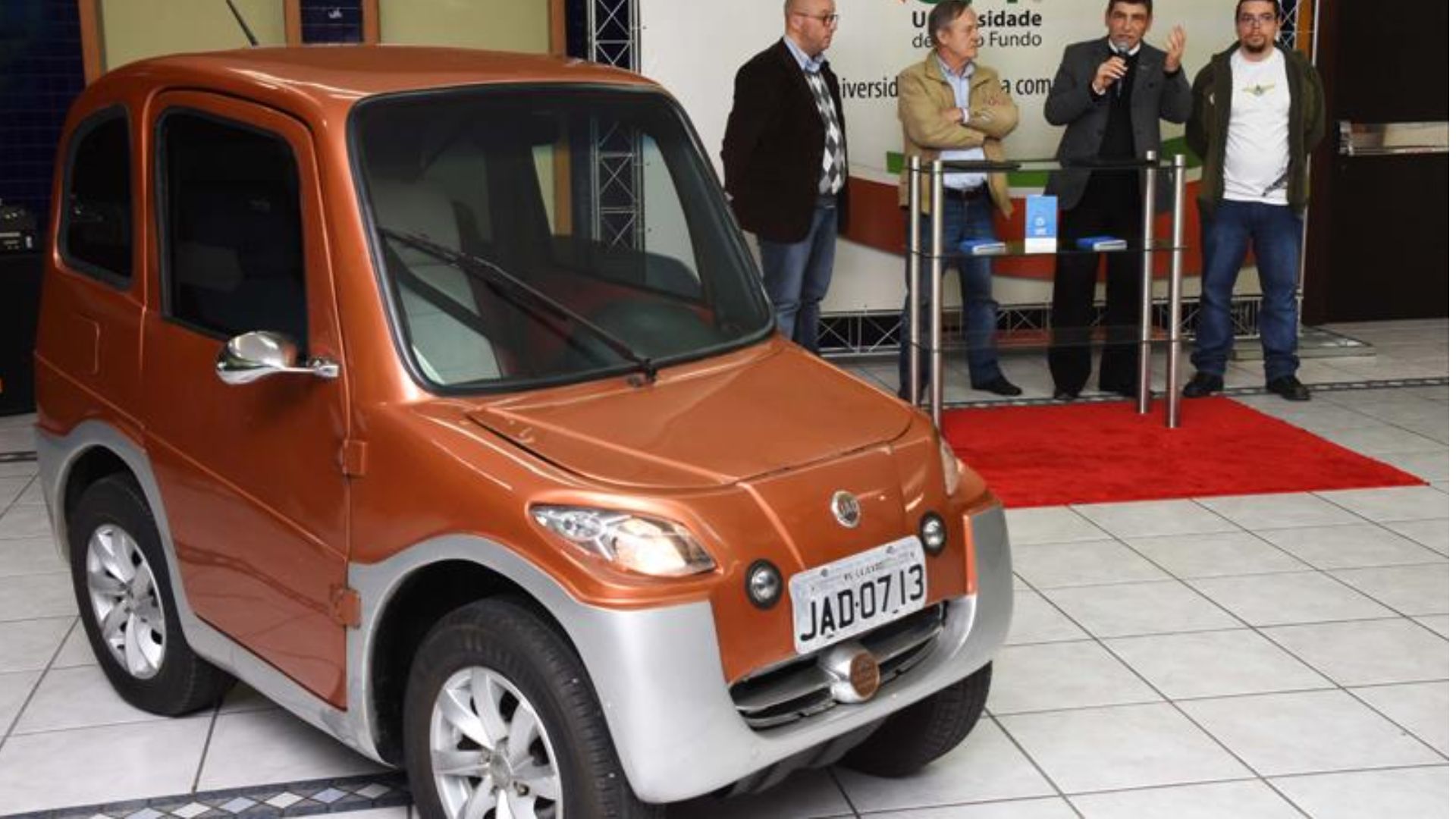
Craft Invention Emerged in the Interior of Rio Grande do Sul Transformed Casual Observation into a Functional Electric Automotive Project and Garnered National Attention by Uniting Low Cost, Mechanical Creativity, and Regulatory Persistence in a Period When Electric Vehicles Were Still Rare in Brazilian News.
Compact, electric, and developed outside of automakers, the JAD emerged in Rio Grande do Sul as a craft project by João Alfredo Dresch, a resident of Lajeado, who decided to build his own vehicle after seeing similar models circulating in Italy in 2009.
The version that gained national attention combined reduced dimensions, an urban proposal for two people, and low operating costs, at a time when electric cars still rarely appeared in Brazilian news.
Idea for the Electric Minicar Was Born After a Trip to Italy
The idea was born far from the automotive industry and research centers. In an interview, Dresch summed up the initial impulse with a short phrase: “I Just Used My Head”.
-
Spain surprises the world by erecting 62 artificial dunes, mixing sand with natural remains of posidonia, and causing the structure to lose only 1.4% of its volume in 1 year.

-
With 16 Bulava missiles, improvements in acoustic stealth, and a design focused on silent patrols, Russia’s nuclear submarine was born to ensure Moscow’s invisible retaliation and has become one of the pillars of its maritime strength.

-
‘Populous’ city in Rio among the worst in Brazil in national ranking and exposes silent development crisis.

-
Couple buys house in the South Zone of São Paulo, opens a hidden door in the garage, and finds a secret wine cellar with dozens of old wines forgotten since the 1970s.

According to him, the decision came after observing a silent minivehicle being charged on the street during a trip to Italy and concluding that something similar could work in Brazil.
Back in the country, the inventor began to gather parts on his own and moved forward without formal academic project.
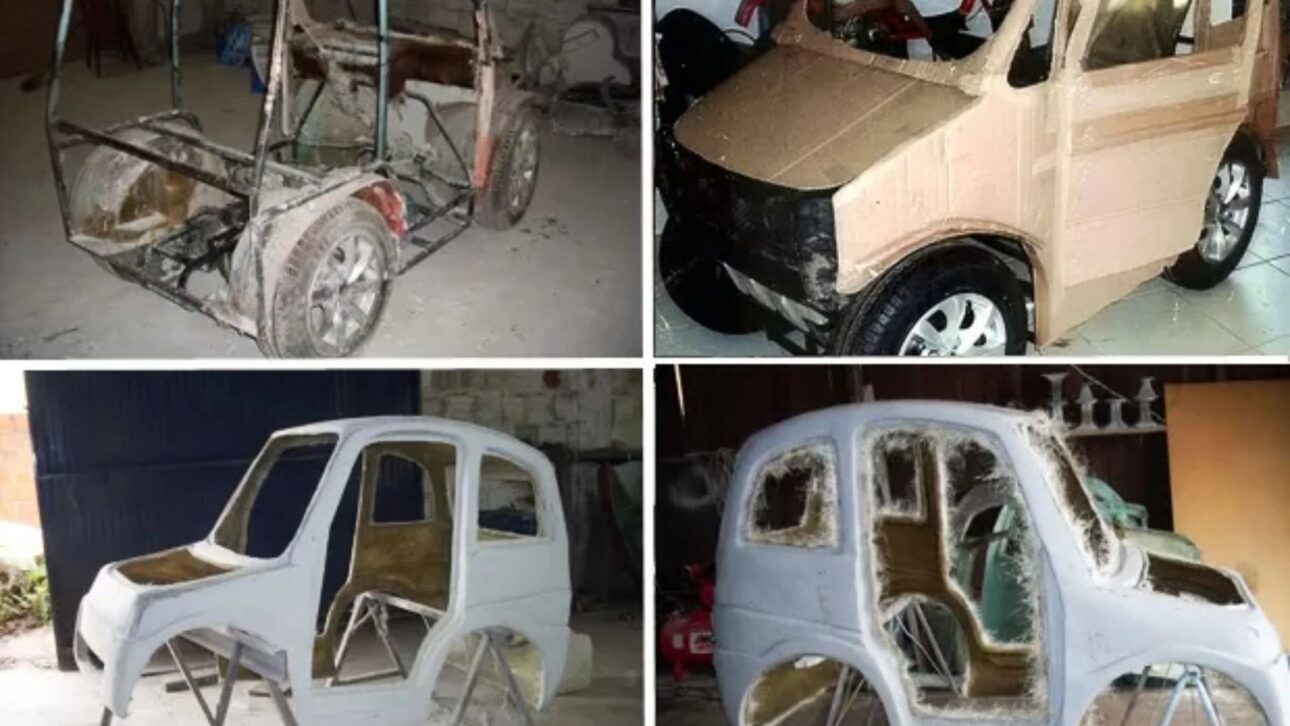
The first step was structural: in about three months, the chassis was ready.
Then came the shape and fit tests, in a sequence of prototypes made with cardboard, wood, and fiber, until reaching the final body on a tubular steel frame.
The journey required considerable investment for a garage project.
Reports published in 2014 indicated that Dresch started the endeavor with R$ 10,000 borrowed and completed the first model after about 11 and a half months of work, with total spending close to R$ 40,000.
In another interview, he stated that the amount was equivalent to the price of a popular car at the time.
Specifications of the JAD1 Caught Attention in Brazil
The specifications released at that time help explain why the vehicle became a national curiosity.
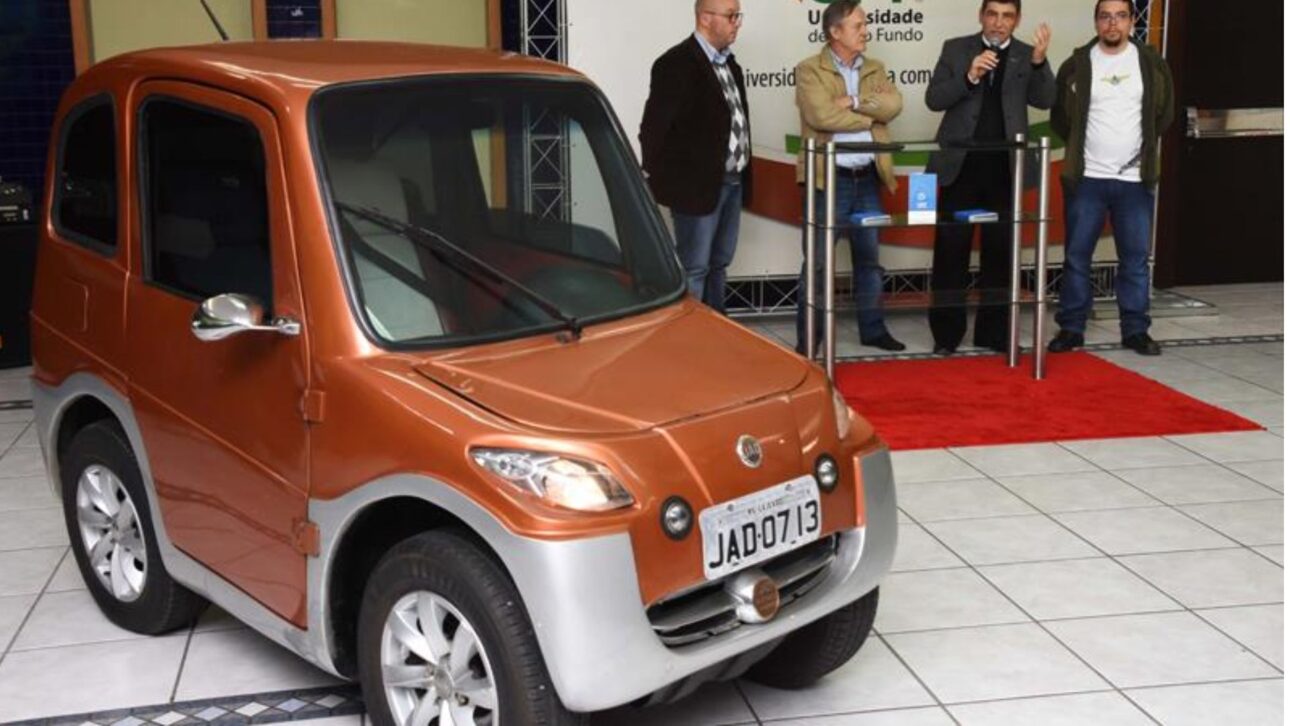
The JAD1 was described as an electric minicar with a 5 horsepower motor, a maximum speed of up to 70 km/h, and an estimated cost of about R$ 0.10 per kilometer.
The system used 14 batteries, and the proposal aimed to meet short-distance travel with low operational costs.
The dimensions reinforced the logic of an urban microvehicle.
Dresch informed Grupo A Hora that the car measured 1.95 meters in length by 1.05 meters in width, in addition to accommodating two people.
Terra also reported a height of 1.20 meters and noted that the model could run about 100 kilometers with a two-hour charge, although this differed from other interviews with the inventor, where the range appeared at a lower level.
This difference in numbers also appears in the charging cost. Dresch told Grupo A Hora that the vehicle could run 60 kilometers with R$ 2 in energy, a proportion lower than the estimate of R$ 0.10 per kilometer released in 2014.
As the published values vary according to the source and the moment of the statement, the most reliable data is to treat the cost as a time estimate provided by the inventor in interviews, and not as a standardized technical reference.
Bureaucracy and Licensing Delayed Vehicle Circulation
The public reception of the JAD did not eliminate the central obstacle of the project: regularization.
Dresch reported that he started the licensing process in March 2011 and took the vehicle to the Detran several times until he managed to obtain documentation.
In this interval, the minicar was seized twice between 2011 and 2014, while still waiting for authorization to circulate.
According to the inventor himself, the process took two years and seven months.
The licensing was completed in January 2014, according to reports published at the time.
It was after this stage that the JAD began to circulate with a plate chosen by the creator, formed by his initials.
From then on, the project gained a second type of legitimacy.
In later news, the University of Passo Fundo referred to the JAD1 as the first electric car to be licensed in Brazil.
Still, the university itself had previously used a more cautious formulation, stating that the JAD2 could be the first manufactured and licensed in the country.
Partnership with University Led to the Development of the JAD2
In September 2016, the minicar moved to a new phase with the signing of a cooperation agreement between Dresch’s company and the University of Passo Fundo.
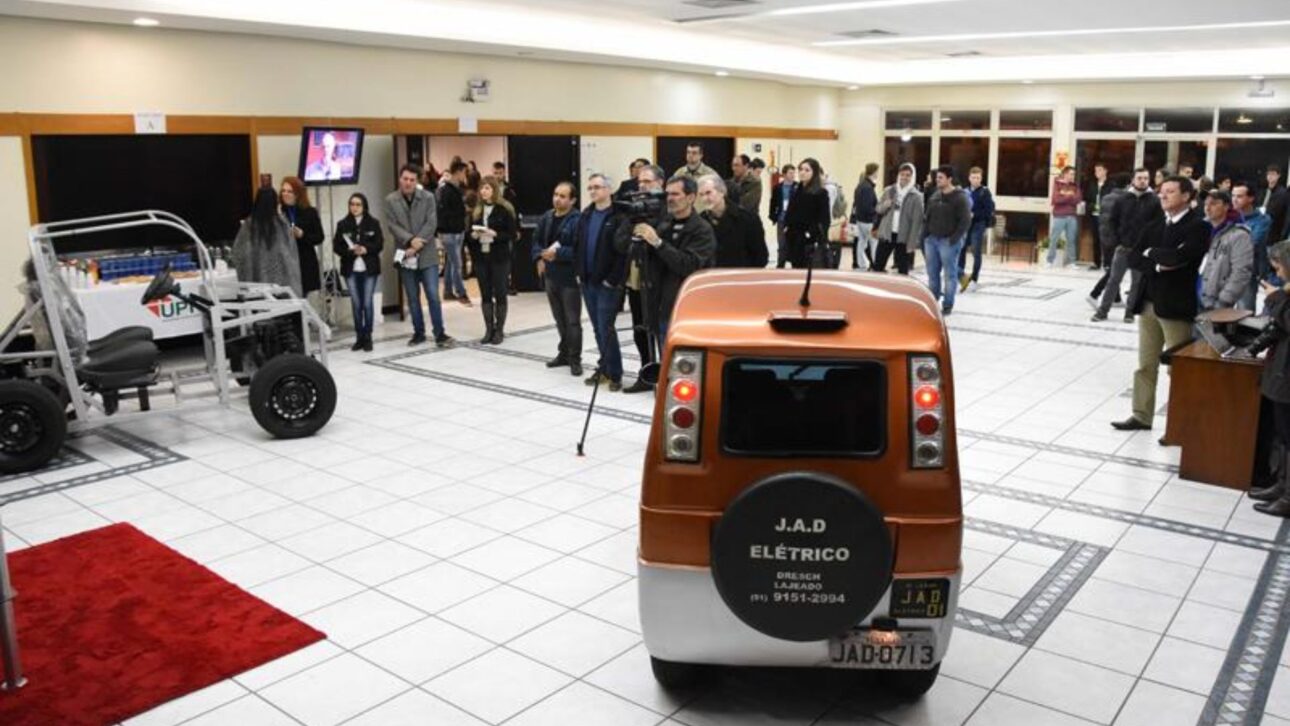
The partnership was organized through UPF Parque and involved courses in Mechanical Engineering, Electrical Engineering, Computer Engineering, Computer Science, and Product Design.
The goal was to develop the JAD2, a more advanced version of the vehicle.
In addition to technical evolution, the university reported that the work would include adjustments to Brazilian legislation.
Items such as airbags and ABS brakes began to be integrated into the studies to make the project compatible with market and safety requirements.
The tests for the second model started in 2017.
A report from the newspaper O Nacional noted that the JAD2 was taken for evaluation at Module III of the university’s Scientific and Technological Park.
The text also detailed that the new configuration had 2.45 meters in length, 1.15 meters in width, six batteries, a range of up to 150 kilometers, and a maximum speed of 45 km/h.
This redesign showed an important change in concept.
While the first JAD became known for creative improvisation and a handcrafted body, the JAD2 emerged as a product in technical development, tested with university support.
At a later stage, UPF reported that it had delivered the final project to the inventor.
According to the institution, about 16 students and 12 professors from different fields participated in the work.
These included Engineering, Product Design, and Computer Science.
At the time, the project coordinator stated that a functional prototype and a conceptual project capable of being presented to investors had been produced.
Gaucho Inventor Took Minicar from Garage to the Debate on Electric Mobility
The journey of João Alfredo Dresch combines casual observation, artisanal manufacturing, regulatory bureaucracy, and academic validation.
What began with cardboard and wooden molds in an improvised workshop advanced into a project that entered the debate on electric mobility before the popularization of imported models in the Brazilian market.
More than the speed or size, the JAD gained prominence by condensing an unusual journey.
A retiree without higher education in the automotive field managed to take from the garage a functional electric vehicle, license it after a long process, and later bring the idea to a university to develop a second version with aims of scaling.
This chain of events helps explain why the minicar continues to be cited as a unique case of artisanal innovation in Brazil.







Seja o primeiro a reagir!