





 Portuguese
  English
  Spanish
  4 min of reading
  1 comment




SALt Lamp, Invention Powered by Water and Salt, Promises Up to 8 Hours of Light and USB to Charge Cell Phones, Bringing Cheap Energy to Families Without Electricity.
Few inventions come with the promise of changing the lives of millions of people forgotten by basic infrastructure. But that is exactly what happened in the Philippines, an archipelagic country where thousands of families live without access to electricity or rely on candles and kerosene lamps. In a scenario of social and environmental vulnerability, an idea emerged that gained international attention: the SALt Lamp (Sustainable Alternative Lighting), a lamp powered only by water and salt, created by Filipino engineers with the goal of providing cheap and safe lighting for isolated communities.
The proposal seemed too simple to be real: just one glass of water and two teaspoons of salt could generate up to eight hours of continuous light. This contrast between the extreme need and the simplicity of the solution caught international attention, transforming the SALt into a symbol of how innovation can arise outside of large, million-dollar laboratories and directly impact the lives of those who need it most.
How the Saltwater Lamp Works
The secret behind the invention lies in basic electrochemistry. The mixture of water and salt acts as an electrolyte inside a galvanic cell, where two metallic electrodes of different compositions interact through oxidation and reduction reactions.
-
With a cost per shot close to zero, the DragonFire laser could change naval warfare in 2027 and provide British ships with nearly unlimited defense against drones.

-
A British startup creates tires that generate electricity in electric vehicles when passing over potholes, speed bumps, and cracks.

-
Scientists have created robots made with living cells that have their own nervous system, swim on their own, explore the environment, and self-organize without any genetic engineering, and now they want to do the same with human cells.

-
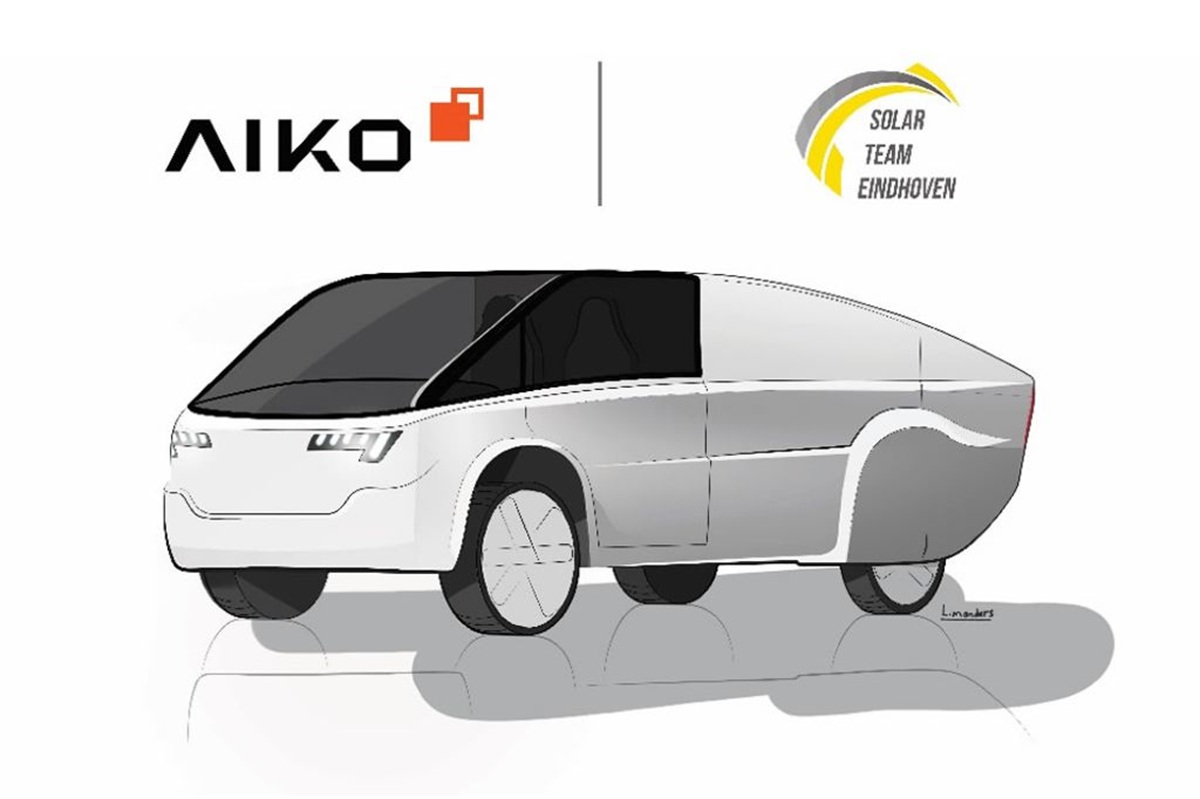
Students create a solar-powered ambulance that operates without a plug, without fuel, and still keeps medical equipment running in remote areas.

The result is the production of electrical energy sufficient to light low-power LED lamps, illuminating an entire environment at night.
In addition to lighting, the SALt was designed with a USB port capable of charging small devices, such as cell phones. For isolated communities on islands or mountainous regions, where there is no electrical grid and communication relies on mobile devices, this functionality becomes vital.


The project also has an important environmental appeal: by replacing kerosene lamps, it eliminates the risk of household fires, the emission of harmful smoke, and ongoing expenses with expensive fuels. The impact is direct on health, family budget, and quality of life.
Social and Economic Impact of SALt Lamp
The potential of the lamp goes beyond the technology itself. It was created as a response to energy inequalities that characterize developing countries. In the Philippines, it is estimated that more than 16 million people do not have reliable access to electricity. For these families, the electricity bill, when it exists, consumes a good portion of their monthly income.
With the SALt Lamp, the cost virtually disappears, as the main input—salt and water—is within reach of most coastal communities. This ensures energy autonomy, reducing dependence on diesel generators, which are expensive, polluting, and require complicated logistics for fuel transportation.
Another highlight is the issue of home safety. Replacing kerosene lamps means fewer accidents, fewer smoke poisoning cases, and lower hospital expenses. In other words, the impact is not only in the energy sector but also in public health and family budgets.
Limitations and Challenges of the Technology
Despite its worldwide impact, the SALt Lamp faces some technical and logistical challenges. The main one lies in the metallic electrodes, which wear out over time and need to be replaced after a few months of use. This factor generates maintenance costs that can compromise the viability of the solution on a large scale.
Another point is that, although the energy is sufficient for lighting and small charges, it cannot sustain higher-demand appliances. This means that SALt is a partial solution aimed at basic needs but still far from replacing more robust energy sources, such as solar and wind.
Still, the project remains relevant precisely because it targets a specific and urgent problem: to bring light to families who still live in the dark.
International Recognition and Global Support
Filipino engineer Aisa Mijeno, the creator of SALt, was invited to present the project at international forums on innovation and sustainability.
The social impact garnered so much attention that the invention was praised by world leaders such as Barack Obama and Jack Ma, who highlighted it as an example of creativity applied to solving real problems.
The international recognition brought visibility and financial support, but it also increased the pressure to turn the idea into a scalable product. Proving that SALt can be mass-produced, distributed in remote regions, and maintained at low cost is the next step for the invention to go from being merely a promise to becoming a reality on a large scale.
Alternative Energy and the Future of Isolated Communities
The SALt Lamp should not be seen as a substitute for more robust clean energy solutions, but rather as a strategic complement for specific situations. While solar energy programs require larger investments in panels and batteries, SALt acts as an immediate, cheap, and accessible alternative.
In a world where more than 700 million people still live without access to electricity, according to data from the International Energy Agency (IEA), projects like this show that it is possible to think of energy in a decentralized way, adapted to local realities and with low environmental impact.
The Filipino saltwater lamp may not be the definitive solution to the planet’s energy shortage issue, but it has already proven something essential: social innovation does not have to be complex or expensive to transform lives. Sometimes, a glass of water and a teaspoon of salt can be more revolutionary than any billion-dollar power plant.








I enjoyed the case study — it really brought the theory to life.