





 Portuguese
  English
  Spanish
  5 min of reading
  0 comments


The Abandoned Nineteenth-Century Church Became a Home with a Construction Plan That Seems Simple, But the Couple Shows That It Requires Repetition, Precision, and Dedication to Turn Dream into Reality
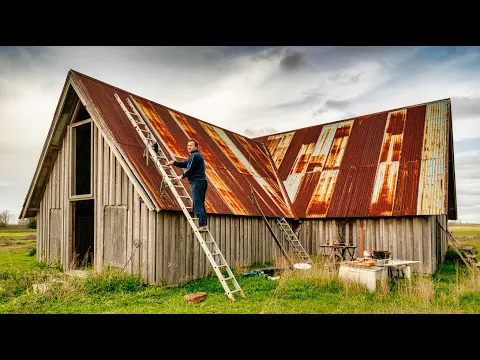
The couple enters the abandoned church and transforms the space into a home, and the first impression deceives. On the outside, corrugated tiles marked and green stains. On the inside, a floor with marks, visible wood, and an emptiness that does not forgive mistakes.
The tension arises early because any failure up there ruins the rest. The couple addresses the roof and gutters, then descends to the floor with gravel and cement, and only then moves on to smooth walls, aligned windows, bathroom, and kitchen.

This draws attention in the world of construction and maintenance because many renovations get lost in haste. Here, the path is different. The abandoned church transforms into a home when each step prepares the next, without skipping what sustains daily use.
-
Friends have been building a small “town” for 30 years to grow old together, with compact houses, a common area, nature surrounding it, and a collective life project designed for friendship, coexistence, and simplicity.

-
This small town in Germany created its own currency 24 years ago, today it circulates millions per year, is accepted in over 300 stores, and the German government allowed all of this to happen under one condition.

-
Curitiba is shrinking and is expected to lose 97,000 residents by 2050, while inland cities in Paraná such as Sarandi, Araucária, and Toledo are experiencing accelerated growth that is changing the entire state’s map.

-
Tourists were poisoned on Everest in a million-dollar fraud scheme involving helicopters that diverted over $19 million and shocked international authorities.

The Problem That Hinders Any Abandoned Church Trying to Become a Home Starts with the Roof, and the Couple Decides to Face Corrugated Tiles and Gutters Before Thinking About Finishes
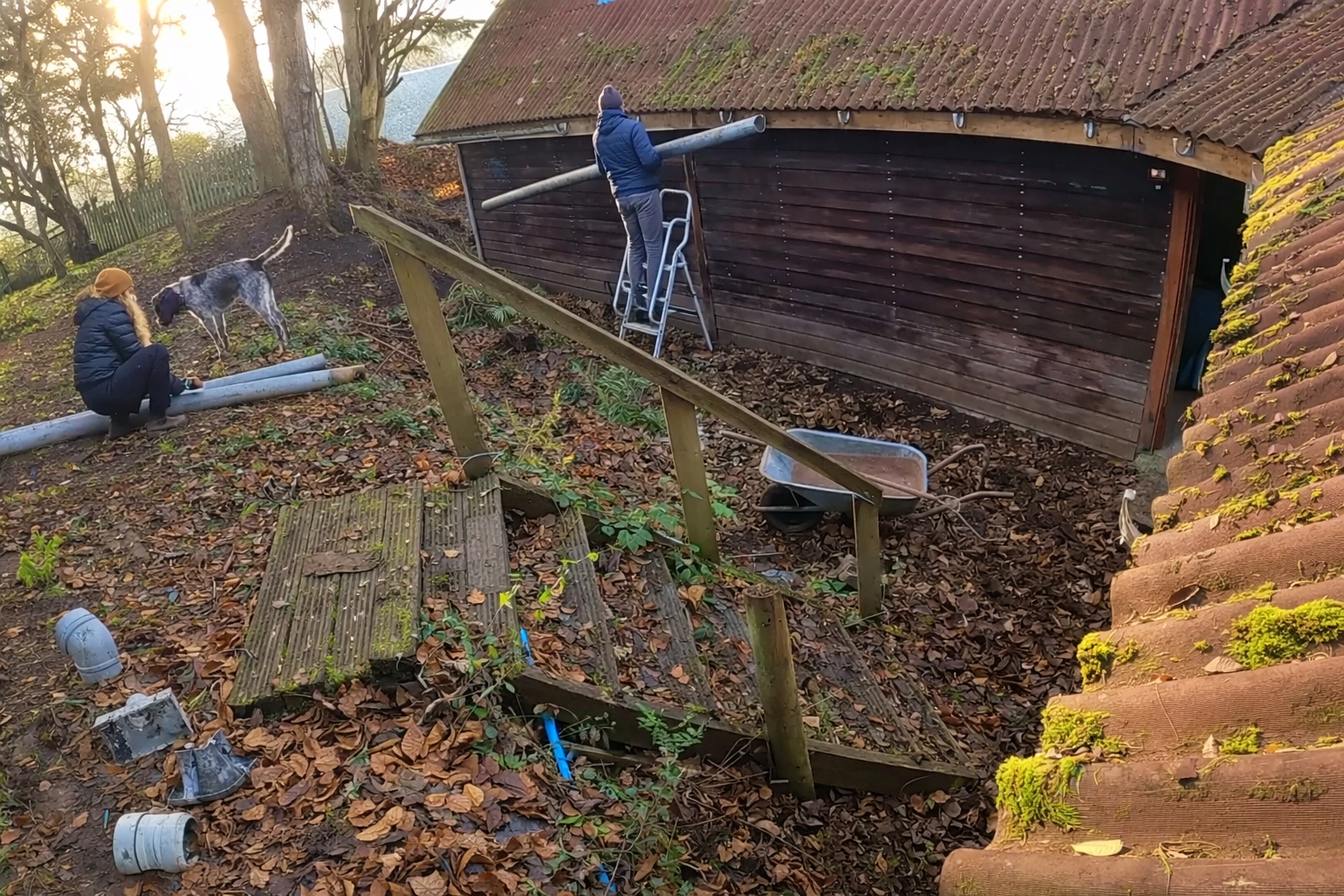
An old building carries an obvious risk. Time hits first up high. The couple looks at the abandoned church and treats the roof as a priority because the interior depends on it to progress without headaches.
The execution revolves around corrugated tiles and gutters accompanying the eaves. Some areas appear cleaner and others still dark, as if the work advanced in parts. High openings also emerge, letting light in, which requires attention to alignment.
The appearance changes, therefore, and the feeling of abandonment fades, and the space begins to accept the next steps with more predictability. The abandoned church transforms into a home when the top is no longer a weak point.
The Industrial Turn of the Renovation Appears in the Floor, the Couple Spreads Gravel and Cement and Creates the Base That Allows the Abandoned Church to Transform into a Home Without Stumbling or Improvisation

The floor dictates the pace of the work. The environment starts off spacious, with exposed wood and a floor with marks and cracks. If the couple wants to turn the abandoned church into a home, they first need a firm and level surface.
The practice shows gravel being spread and pulled with a long-handled tool, always with repeated movements. Cement bags and buckets come in. The material occupies the area in layers, with constant adjustments to reach corners and edges.
The space stops looking like a empty warehouse and begins to accept circulation with more stability. The floor also reduces the feeling of loose dust, and this changes the workflow and the perception of those who enter.
Smooth Walls Change the Reading of the Environment, the Couple Uses Compound and Trowel, and the Abandoned Church Transforms into a Home When the Exposed Wood Gives Way to Continuous Surfaces
The wall reveals the state of a renovation. When it becomes smooth, the place gains another light and another sense of cleanliness. In the abandoned church, this stage marks the transition from rustic to usable.
The couple applies compound with a trowel, in short strokes, pressing and correcting irregularities. The hand touches to feel undulations, and the tool removes excess, leaving the surface more uniform with each pass.
What happens, then, is that with the wall smoothed, the interior is ready to receive paint and better close off the areas around openings. The abandoned church transforms into a home when the junctions of surfaces no longer seem temporary.
The Window Corridor Becomes the Control Point, the Couple Aligns Frames and Installs Wooden Sills, and the Abandoned Church Transforms into a Home with More Organized Light and Clean Edges
Many windows demand consistency. With multiple openings on the same wall, any misalignment stands out. The couple needs to correct this for the abandoned church to transform into a home without the look of an endless construction site.
The execution shows frames adjusted and wooden sills creating a continuous line. The wood covers edges and organizes the transition with the wall. A workbench appears nearby, with tools and fastening items within reach.
The consequence is a change in perception. The perimeter becomes more enclosed, the space becomes more coherent, and the environment begins to function as a home because the repetitions stop looking like patches and start to look like a standard.
The Domino Effect Appears When Bathroom and Kitchen Stand Up, Glass Shower, Toilets, and Patterned Tiles Count In, and the Couple Transforms the Church into a Home with Areas Ready for Use

The renovation gains urgency when the essential environments appear. Bathroom and kitchen define the routine. Without them, the rest is just scenery. Here, the couple pushes the renovation to the point where the church transforms into a real home.
The bathroom then appears, with glass shower, as well as toilet and sink already positioned. The work occurs in a small space, with adjustment inside the shower and tools close at hand. At the same time, the kitchen receives patterned tiles in a square pattern, and an electric tool rests on the surface to correct before the final finish.
The consequence is the leap in functionality. The separation between wet and dry areas becomes clearer by the shower unit, and the kitchen gains identity when the tiles are added. The upper floor also appears with stretched and aligned carpet, completing the use by levels.
The result leaves a practical message for the renovation sector: what stands out here is not luxury, it’s method. The couple transforms the church into a home when they start with what protects, go through what sustains, and only then finish with the finishing touches.
If you think that an abandoned nineteenth-century church can really be transformed into a home without losing the visual impact of the structure, leave a comment with your opinion and share it with those who follow renovations, engineering, and remodeling.










-

Uma pessoa reagiu a isso.