





 Portuguese
  English
  Spanish
  5 min of reading
  1 comment


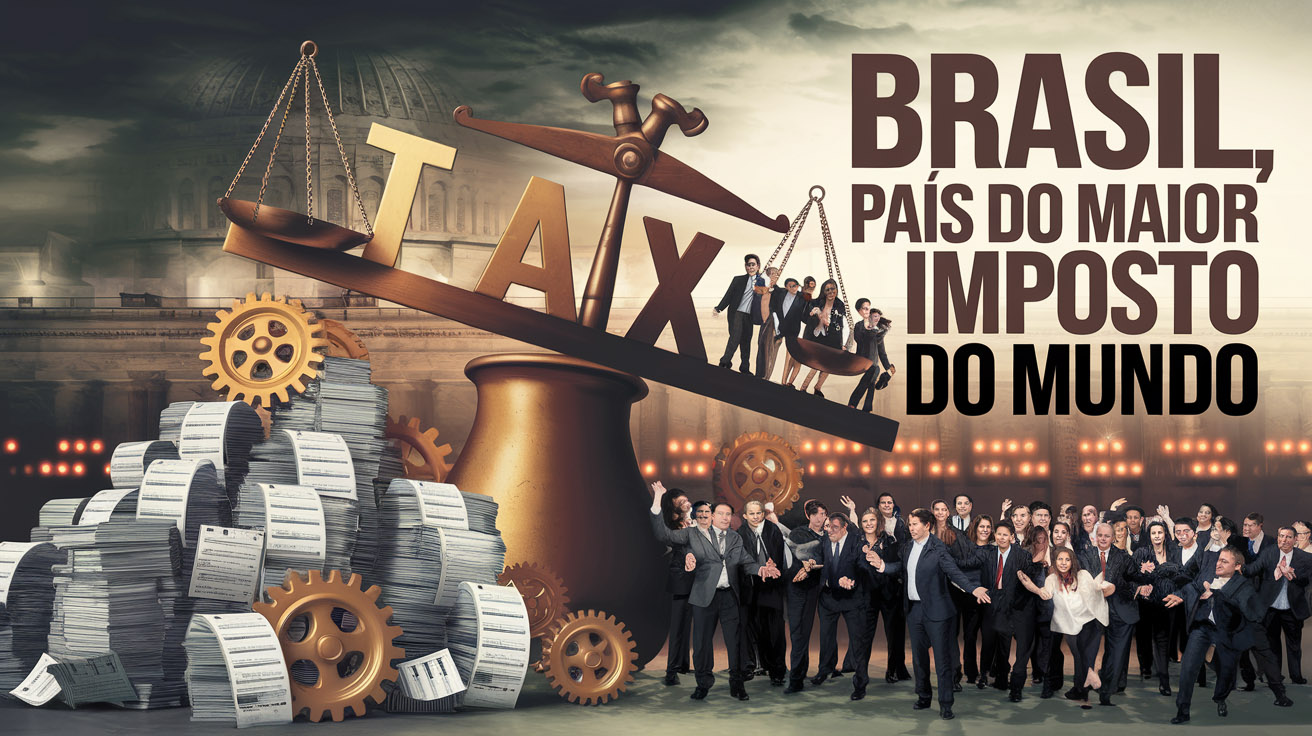


The Tax Reform in Brazil Promises to Transform the Fiscal System with the Creation of the VAT, but Raises Controversies by Including Possibly Record Rates and Excluding Arms from the Selective Tax. The Proposal Seeks Simplification, but Faces Criticism about Exemptions that May Compromise Tax Justice. Is This the Solution or a New Burden for the Economy and Consumers?
Nothing is so bad that it can’t get worse. The phrase, although laden with pessimism, seems to echo the fear of experts and sectors of the economy in light of the current scenario of the tax reform under consideration in Brazil.
According to CNN Brazil, the Federal Senate recently approved the base text of the reform, but the project still faces significant challenges before its final sanction.
The proposal, which seeks to simplify the complex Brazilian tax system, returns to the Chamber of Deputies due to the various changes made by senators.
-
A new Brazilian shopping center worth R$ 400 million will be built in an area equivalent to more than 4 football fields, featuring 90 stores, 5 cinemas, a supermarket, a college, and parking for 1,700 cars, potentially generating 3,000 jobs.

-
Larger than entire cities in Brazil: BYD is building a 4.6 km² complex in Bahia with a capacity for 600,000 vehicles per year, but the discovery of 163 workers in conditions analogous to slavery has shaken the entire project.

-
With an investment of R$ 612 million, a capacity to process 1.2 million liters of milk per day, Piracanjuba inaugurates a mega cheese factory that increases national production, reduces dependence on imports, and repositions Brazil on the global dairy map.

-
Brazilian city gains industrial hub for 85 companies that is equivalent to 55 football fields.


Among the main measures, the implementation of the Value Added Tax (VAT), which will replace federal and state taxes, stands out.
However, the VAT rate is still not defined, and estimates suggest that it could exceed 28%, possibly reaching 29%.
If confirmed, Brazil will have the highest VAT rate in the world, surpassing Hungary’s, which is currently at 27%.
This possibility raises questions about the impact of the new tax model on competitiveness and the cost of living in the country.
Why Could the VAT Be So High?
According to experts consulted by CNN Brazil, the main factor pushing the VAT rate is the special regimes and tax exemptions granted to certain sectors.
These benefits reduce the burden for some areas but force an increase in the overall average to maintain revenue.
Professor Tathiane Piscitelli from FGV Direito SP highlights that, although the reform brings principles like simplification and neutrality, the exemptions included in the text may compromise its effectiveness.
“This list [of exemptions] cannot be indiscriminate.
The exceptions must align with the constitutional values of tax and social justice,” she stated in an interview with CNN Money.
Criticism of the Exclusion of Arms from the Selective Tax
Another controversial point is the Senate’s decision to exclude arms and ammunition from the so-called Selective Tax (IS), popularly known as the “sin tax.”
According to Tathiane Piscitelli, this measure will result in a 70% reduction in taxation on revolvers, increasing the weight of the general rate for society as a whole.
The expert warns that the decision transfers the costs associated with armed violence to the population. “It is time to pressure senators to avoid this setback,” she stated in a note.
Positive Impacts of Tax Reform
Despite the controversies, experts recognize that the reform can bring significant advances.
Studies from the Independent Fiscal Institution (IFI) indicate that tax simplification has the potential to reduce costs and attract investments.
Today, Brazilian tax litigation represents about 70% of Gross Domestic Product (GDP), while in the United States this figure is only 1%.
For Marcus Pestana, president of the IFI, the reform improves the business environment and corrects distortions of a system that he classifies as regressive, bureaucratic, and costly.
He emphasizes that the rate could be lower if there were fewer exceptions, but acknowledges that the approved project is the best possible within the political context.
Sectors Celebrating the Reform
Some sectors of the economy, such as real estate and services, celebrated the benefits secured by the reform.
Organizations like the Brazilian Chamber of Construction Industry (CBIC) and the Brazilian Association of Real Estate Developers (Abrainc) highlighted the reduction of rates for the Free Trade Zone of Manaus and the favored regime for the oil refining industry in Western Amazon.
The Federation of Industries of the State of Amazonas (Fieam) argues that the reform reaffirms the strategic value of the region and protects 96% of the Amazon Rainforest.
In a statement, the entity stated that “the regulation does not grant new bonuses, it only preserves the existing mechanisms in the legislation.”
Concerns of Industrial Sectors
On the other hand, federations like Firjan, Fiemg, and Fiesp criticized the benefits granted to the Free Trade Zone of Manaus, pointing to risks for regional competitiveness.
According to Igor Rocha, chief economist of Fiesp, the measure violates the principle of equality and exacerbates inequalities between states.
A More Transparent System
Despite the criticisms, economist Eduardo Fleury, in an interview with WW, highlighted that the reform will bring gains in efficiency and transparency.
According to him, the clear visualization of taxes will allow consumers and companies to better understand the system and make more informed decisions.
The Challenge of Aligning Expectations and Reality
To understand the international context, it is worth noting that the implementation of value-added taxes is not unprecedented. European countries have faced similar challenges when introducing VAT systems.
In Germany, for example, the process was gradual and accompanied by adjustments to avoid the tax burden compromising consumption and investment.
In the United States, although there is no national VAT, states that adopt similar systems face issues such as regressivity, which can disproportionately impact low-income families.
Experts point out that Brazil, by adopting VAT, will need to balance revenue and tax equity to avoid repeating the mistakes of other countries.
The Transition and Short-Term Impacts
One of the major challenges is the transition to the new model. Business owners and representatives of the productive sector warn that adapting to the new rules will require investments in technology and training.
Small and medium-sized enterprises may face greater difficulties, given their lower capacity to absorb additional costs.
According to the National Confederation of Commerce (CNC), the complexity of the current system is already one of the main obstacles for the retail sector.
With the reform, it is expected that tax unification will reduce fiscal disputes between states, but the lack of clarity regarding the final rate still generates uncertainty.
An Opportunity to Modernize Brazil
Despite the challenges, the tax reform represents a unique opportunity to modernize the Brazilian fiscal system.
Countries like Canada and Australia have shown that well-structured reforms can drive economic growth and simplify tax administration.
The Question Remains: How Do You Evaluate the Tax Reform Proposal? Leave Your Opinion in the Comments!








Reformas bem estruturadas podem impulsionar o crescimento.
O que não é o caso do Brasil. Onde todo e qualquer ato do governo, é populista e só visa votos futuros.