





 Portuguese
  English
  Spanish
  3 min of reading
  0 comments


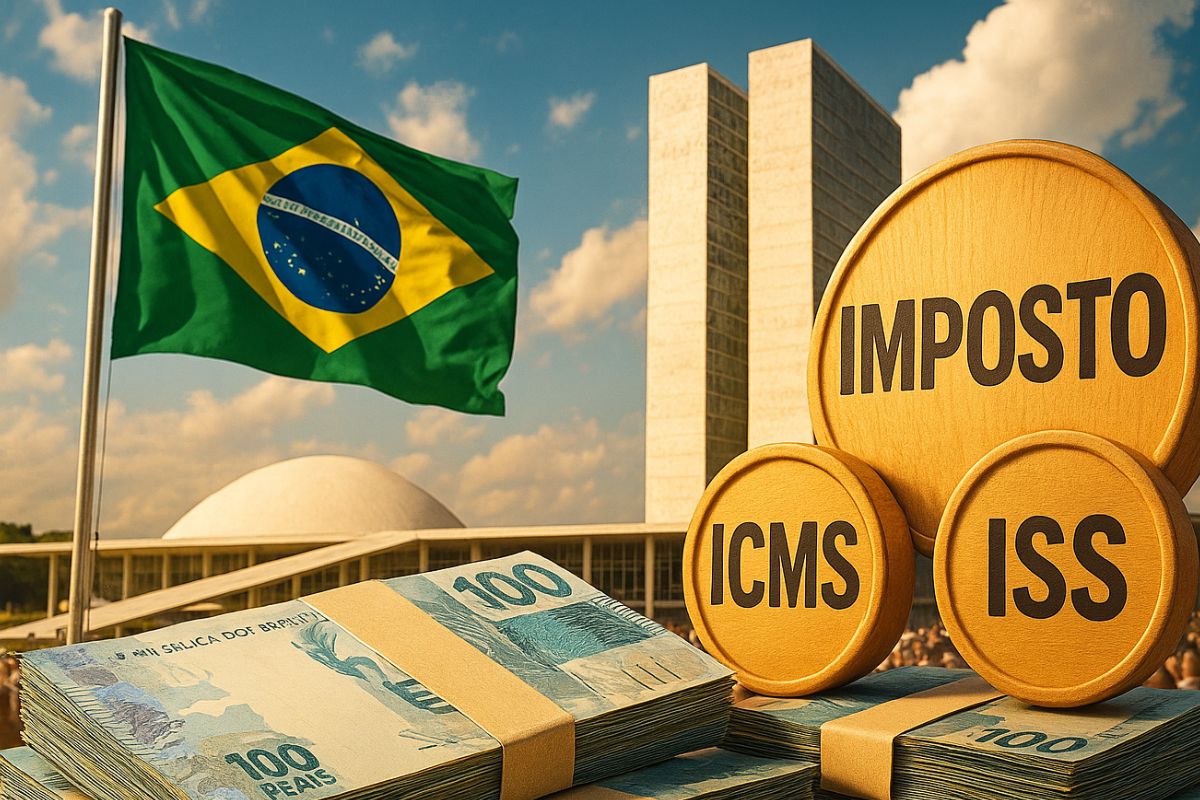
Approved Text Defines Transition Rate Based on Revenue Between 2024 and 2026, Creates Committee to Manage IBS and Expands Exemptions in Strategic Sectors, According to O Globo
The Senate approved, with 51 votes in favor and 10 against, the second regulatory project of the Tax Reform. The proposal establishes new rules for ICMS, ISS, and selective taxes, with a direct impact on companies, states, municipalities, and millions of Brazilians.
The approved text provides for the creation of the committee that will manage the Tax on Goods and Services (IBS), the definition of the transition rate based on the average revenue between 2024 and 2026, and adjustments in taxes such as ITCMD, ITBI, and Cosimp. Now, the proposal returns to the Chamber of Deputies.
Transition Rate and Impact on States
One of the most sensitive points was the definition of the transition rate of the IBS.
-
Brazilian city bets on the business environment to generate jobs and attract investments in the energy sector — secretary reveals strategy at Macaé Energy 2026.

-
50 viaducts, 4 tunnels, 28 bridges, and 40 kilometers of bike paths: BR-262 in Espírito Santo will receive 8.6 billion reais for the largest engineering project in the state’s history, inspired by the Immigrant Highway in São Paulo.

-
Brazil produces too much clean energy and doesn’t know what to do with it: over 20% of solar and wind capacity was wasted in 2025 while investors flee and 509 renewable generation projects were abandoned in the last year.

-
Piauí will produce a new fuel that replaces diesel without needing to change anything in the truck’s engine and reduces pollutant gas emissions by half: truck drivers from all over the Northeast are already celebrating the news that will arrive later this decade.

The rapporteur Eduardo Braga (MDB-AM) accepted an amendment that establishes the calculation based on the average revenue of ICMS and ISS between 2024 and 2026, a measure advocated by state finance secretaries.
According to Comsefaz, the decision ensures more consistent data that aligns with recent reality.
The transition model provides for a gradual calibration of the rate, allowing states and municipalities to adapt their finances without abrupt disruptions.
This mechanism was presented as essential to avoid fiscal imbalances during the implementation of the new system.
Changes in the Fuel Sector
The project also modified the way to collect tax on naphtha, a raw material for gasoline and the petrochemical sector. Previously, taxation would occur only in 2033.
With the new rule, ICMS will be charged upon importation, closing gaps for fraud and evasion in the sector.
The measure was highlighted by the rapporteur as a way to increase immediate revenue and strengthen tax security in one of the most sensitive sectors of the economy.
The Role of the IBS Committee
The committee that will manage the IBS will have strategic functions: collect, compensate, and distribute the tax, as well as standardize rules and centralize ancillary obligations.
The structure will have 54 members, equally divided between states and municipalities, with four-year terms.
To expand representation, a minimum of 30% of women in the executive board is planned.
During the transition, the division of municipal seats will be between the National Front of Mayors (FNP) and the National Confederation of Municipalities (CNM).
The Union is expected to invest up to R$ 3.8 billion between 2025 and 2028 in the establishment of the agency.
Selective Taxes and New Exemptions
The text consolidated the gradual application of the Selective Tax on sugary drinks, set to take place between 2029 and 2033, in addition to those already in place on cigarettes and alcoholic beverages.
It also expanded special regimes, including drivers and app delivery workers, taxi drivers, and truck drivers among the beneficiaries of exemption.
Another change was the definition of a specific regime for financial services, with an initial rate of 10.85% in 2027, rising to 12.5% in 2033.
The model provides for adjustments as the ISS is gradually reduced.
Rules for ITCMD, ITBI, and Cosimp
For ITCMD, progressivity was established up to a cap of 8%, in addition to maintaining exemptions for books, phonograms, and private pension.
For ITBI, municipalities will have to disclose the criteria for calculating the market value, with the possibility of contestation by taxpayers.
As for Cosimp, the public lighting contribution will now include security monitoring systems, maintaining optional charging on electricity bills.
The approval of the project in the Senate is considered a decisive step for the implementation of the Tax Reform.
However, the text may still undergo changes when it returns to the Chamber, where disputes over revenue and the composition of the committee are expected to return to the debate.
And you, do you believe that the new rules for ICMS, ISS, and selective taxes will actually simplify the system or create more complexity? What impact do you expect to feel on your wallet or your business? Share your opinion in the comments — we want to hear from those who live this in practice.










-

Uma pessoa reagiu a isso.