





 Portuguese
  English
  Spanish
  5 min of reading
  0 comments


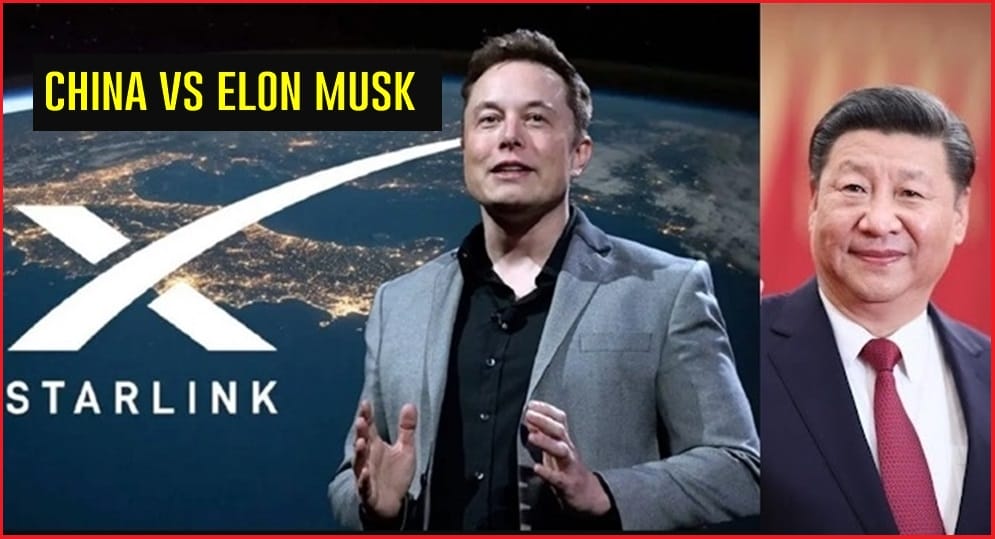
The Technological Race Between China and Elon Musk Is Heating Up! China Seeks to Surpass Starlink with Its Own Satellite Internet Service
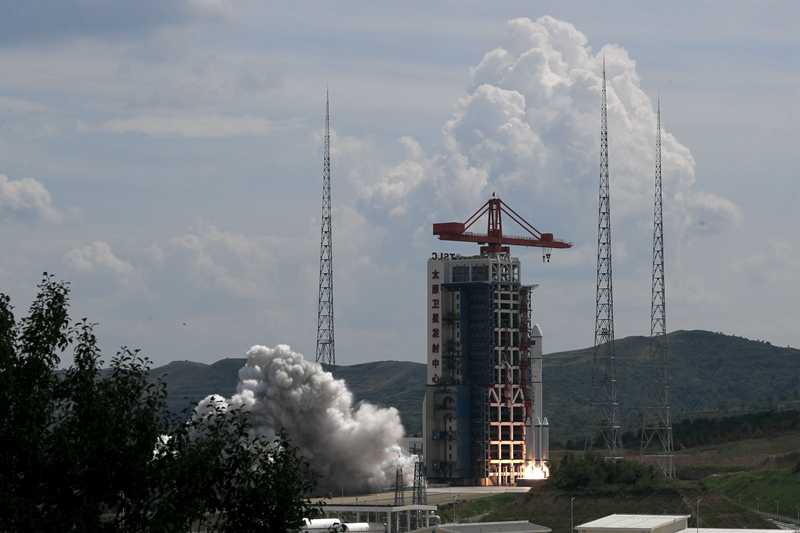
The space competition between China and the United States is intensifying as both countries invest in their respective low Earth orbit (LEO) satellite constellations to provide satellite internet and communication services around the globe. On August 6, a Long March-6 rocket, carrying the Chinese flag, took off from the Taiyuan Satellite Launch Center, launching 18 communication satellites into orbit. This certainly represents another rival to Elon Musk’s Starlink.
This launch was hailed as a milestone in China’s efforts to establish its presence in the satellite internet sector, which has significant security implications and a potential impact on the export of its restrictive governance model online.
Currently, this orbital territory below 2,000 kilometers is dominated by Starlink, Elon Musk’s satellite internet service. Elon Musk’s Starlink already operates over 6,400 satellites and provides internet services to more than 4 million users in at least 102 countries. However, the service is not available in China, a country that maintains strict control over what its users can access on the internet.
-
Scientists have discovered a gigantic magnetic anomaly hidden beneath the soil of Australia that mirrors the shape of the entire continent and holds geological records of two and a half billion years that could change what we know about the Earth.

-
The heatwave that has been affecting Brazil in recent weeks is coming to an end: a cyclonic vortex is moving in during Holy Week with heavy rains, and a cold air mass is already threatening to lower temperatures in the South starting in April.

-
(VIDEO) Cameras from an astronomical observatory captured two meteors falling over Santa Maria in Rio Grande do Sul with only a one-minute difference and such close trajectories that scientists are now investigating whether the two objects have the same origin.

-
Fireballs shoot across the skies of the USA and meteor explosions draw attention: what is causing this mysterious wave of sightings?


China’s Push in Satellite Internet
The Chinese race to enter the satellite internet sector has implications far beyond connectivity. Beijing is trying to ensure it can maintain control over communications, even in times of war or disaster, when terrestrial infrastructure may be compromised. LEO satellites offer a significant advantage: their proximity to Earth ensures faster communications with lower latency.
China’s plans are ambitious. In August, the country requested from the International Telecommunication Union the frequency needed to launch 51,300 satellites in LEO. For comparison, SpaceX plans to launch up to 42,000 satellites.
However, China still faces considerable challenges in achieving this goal, such as the lack of reusable rocket technology, an area where SpaceX already excels with its Falcon system. This system allows the same rocket to be reused multiple times, significantly reducing launch costs.
Starlink and the Race for Technological Leadership
Despite its ambitions, China has struggled to keep pace with U.S. advancements in the space sector. One of China’s biggest challenges is the absence of a reusable rocket system comparable to SpaceX’s Falcon.
This system allows dozens of satellites to be launched in a single flight while the rocket returns to be reused. This puts China at a disadvantage, as reuse reduces costs and enables more frequent launches.
To try to catch up, China has adopted a “quantity over quality” strategy, launching more rockets, albeit less advanced ones, while heavily investing in reusable rocket technology.
In July 2024, the Chinese government began constructing a complex in Beijing aimed at developing reusable rockets, with the goal of launching its first model by 2028.
Additionally, the commercial aerospace sector in China is rapidly growing, with 537 companies operating at the end of 2023, engaged in satellite manufacturing, launches, and ground services. However, the sector is highly capital-intensive and still relies heavily on state support to remain competitive against the United States.
The Rise of Satellite Internet in China
China’s advancement in the satellite internet sector may also expand the Chinese Communist Party’s control over the flow of information within the country. This occurs in a context where China already blocks access to most U.S. internet services, including Elon Musk’s Starlink, to maintain strict control over what its citizens can access online.
In 2022, Elon Musk revealed that the Chinese government requested assurances that SpaceX would not sell the Starlink service in China, a measure aimed at preserving the country’s so-called “Great Firewall.” This firewall restricts access to information that the government considers sensitive or subversive.
The expansion of satellite internet services may thus be a tool for China to export its internet control model. In a recent report, experts warned that the centralized nature of satellite internet makes it easier to monitor and filter content. Countries adopting China’s satellite internet services could potentially use this infrastructure to implement censorship and surveillance similar to that occurring within Chinese borders.
The Geopolitical Landscape and Competition with the U.S.
Although Starlink is a private company, it has a large market of government clients, and many experts believe the same will happen with Chinese satellite constellations. For both countries, there are both national security and economic reasons to develop these constellations.
In the United States, the government broadly supports SpaceX in its satellite internet efforts, while China is mobilizing state and private resources through companies like China SatNet.
China is already exporting its satellite internet services, as demonstrated by a test conducted in Thailand in May by GalaxySpace. This move is seen by many as an extension of Chinese foreign policy, similar to the Belt and Road Initiative, which aims to expand Beijing’s political influence worldwide.
However, the expansion of satellite internet controlled by China also presents risks. Experts point out that by exporting its digital governance model, Beijing may pressure other countries to implement censorship or share sensitive data, which could undermine the digital sovereignty of these countries.
China’s Influence on the Future of the Internet
The proliferation of Chinese satellite internet services could lead to the emergence of a bifurcated internet ecosystem, with Chinese-led space infrastructure on one side and a network connected to the United States on the other.
This would heighten global tensions surrounding internet governance and could complicate efforts to regulate these satellite constellations.
This competition in space is not limited to the internet. Both the U.S. and China are investing in lunar programs, which many see as a race to explore the Moon’s resources. Additionally, U.S. officials have expressed concern about Russian and Chinese space programs, fearing the development of weapons in space.
International Cooperation and Space Security
In light of these tensions, many experts advocate for the need for international cooperation to avoid an arms race in space and ensure that space operations are safe and sustainable for all nations involved.
While advancements in space from both China and the U.S. may have civil and military applications, the lack of established norms and rules of conduct among space-faring powers is seen as the greatest threat to space security.
Ultimately, the future of satellite internet appears to be deeply entwined with geopolitical disputes among the major powers. As satellite constellations continue to grow and global connectivity expands, the way these technologies are used – whether to promote digital freedom or to reinforce authoritarian regimes – will be one of the greatest challenges of the space age.
The launch of Chinese satellites marks an important step for the country in the race for leadership in the satellite internet sector, but the challenges ahead are significant. While SpaceX already operates with technological advantages, such as reusable rockets, China still needs to develop similar capabilities to compete on equal terms.
Nonetheless, the Chinese government is determined to use its satellite constellations not only to improve connectivity within the country but also as a tool for global influence.








Seja o primeiro a reagir!