





 Portuguese
  English
  Spanish
  6 min of reading
  0 comments


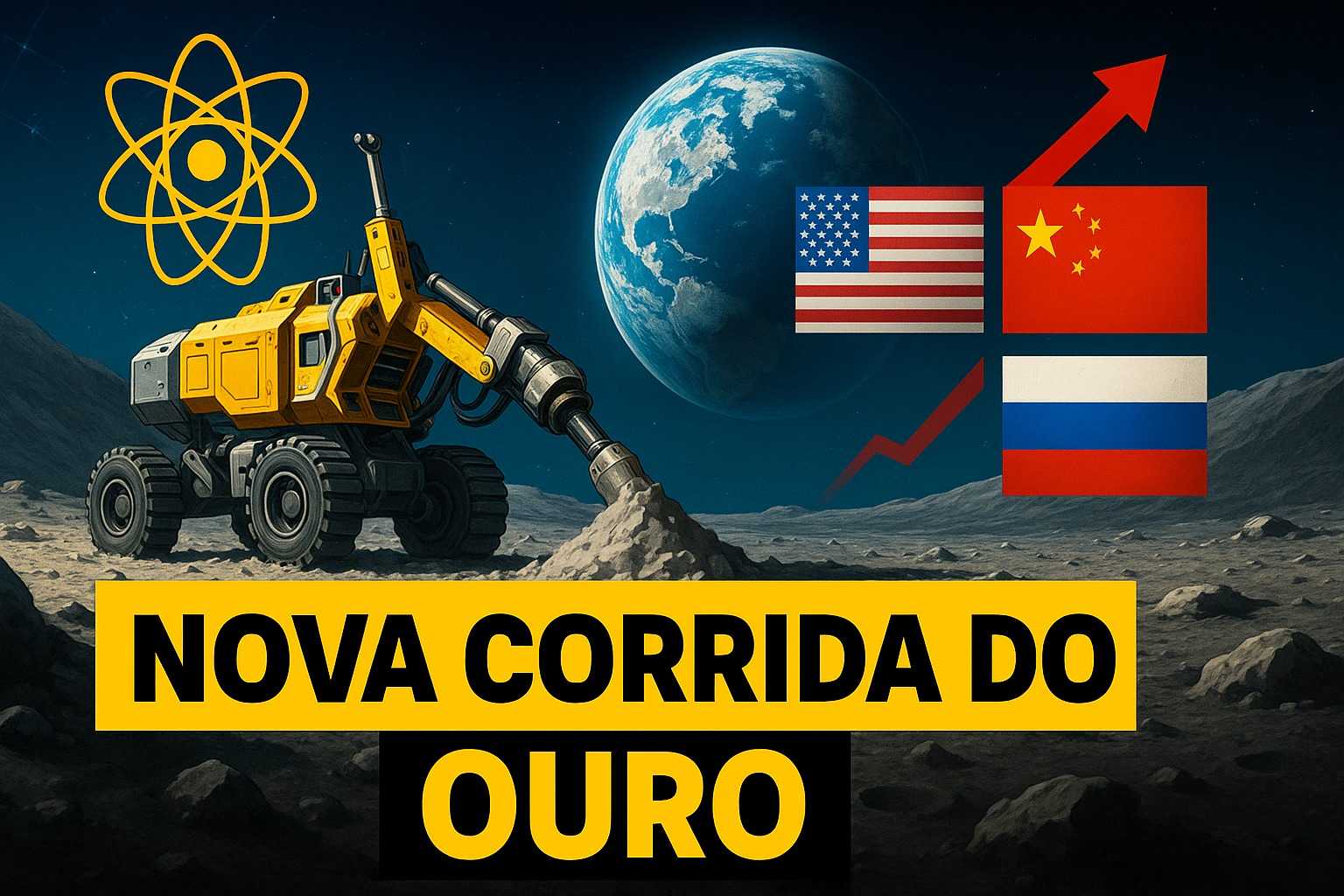
The Moon Has Stopped Being Merely a Symbol of Inspiration to Become a Stage for a Global Race for Strategic Resources. Helium-3, a Rare Isotope Accumulated in Its Dust for Billions of Years, Could Revolutionize Energy and Quantum Technology.
Humanity has always looked at the Moon as a place of mysteries, poetic inspirations, and possibilities of conquest. Now, it has also become the target of an unprecedented technological and geopolitical race. The reason is named: helium-3.
This rare isotope, which has accumulated over billions of years on the lunar surface due to the constant impact of solar wind, could be the key to revolutionary advances in quantum computing, national security, and even the search for the long-dreamed nuclear fusion fuel.
Space startups, technology giants, and governments from different continents are keeping an eye on this strategic resource. The United States and China are emerging as protagonists, but they are not alone. Russia, the European Union, India, and other actors are already moving to ensure they do not miss out.
-
With a cost per shot close to zero, the DragonFire laser could change naval warfare in 2027 and provide British ships with nearly unlimited defense against drones.

-
A British startup creates tires that generate electricity in electric vehicles when passing over potholes, speed bumps, and cracks.

-
Scientists have created robots made with living cells that have their own nervous system, swim on their own, explore the environment, and self-organize without any genetic engineering, and now they want to do the same with human cells.

-
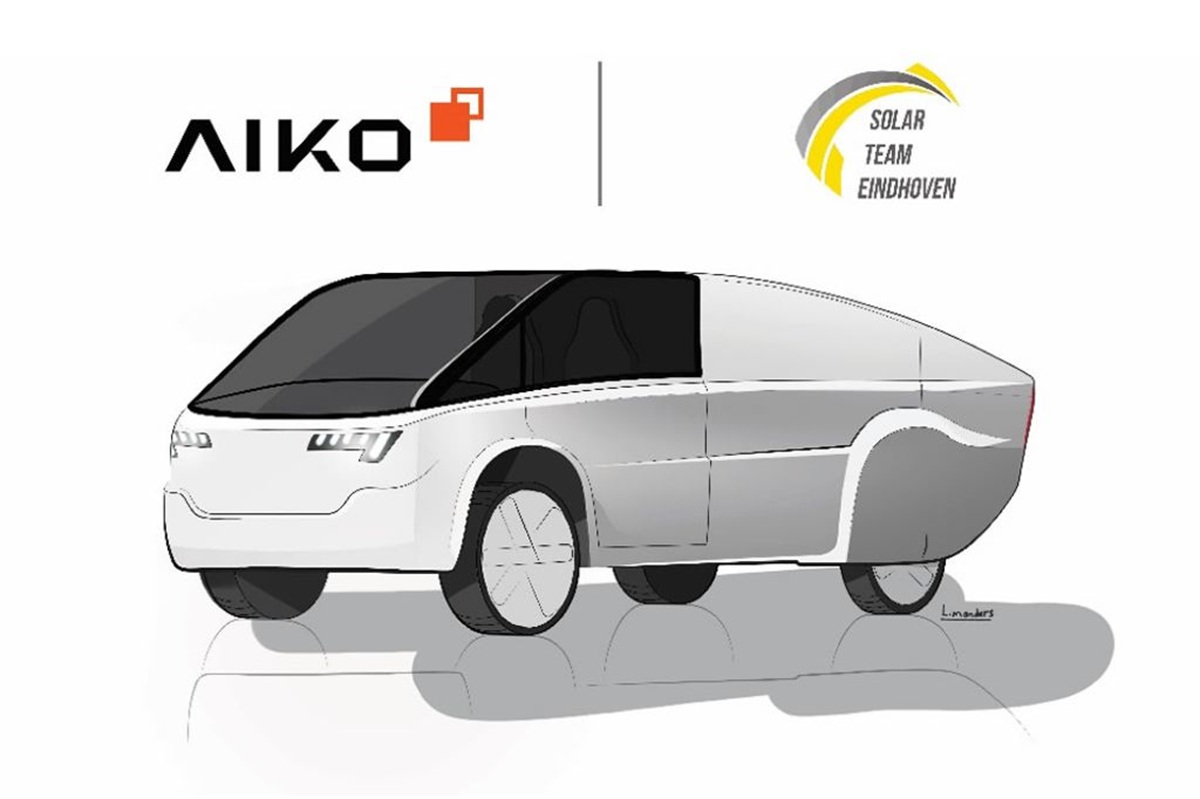
Students create a solar-powered ambulance that operates without a plug, without fuel, and still keeps medical equipment running in remote areas.

The question looming over this scenario is simple yet loaded with profound implications: who will arrive first, and what will this arrival mean for the future of energy, science, and global politics?
For many years, Sérgio Sacani, a science communicator, has highlighted the importance of Helium-3. Today, the competition among the powers has become a reality.


The Value of Helium-3
Helium-3 is scarce on Earth. It comes almost exclusively from the decay of tritium nuclear stockpiles, generating only small amounts per year. This limited supply does not come close to meeting the growing demand, especially given the projections for quantum computing.
On the Moon, however, the situation is different. Without a magnetic field to deflect the solar wind, the satellite has accumulated this isotope in the surface layers of the regolith. Scientists estimate that there could be up to a million metric tons scattered across the terrain, although in low concentrations.
This seemingly technical detail has gigantic implications. Dilution refrigerators used to cool qubits in quantum computers rely on mixtures of helium-3 and helium-4. The colder the systems, the more stable the quantum states become.
An engineer has even highlighted that inside these refrigerators it is colder than in outer space, an essential requirement for reducing failures and increasing the utility of the machines.
The same isotope also has medical applications, such as in hyperpolarized magnetic resonance imaging, and is an efficient neutron absorber, making it useful in radiation detectors.
But the most fascinating point arises when discussing nuclear fusion. Unlike other reactions, fusion with helium-3 generates charged particles instead of neutrons, which drastically reduces long-term radioactivity problems. Even though it is still theoretical, the potential to generate nearly clean energy with this resource has politicians, military officials, and investors dreaming big.
The Challenges of Lunar Harvesting
Despite all the potential, transforming lunar regolith into usable helium-3 is not straightforward. Samples from the Apollo missions showed minimal concentrations of the isotope, measured in parts per billion. This means that tons and tons of soil need to be processed to obtain just a few liters of gas.
The theoretical process is clear: excavate the regolith, heat it to extremely high temperatures, release the trapped gases, separate helium-3 from helium-4, and store the final product. In practice, each step is a monumental engineering challenge.
The fine, glassy particles of lunar regolith are abrasive and behave unpredictably in reduced gravity. Lubricants evaporate, parts jam, and remote operation faces limitations due to communication delays with Earth. This necessitates the development of robust autonomous systems.
Moreover, large-scale heating requires reliable energy sources. Whether through solar concentrators or small nuclear reactors, the projects need to balance weight, energy consumption, and durability.
Startups’ Bets
In this landscape of technical obstacles, some startups are attempting to turn science fiction into reality.
One of the most cited examples is Interlune, which has developed the concept of a mobile harvest machine. The equipment would be capable of collecting regolith, heating it, and releasing the gases internally while expelling the spent soil as it progresses.
The idea is bold: to create a light machine that fits in a single landing module but has the capacity to process dozens or even hundreds of tons of regolith per hour. The Interlune CEO himself summarized the scale of the challenge: to obtain just a few liters of helium-3, it would be necessary to process regolith equivalent to the volume of a backyard swimming pool.
The company has already moved beyond the laboratory phase and conducted tests in reduced gravity, in addition to forming partnerships with heavy machinery manufacturers on Earth to adapt their systems to the space environment.
But it is not enough to collect. The separation of helium-3 from helium-4 is another bottleneck, requiring highly advanced cryogenic or membrane systems. Proofs of concept have already occurred, but transporting this technology to the Moon is still an open mission.
And even after overcoming these steps, the challenges of transporting it back to Earth and the economic viability remain.
Laws and Disputes
The race is not only fought in laboratories and production lines. Legally, the United States has taken the lead. In 2015, they passed a law recognizing the right to private ownership of resources extracted in space. In 2020, they launched the Artemis Accords, which establish principles for cooperation and regulation for space exploration.
China and Russia did not adhere to these accords. China, in particular, treats its Chang’e lunar program as a symbol of national power. Officials in the country openly speak about helium-3 as fuel capable of meeting their energy needs for thousands of years.
Russia, despite delays in its Luna program, has aligned with China to develop a lunar research station in the 2030s. The European Union maintains a more collaborative stance, supporting studies and pilot projects. India, following the success of its Chandrayaan-3 mission in 2023, also appears as a potential partner or competitor.
This mosaic of initiatives makes it clear that lunar mining goes beyond science. It connects to geopolitics, trade, and the global balance of power.
A Parallel with Rare Earths
Analysts draw a parallel with what happened with rare earths on Earth. Today, China dominates this production chain, influencing strategic sectors around the globe.
If something similar happens with helium-3, a country or bloc that controls its extraction could dictate the directions of quantum computing, energy security, and even advanced medicine. This perspective is precisely what drives Washington to accelerate private and diplomatic initiatives to secure a leadership position.
Beijing, in turn, bets on large national programs and sees helium-3 as part of its narrative of self-sufficiency and technological supremacy.
The Near Future
What is expected to happen in the next decade is a mix of patience and boldness. Small reconnaissance missions, prototypes of harvesters, and experimental purchases of helium-3 should mark the beginning.
Even though the immediate prize is modest, the symbolic and strategic value is enormous. Establishing the first supply chain for helium-3 could mean not only financial gains but also international prestige and negotiating power.
Marcin Frackiewicz, an expert closely following this field, summed up the situation well: the story of helium-3 unfolds at the intersection of cutting-edge science and global strategy.
For now, the Moon remains silently guarding its treasure of billions of years. But with each new launch, every new test, and every international agreement signed, the race to transform lunar dust into fuel for human dreams intensifies.
What is at stake is not just technology. It is the future of energy, science, and power in the 21st century.








Seja o primeiro a reagir!