





 Portuguese
  English
  Spanish
  5 min of reading
  0 comments


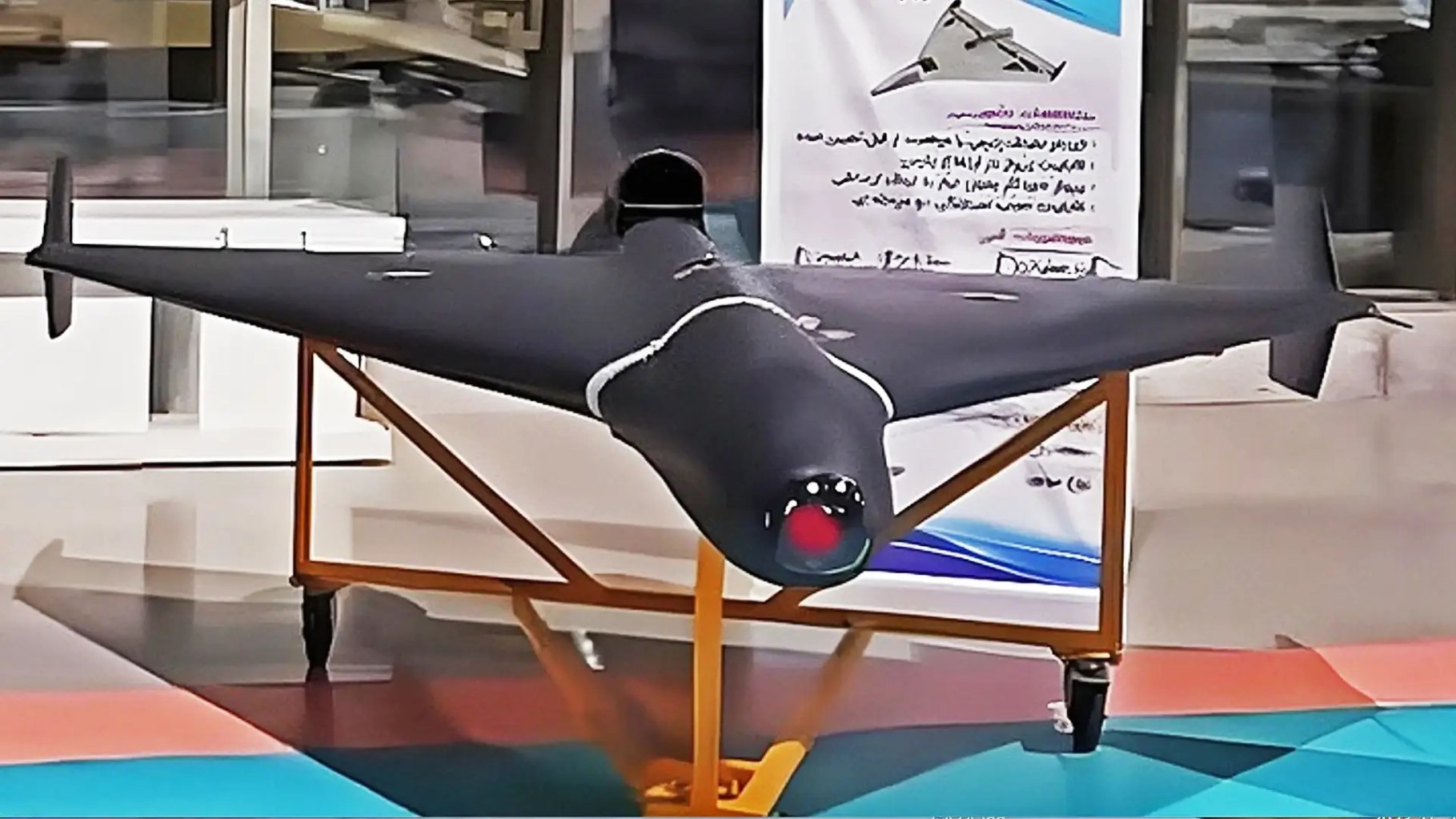
The Introduction of Jet-Powered Shahed Kamikaze Drones Marks a New Challenge for Ukraine’s Air Defense. Faster and Harder to Intercept, They Force the Use of Expensive Missiles and Threaten the Country’s Defensive Strategy Amidst the War with Russia.
Recent Russian attacks on Ukraine have raised a new alarm among Ukrainian authorities. This time, among the more than 300 drones and missiles launched, there were eight units of the jet version of the Shahed drone.
The new development represented a significant shift in Russian strategy and made it clear that there is a growing challenge for Ukraine’s air defense.
The spokesperson for the Ukrainian Air Force, Yuri Ignat, explained why these drones are concerning. He stated that on radar, they behave like cruise missiles, reaching speeds of over 500 km/h.
-
China has created a mass-produced hypersonic missile that costs the same as a Tesla, and this is changing everything in modern warfare because the United States cannot defend itself without spending millions.
-
100% Brazilian technology transforms agricultural waste into a meat-scented ingredient using fungi from the Amazon rainforest. The process does not use excessive water or chemicals, and it also increases the nutritional value of the final product.

-
Psychology reveals that adults who avoid conflicts at all costs are not balanced individuals, but rather children who learned in the worst way that expressing emotions brought punishment and now live paralyzed by the fear of expressing themselves.

-
Goodbye pet hair on clothes: a washer with an internal filter promises to remove up to 5 times more hair than regular machines and uses an XL trap dryer system to capture what remains.


This speed complicates detection and interception, as many Ukrainian anti-air systems were not designed to handle this type of threat.
Speed and Altitude as Barriers
According to information obtained, the model used would be the Shahed-238, developed by Iran and revealed last November. Documents indicate that this drone can fly up to nearly 9.6 km in altitude, with a range of up to 2,000 km. Its warhead weighs about 50 kg, and its turbojet engine propels it to speeds of up to 600 km/h.
In contrast, the traditional Shahed-136 reaches a much lower speed of about 180 km/h. Because of this, conventional Shaheds can be targeted by simpler weapons. On the other hand, the Shahed-238, according to the Ukrainian portal Militarnyi, can practically not be hit by light weapons or electric interceptor drones. This makes it an even more complex and dangerous threat.
High Lethality in Attack
The damage from the most recent attack was severe. Ukrainian authorities confirmed the death of at least 13 people and more than 130 injured. The offensive package also included eight Iskander-K cruise missiles, in addition to the jet drones and the traditional propeller-driven Shaheds.
The assessment from Ukrainian experts is that the new drones are part of a more aggressive tactic from Russia.
The objective would be to test Ukraine’s defensive systems, especially the interceptor drones that the country has been developing. This hypothesis was raised by Alexander Kovalenko, a well-known political-military analyst from Ukraine.
Production of Interceptors in Focus
President Volodymyr Zelensky has already called for the country to produce a thousand interceptors per day. These drones, based on FPV (first-person view) technology, are being adapted to fly higher and faster than conventional models. However, there are still doubts about their real effectiveness against jet Shaheds.
Mykhailo Fedorov, Ukraine’s Minister of Digital Transformation, acknowledged the challenge.
According to him, Russia is constantly adapting the Shaheds to evade Ukrainian countermeasures. He stated that solutions need to evolve daily and that the country is already working on new technological responses to the problem.
Logistical Obstacles for Ukraine
The development of interceptor drones faces difficulties. Russian attacks on Ukrainian factories directly affect production.
Furthermore, there are issues with the supply chain and the constant need to relocate operations for safety.
Fedorov emphasized that companies need to change locations frequently, seek new professionals, and urgently acquire components. This delays the expansion of production capacity at a time when urgency is at its peak.
Russian Limitations in Manufacturing
On the other hand, Russian production of jet Shaheds also faces barriers. Although it is already manufacturing about 2,000 units of the traditional model per month, with plans to reach 5,000, jet drones require greater sophistication.
According to the portal Militarnyi, the complexity of turbojet engines and more robust structures raises production costs.
As a result, each Shahed-238 drone may mean fewer conventional Shaheds on the battlefield. This is because manufacturing a more advanced model consumes more time, resources, and components.
Cost of Defense is a Serious Problem
While jet drones are more difficult to produce, their presence in attacks represents a financial dilemma for Ukraine. To intercept them, the country needs to use expensive surface-to-air missiles (SAMs).
A single AIM-120 missile, used in the NASAMS system, can cost between US$ 500,000 and US$ 1 million.
Other systems, such as the Patriot PAC-3 missiles, are even more expensive — around US$ 4 million per unit. Meanwhile, Shaheds, even the most advanced ones, cost a fraction of that amount. This allows Russia to force Ukraine to spend millions on defense while investing much less in attack.
China as Possible Support in the Russian Supply Chain
Another factor mentioned was the possible involvement of China. The country has supported Russia with materials and parts for its military industry. This support may help Moscow maintain production of more sophisticated Shaheds, despite the mentioned difficulties.
The supply of jet engines and other sensitive components depends on a robust supply chain, and China may play a key role in this process. This creates an external factor that is beyond Ukraine’s direct control and reinforces the complexity of the scenario.
Interleaved Use as a Tactic
For now, the use of jet drones appears to be occurring in a limited manner, mixed with traditional models. This combination serves to confuse Ukraine’s defensive systems and complicate the response. An attack with multiple layers, including slow drones, fast drones, and missiles, requires a rapid and coordinated reaction, which increases the chances of failures.
Additionally, the cost for Ukraine to intercept all targets becomes even higher. This wears down the air defense system and opens up space for heavier attacks with more impactful weapons.
The Future of Aerial Warfare Remains Uncertain
The coming weeks should show whether Russia will be able to increase its production of jet Shaheds. It will also be possible to observe if Ukraine can respond with truly effective interceptors.
The most important thing at this moment is that the scenario has changed. The introduction of jet Shaheds creates a new threat pattern, with superior speed and altitude. The drone war has entered a new phase — faster, more complex, and potentially harder to control.







-

Uma pessoa reagiu a isso.