





 English
  Francês
  Alemão
  Italiano
  Japonês
  Norueguês
  Portuguese
  Spanish
  3 min of reading


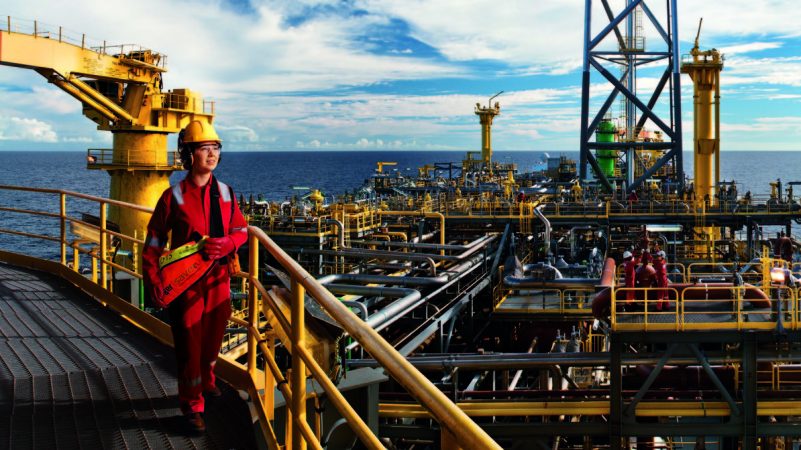
Shell Plans to Invest Around US$ 2 Billion Annually in Its Activities in Brazil by 2025, but May Increase This Amount to Take Advantage of New Acquisition Opportunities in the Three Oil and Gas Auctions.
The Vice President of Exploration for Shell in North America and Brazil, Martin Stauble, stated during OTC Houston 2019 that Brazil is currently the main driver of the company’s Capex. Despite the appetite for Brazil, the executive mentioned that the country still presents some challenges: “It is still very difficult to obtain seismic permits,” he reported.
The company’s Global CEO, Ben van Beurden, mentioned that the firm’s offensive in the country will not be limited to the oil sector, and the Anglo-Dutch multinational’s expansion plan also includes natural gas, biofuels, and solar energy. Entry into refining is, however, ruled out.
-
Government unlocks R$ 554 million for a highway that has been requested for decades and accelerates the duplication of BR.
-
Without bricks, without cement, and without endless construction: the cardboard house that is assembled in modules and can be moved.

-
Billions of barrels on the equatorial margin could lead Amapá to double its oil production in Brazil — the state aims to enter the route of companies in the Campos Basin, attract investments, and boost jobs and businesses in the oil and gas sector.
-
Without bricks, without cement, and without endless construction: the cardboard house that is assembled in modules and can be moved.

When asked if the company is interested in the package of eight refineries being sold by Petrobras, Ben van Beurden explained that Shell has sold a large part of its refining assets globally in recent years, and that the company’s focus today is on refineries integrated with petrochemical complexes and global trading hubs. “Brazil could become an integrated hub in the future, but not for us at this moment,” he commented.
The executive met on this Wednesday, May 8, with President Jair Bolsonaro to, according to van Beurden, express Shell’s “confidence and commitment” to the country and to hear the government’s plans for the sector. The company’s forecast is that its production in deep waters could exceed 900,000 barrels per day of oil equivalent (BOE/day) in 2020, and that Brazil could represent half of this volume.
According to Beurden, Brazil is at the top of the company’s global growth strategy in deep waters. Ben van Beurden mentioned that he sees the auction of the excessive rights, scheduled to take place in October, as “attractive” because it involves assets with proven reserves and in production.
Shell currently produces around 375,000 BOE/day in Brazil. The oil company operates the Parque das Conchas and Bijupirá-Salema (Campos Basin) and is a partner with Petrobras in the main pre-salt fields (Lula and Sapinhoá).
While analyzing potential massive wells offshore Brazil, Shell intends to drill two deep-water wells in Mexico – one at the end of the year and another in January 2020.
Shell, however, sees opportunities for integration in the natural gas chain. “We believe in gas as the fuel of the future and Brazil is a large market, but we need political definitions to unlock this market. There is a lot of gas available, especially in the pre-salt, that needs to find a home,” he said.
“Brazil is one of the most prominent ‘players’ in biofuels in the world… In power generation, we want to grow in the coming decades in this sector, and Brazil has fantastic opportunities in solar, wind, but also in thermal generation from natural gas,” he stated.
Ben van Beurden explains that the search for new businesses in the renewable energy sector and power generation in Brazil is part of the company’s global strategy to reposition itself in the face of the energy transition toward a low-carbon economy. In February, the company announced its debut in the energy sector in Brazil by acquiring a 29.9% stake in the consortium responsible for building the Marlim Azul gas thermoelectric plant (565 megawatts) in Macaé (RJ), alongside Pátria Investimentos and Mitsubishi. The unit will consume Shell’s gas from the pre-salt.





Seja o primeiro a reagir!