





 Portuguese
  English
  Spanish
  6 min of reading
  0 comments


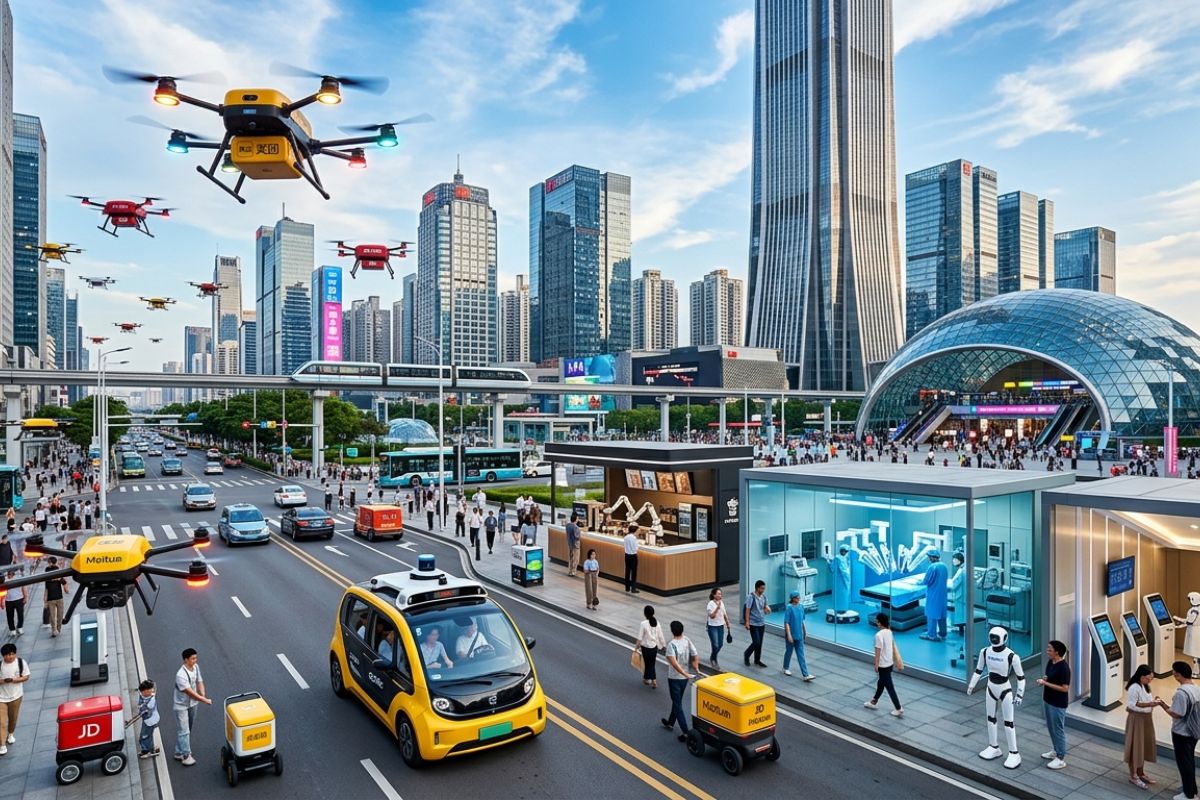
In 100 hours in the city, autonomous robots appear on the street, in the hotel, in the subway, and in the hospital, while drone shows and the “Eye of Shenzhen” reinforce the future atmosphere
The experience in Shenzhen shows why the city is called futuristic: autonomous robots are already making deliveries, traveling on their own routes, and even entering elevators without human assistance. Among drones that drop off packages at machines, self-driving cars, and stores dedicated to technology, everyday life seems like a permanent showcase.
Throughout a hundred hours exploring the city, what stands out is not just the number of machines, but the variety: delivery robots, humanoid robots, surgical robots, and intelligent hotel systems coexist with real failures, tests, adjustments, and limitations that still appear in daily life.
Deliveries by drones and the beginning of the city dominated by autonomous robots

The journey begins with drones replacing delivery people. The order is placed via QR code and WeChat, and the drone arrives bringing drinks and food, leaving the package at a machine that functions as a pickup point. The process is quick, straightforward, and resembles a “last-mile delivery” without human contact.
-
They spent up to 5 hours a day underwater, and their bodies changed because of it: discover how human populations developed impressive biological adaptations to survive in the most extreme environments on Earth.

-
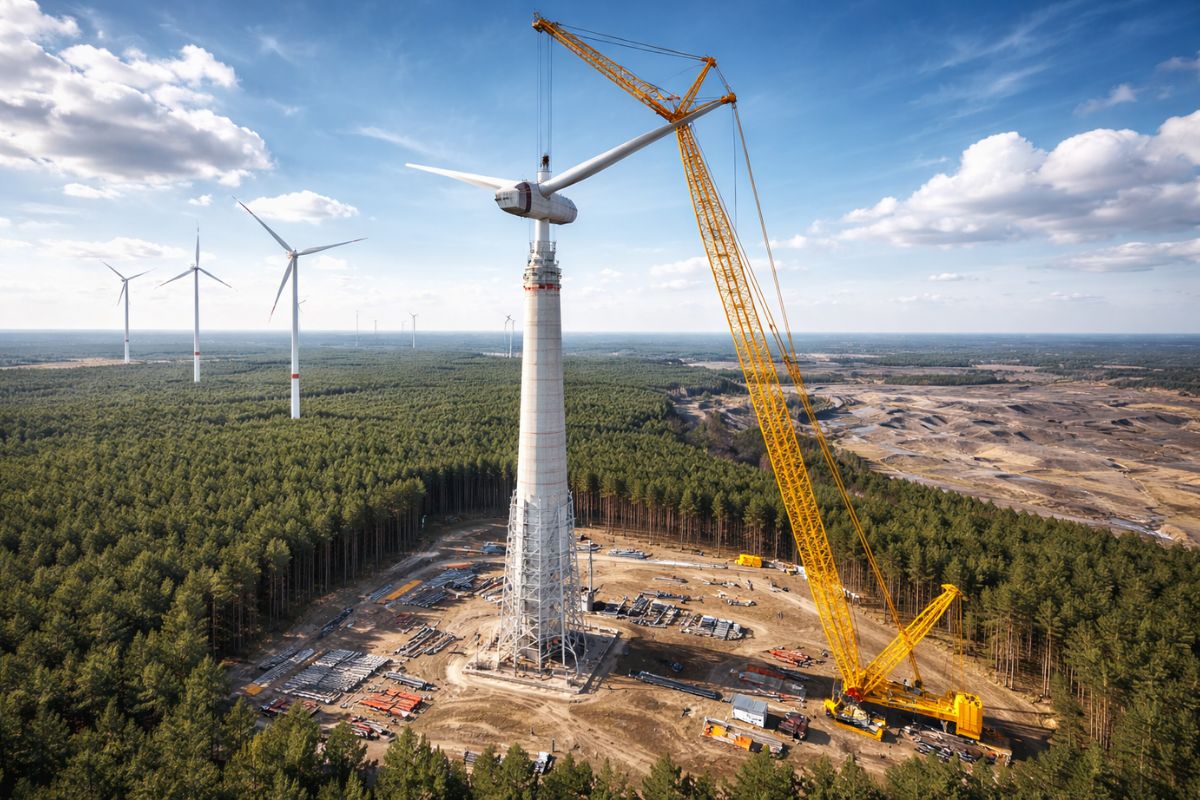
The tallest wind turbine in the world is rising where there was coal: 360 meters in Schipkau, Germany, it ascends with a telescopic system, captures winds above 300 m, and aims to connect to the grid by 2026.
-
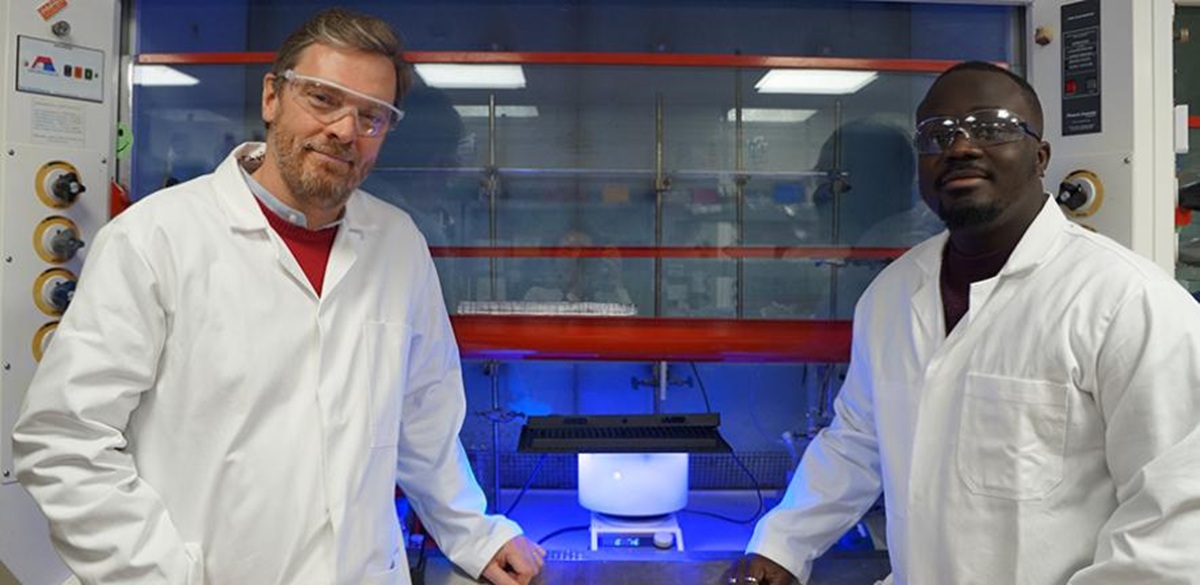
Cambridge University creates a solar reactor that transforms hard-to-recycle plastic and battery acid into clean hydrogen, operating for over 260 hours and paving the way to add industrial value to two waste materials that currently lead to disposal and environmental costs.
-
Samsung made a mistake and you need to take advantage before they fix it: the Galaxy S25 FE has dropped in price and now ‘humiliates’ the S26 in cost-benefit with plenty of screen, cameras, and performance.

There is also a practical detail that reinforces the logic of the system: the boxes are reusable, so the user opens, takes out, and returns them to keep the circuit going. In this scenario, autonomous robots do not appear as a “concept,” but as logistics operating in real-time.
The “Robot City” has a slow humanoid and a cleaning robot that breaks

Not every humanoid robot impresses. A model presented as a reception robot tries to interact but appears stuck and slow, receiving low ratings for utility. This reflects the current moment: not every humanoid robot is close to replacing people.
On the street, a cleaning robot sweeps and mops, dealing with leaves and dirt. The utility seems high for monotonous tasks, but the scene itself reveals the reality: autonomous robots break down, and sometimes there are humans working with a broken robot in the background. The city is futuristic, but it is not perfect.
Restaurant with tracks and magnets: fun automation, but with limits

In the robot restaurant, food “orbits” to the table on a track system with fittings and magnets. It’s the kind of solution that draws attention for its spectacle and engineering of flow: the dish arrives at the right table via an automated path.
However, again, practical limitations appear: drinks can spill, items arrive crooked, and there are situations where the robot does not seem very reliable. The result is an interesting automation, but it still needs refinement to be truly flawless.
Self-driving taxi: sensors on the roof and the tension of trusting the empty steering wheel

The transition to transportation is one of the strongest moments. The self-driving taxi has large sensors on top, and the interior has no one driving.
To unlock, just press a button; to start, you need to enter the last digits of your phone number. The service operates in specific areas with more controlled traffic.
The experience is described as smooth and safe in several stretches, with the car avoiding traffic and making complex turns. Still, there is a scare: the vehicle drops passengers off at a bad spot, practically in the middle of the street, with horns in the background.
Shenzhen shows progress, but also exposes that autonomous robots in traffic still need to mature in stop and drop-off decisions.
High-Tech Park: autonomous robots become industry and showcase
The High-Tech Park brings together large companies and reinforces the ecosystem atmosphere. There are mentions of headquarters and stores, and the tour fits a central idea: autonomous robots are not just the final product, but part of a development, testing, and demonstration chain.
The contrast also appears: while there are advanced cars and systems, everyday life continues with maintenance, adjustments, and temporary “fixes.” It is a future under construction, not a finished future.
Surgical robots: when technology leaves the street and enters the operating room

The most serious point arises with surgical robots. A robotic arm, with a camera and motion tracking, is used to simulate a total knee replacement procedure.
The highlighted idea is that the system increases precision and can make surgery faster and safer, even allowing someone without experience to perform guided steps.
Here, the impact is different: autonomous robots and robotic arms cease to be convenience and enter the territory of high responsibility.
The scene also shows how much technology depends on interface, training, and control, not just on “having a robot in the room.”
Smart hotel with AI: virtual assistant and delivery that uses the elevator alone
In the hotel, the room reacts as soon as the card is inserted: curtains open, lights and air conditioning turn on, and a virtual assistant appears as a constant presence.
The routine becomes even more automated with a delivery robot that takes orders to the room, avoids people, and enters the elevator without assistance.
The most striking aspect is the sense of efficiency: autonomous robots reduce the time of delivery people and eliminate the need to go down to the lobby, benefiting both the deliverer and the receiver. After the delivery, the robot returns to the base to recharge and repeat the cycle.
Hive of autonomous robots: delivery cars at the stations and remote driving
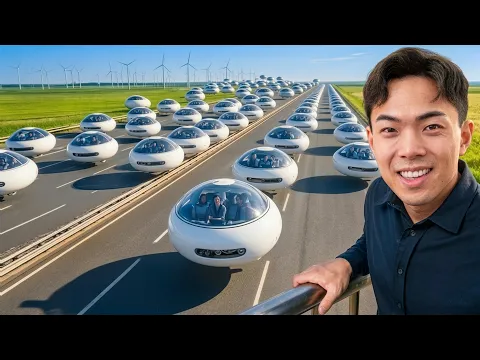

One of the most “Shenzhen” finds is the hive of delivery robots that look like small self-driving cars, with a sensor on top and a large cargo compartment. They circulate near subway stations, delivering packages and restocking stores.
The behind-the-scenes also appears: there is a remote driving station, with a control structure and a realistic simulator, indicating that part of the operation can be monitored and managed remotely.
This reinforces the thesis that autonomous robots can drive alone, but still are part of a human supervision system.
Drone show and “Eye of Shenzhen”: the spectacle becomes infrastructure
The city mixes functional technology with spectacle. There is a drone show in a theme park, with formations and movements that seem “impossible” live, in addition to a clear contrast: drones create more varied patterns than fireworks, with potential for choreography.
In the subway, the Gangxia North Station emerges, known as the “Eye of Shenzhen.” The place is described as extremely futuristic and, according to reports, cost over a billion dollars to build.
There is also a “business class” in the subway, with fewer people and more comfort, and a symbolic detail: even daily commuting becomes a demonstration of how the city invests in high-standard infrastructure.
Automated café and dancing robot: when the future becomes pop culture
In a robot store, a barista robot makes lattes based on a sent photo. The process includes foam, precise movements, and a visual result that replicates the image. The design is made with a kind of laser printing that “marks” the milk lightly to create the effect.
Further along, a massage robot appears as a curious experience but receives moderate ratings for being weak at best.
And the conclusion comes with a dance show: larger robots, with agile movements and impressive performance, suggest a future where humanoid robots go beyond utility and enter entertainment. Shenzhen sells efficiency, but it also sells imagination.
Quick question: if autonomous robots are already delivering food, circulating in the subway, and entering elevators by themselves, would you feel comfortable using this every day in your city, or would you think it’s too soon?




Seja o primeiro a reagir!